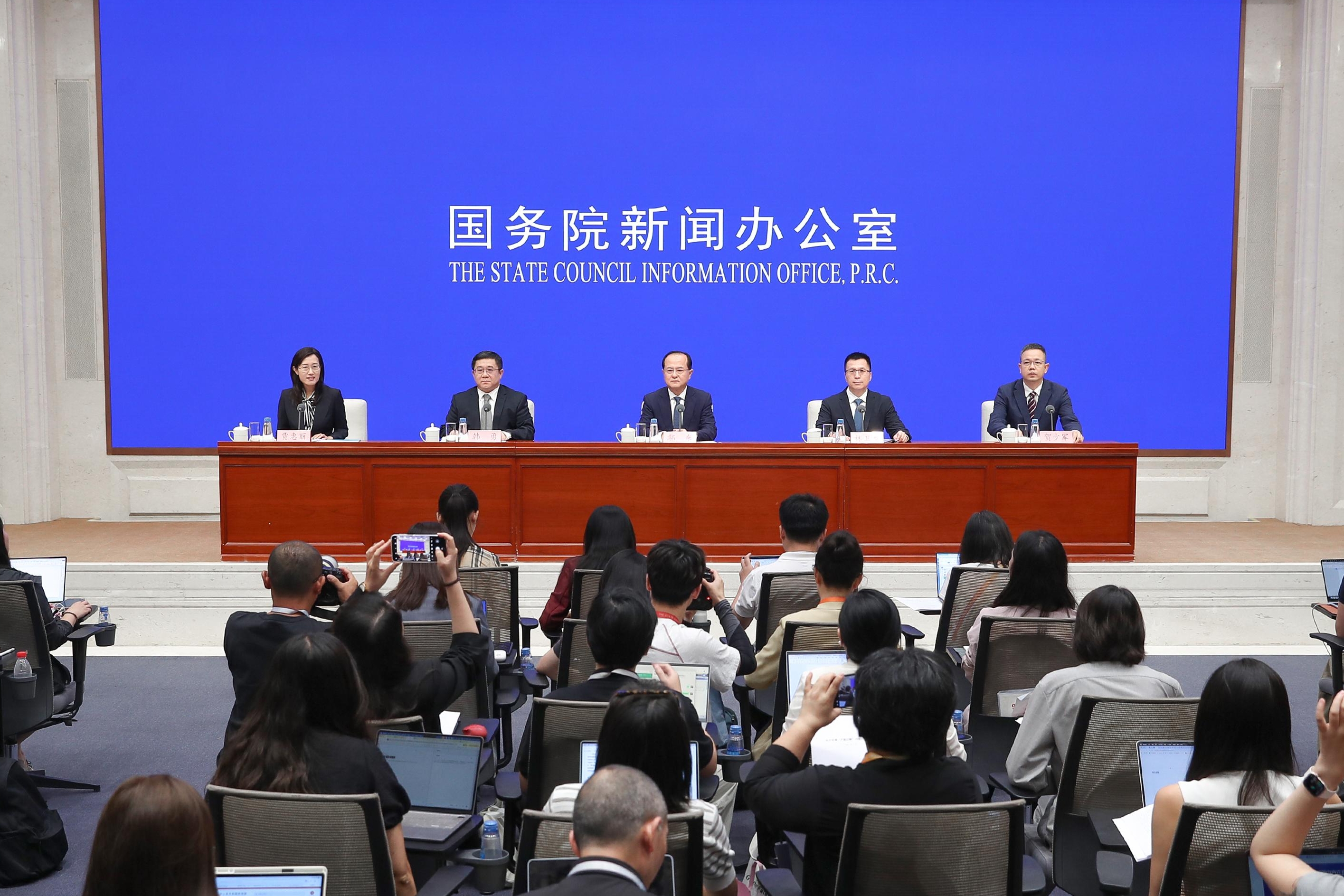
China.org.cn | September 22, 2026


CNR:
In recent years, unilateralism and protectionism have been on the rise, and some economies have adopted discriminatory measures that have undermined fair competition and disrupted the global division of labor and cooperation across industries. How do you view the role of market competition in shaping the global distribution of production capacity, and how can the WTO play a more effective role in upholding a fair international competitive environment? Thank you.
Yan Dong:
Thank you for your question. I would like to invite Mr. Han to answer it.
Han Yong:
Thank you for your question. Market competition is an important safeguard for optimizing and adjusting production capacity and for the healthy development of industries. Historically, successive industrial revolutions and technological transformations have been accompanied by higher production capacity in related industries, and, in the short term, even by oversupply. During this process, companies invest in expanding production in pursuit of profits and market share, and market competition drives them to cut costs and raise efficiency, fostering technological progress and higher productivity. Market competition is the most effective mechanism for preventing the disorderly expansion of production capacity. The role of the government lies in ensuring orderly competition, preserving a level playing field, and allowing the market to fully function, so that outdated capacity is phased out naturally through competition, and a dynamic balance between supply and demand is ultimately achieved. The WTO's principle of fair competition and its related rules have become widely accepted norms of conduct worldwide. All parties should uphold fair competition and reduce undue interference with the global division of labor and cooperation on production capacity.
China is actively fostering a first-class business environment based on fair competition. The country boasts the world's largest pool of market entities. This massive base of market participants creates a fully competitive environment, compelling companies to take on challenges, compete on strength, and keep improving their products and services in competition. McKinsey once described China as "the world's toughest gym," that trains hyper-competitive companies. China's 15th Five-Year Plan calls for advancing the development of a unified national market and removing barriers related to production factor access, bidding, qualification accreditation, public bidding and government procurement. It also calls for full national treatment for foreign-invested enterprises and for a first-class business environment that is market-oriented, law-based and internationalized.
The rules-based multilateral trading system, with the WTO at its core, has played an important role in maintaining the stability of the global economic and trade order. Principles such as free trade, non-discrimination and fair competition have gained widespread acceptance and together form the underlying logic that keeps the order stable and predictable. The multilateral trading system is currently facing severe shocks from unilateralism and protectionism, yet multilateralism remains the preferred choice for the vast majority of WTO members. According to WTO statistics, 72% of global trade is still conducted under the most-favored-nation principle. That fully demonstrates the value and resilience of fair competition and the system's other basic principles. No one wants to go back to the jungle era where the strong bully the weak. In challenging times, international fairness and justice are all the more precious. China will work with all parties to firmly support the multilateral trading system, advance WTO reform, resolutely uphold the organization's basic principles and rules, and safeguard a transparent, fair, and inclusive global trade and economic environment. Thank you.