China.org.cn | September 22, 2026


Bloomberg News:
Does China plan to address trading partners' worries about excess capacity and also low-cost exports that are displacing local industries? If so, how? And do you expect another record trade surplus this year? Thank you.
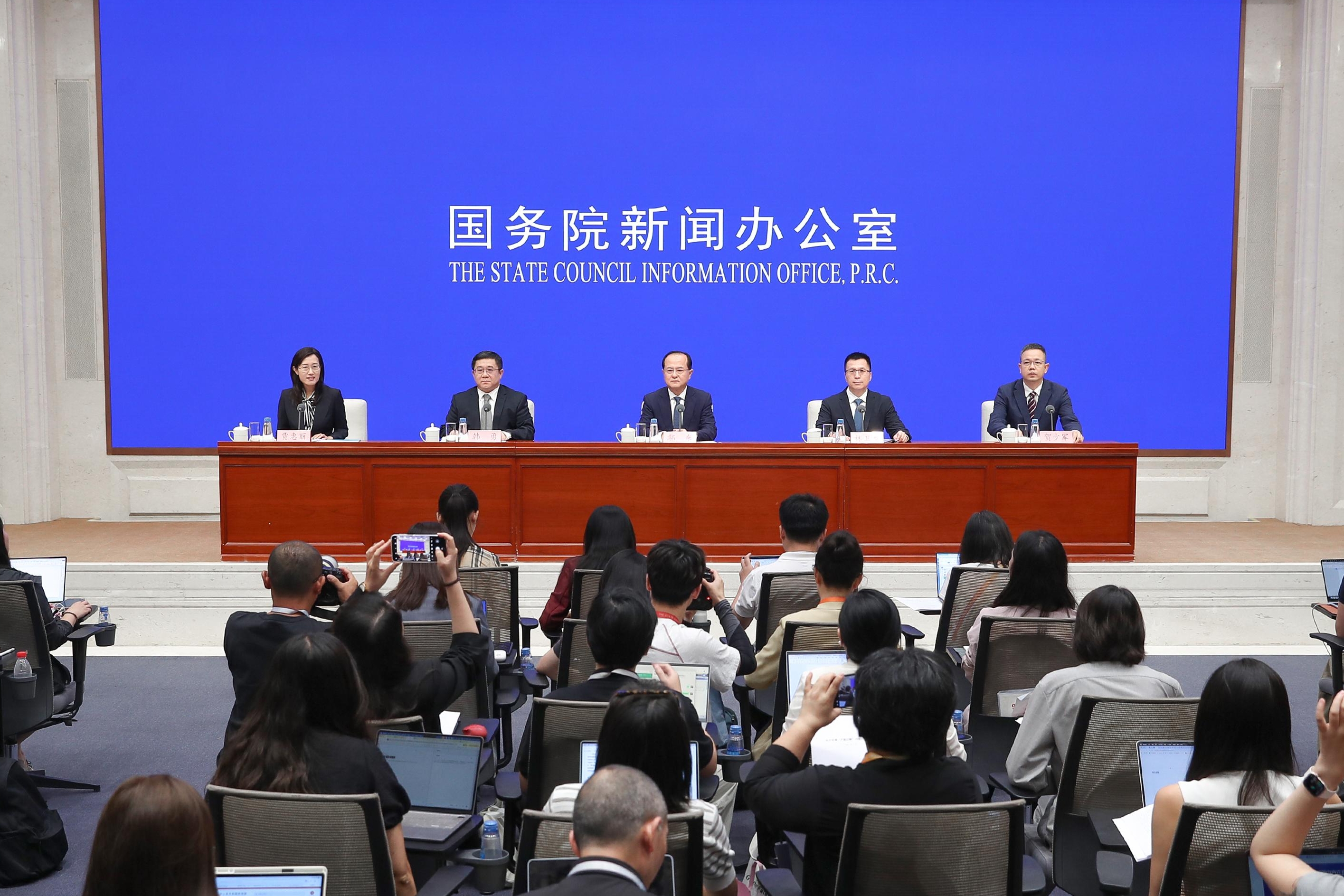
Yan Dong:
I would like to invite Mr. He to answer these questions.
He Shaojun:
Thank you for your questions. The topic of trade surplus has attracted wide attention, and I would like to take this opportunity to share my views from several perspectives.
First, the trade surplus reflects a profound evolution in the international division of labor. Looking back at the global history of economic development, countries have generally experienced trade surpluses during their process of industrialization. Manufacturing powerhouses such as the U.K., U.S., Japan and Germany all recorded trade surpluses for a long time. Industry- and product-wise, 80% of American chips are for export, and about two-thirds of commercial planes delivered by Boeing are sold to customers outside North America. The E.U.'s automobile, pharmaceutical and cosmetics sectors had surpluses of $92.2 billion, $214.6 billion and $11.6 billion in 2025, respectively. Large exports or trade surpluses are not synonymous with excess capacity. Given its complete and efficient industrial system, China's trade surplus is an objective result of changes in the global division of labor and trade landscape.
Second, Chinese products have met the production and living needs of countries worldwide. Consumer goods such as computers, cellphones, furniture, clothing and toys produced in China have provided global consumers with more choices, reduced consumer costs and buffered against inflation risks. China's exports of production equipment and intermediate products have strongly supported the industrial development of its trading partners. For example, we have supplied more than 80% of the world's solar photovoltaic modules and 70% of its wind power equipment, significantly supporting the green transition of our trading partners. Foreign-invested enterprises accounted for 16% of China's trade surplus and also reaped substantial investment returns. All these demonstrate that the trade surplus is registered by China, but the benefits are shared by all.
Third, in terms of the balance of payments in general, despite a relatively large surplus in trade in goods, China has deficits in both trade in services and the capital and financial account. Overall, China's current account surplus is about 3.7% of its GDP, which is within an internationally recognized reasonable range, and there is no significant imbalance in the balance of payments.
I would like to emphasize that it has never been China's intention to seek a trade surplus. China will continue to actively promote the balanced development of imports and exports, open its market wider to the world, and unswervingly expand imports. In the first half of this year, China's imports in goods grew 22.1%, significantly faster than exports. China remains the world's second-largest import market, and the demand generated by its vast market provides strong growth momentum for its trading partners. In particular, since last year, we have been building the "Export to China" brand and plan to hold more than 100 import promotion events annually, sharing China's new development opportunities with the world. At the "Export to China" events overseas, many Chinese companies signed letters of intent to purchase with local companies, broadening their import sources and creating more convenient channels for foreign companies to enter the Chinese market. This initiative has received positive responses from various countries and fostered friendship through mutually beneficial and win-win cooperation.
Going forward, we will take more pragmatic measures to expand imports and share new opportunities from China's vast market with countries around the world.
First, we will continue to enhance the influence of the "Export to China" brand. By holding a series of business matchmaking events, we will further boost imports through collaboration among trade fairs and targeted procurement.
Second, we will continue to increase policy support. We will improve trade facilitation for imports, and optimize the sources and structure of imported goods, so as to meet the needs of industrial development and the people's desire for a better life.
Third, we will fully leverage the role of trade promotion platforms. We will continue to host major trade events such as the China International Import Expo (CIIE) and the China International Consumer Products Expo (CICPE), hold the CIIE U-Fair on a regular basis, better leverage the role of national demonstration zones for innovative import promotion, and actively promote the import of high-quality goods and services from around the world. Thank you.