China.org.cn | September 22, 2026


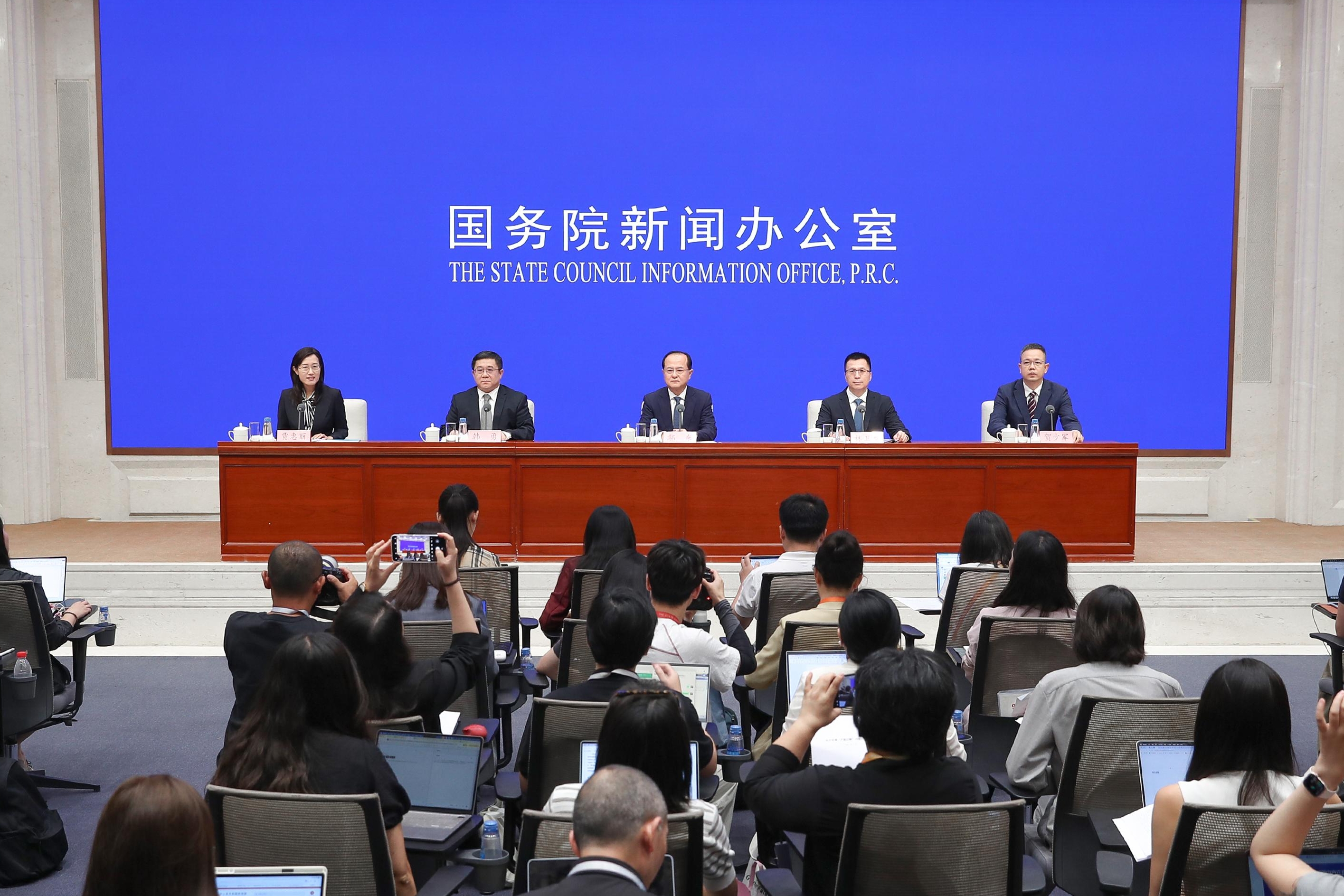
Seashell Finance of The Beijing News:
Currently, countries hold different views on the "excess capacity" issue and international organizations do not have a unified definition. The evaluation criteria vary greatly with significant disagreements. What is your take on this? Thank you.
Yan Dong:
I would like to invite Mr. Lin to answer this question.
Lin Weilong:
Thank you for your question. As you mentioned, there is ongoing debate and a lack of broad consensus in the international community regarding the concept of "excess capacity" and related issues. To understand and view the concept in a more comprehensive, objective and systematic way, we can examine it through three dimensions.
The first is the theoretical dimension. "Excess capacity" is a complex concept that needs to be understood within specific economic contexts. Economists generally interpret it from both macro and micro levels. At the macro level, it refers to supply exceeding demand, where total production capacity significantly surpasses total demand. At the micro level, it means idle enterprise capacity, with factors such as monopolistic competition disrupting capacity clearing, preventing the achievement of optimal output. "Excess capacity" is a dynamic phenomenon in the market economy, related to changes in supply and demand while being affected by the industry life cycle. It operates in a continuous dynamic cycle of "balance-imbalance-rebalance," where balance is relative and imbalance is the norm.
The second is the historical dimension. The global center of production capacity has undergone several major historical shifts along with industrial relocation. Since the first industrial revolution, various factors of production have flowed more rapidly around the world. The United Kingdom and the United States successively emerged as the world's industrial centers. The U.K.'s share in global industrial output peaked at 22.9% in 1880, while the U.S.'s share in global industrial output reached as high as 44.7% in 1953. Since the end of the Second World War, the world has undergone multiple rounds of industrial transfer — from the U.S. to Europe, from Europe and the U.S. to Japan, then on to East Asia and China, and currently with some industries relocating from China to Southeast Asia and other regions — ultimately forming three major regional manufacturing centers in North America, Europe and East Asia. China's transformation into the "workshop of the world" is the result of its active integration into economic globalization and participation in the international division of labor. It has also become a key component of the global manufacturing network.
The third is the practical dimension. Capacity utilization rate needs to be assessed in light of the actual conditions of different countries and industries. Internationally, the capacity utilization rate is usually used to measure the situation of "excess capacity." It measures the ratio of actual output to potential output. However, there are no globally accepted criteria for determining the reasonable range of capacity utilization, as it differs across economies. The median capacity utilization rate for advanced and fast-growing economies mostly falls in the 75%-80% range, whereas that for less developed countries usually stands between 50% and 64%. At the same time, capacity utilization rate also varies considerably across sectors. Capacity utilization in some traditional industries is significantly below the average. In some countries, capacity utilization in beverages and furniture stands at around 65%, while in sectors like rubber, chemicals and plastics it is only 40%-50%. Emerging industries have relatively high capacity utilization rates. In some countries, the capacity utilization rate for computer and peripheral equipment reaches 83%, and for electrical equipment and components it reaches 86%. Economic practices of various countries have shown that capacity utilization rate, although a reasonably objective indicator of the use of production capacity, is not a one-size-fits-all measure for determining whether excess capacity exists in different economies or sectors.
In China's case, the overall industrial capacity utilization rate remains within a reasonable range. In 2025, the capacity utilization rate of industrial enterprises above designated size was 74.4%, and higher capacity utilization was observed in high-tech manufacturing, high-end equipment manufacturing and strategic emerging industries. The temporary low capacity utilization rates in certain traditional raw-material sectors mainly stem from adaptive adjustments brought by structural changes and green transition, which are normal during the upgrading of industries. Overall, China's industrial sector is generally balanced in terms of supply and demand and is operating smoothly. Thank you.