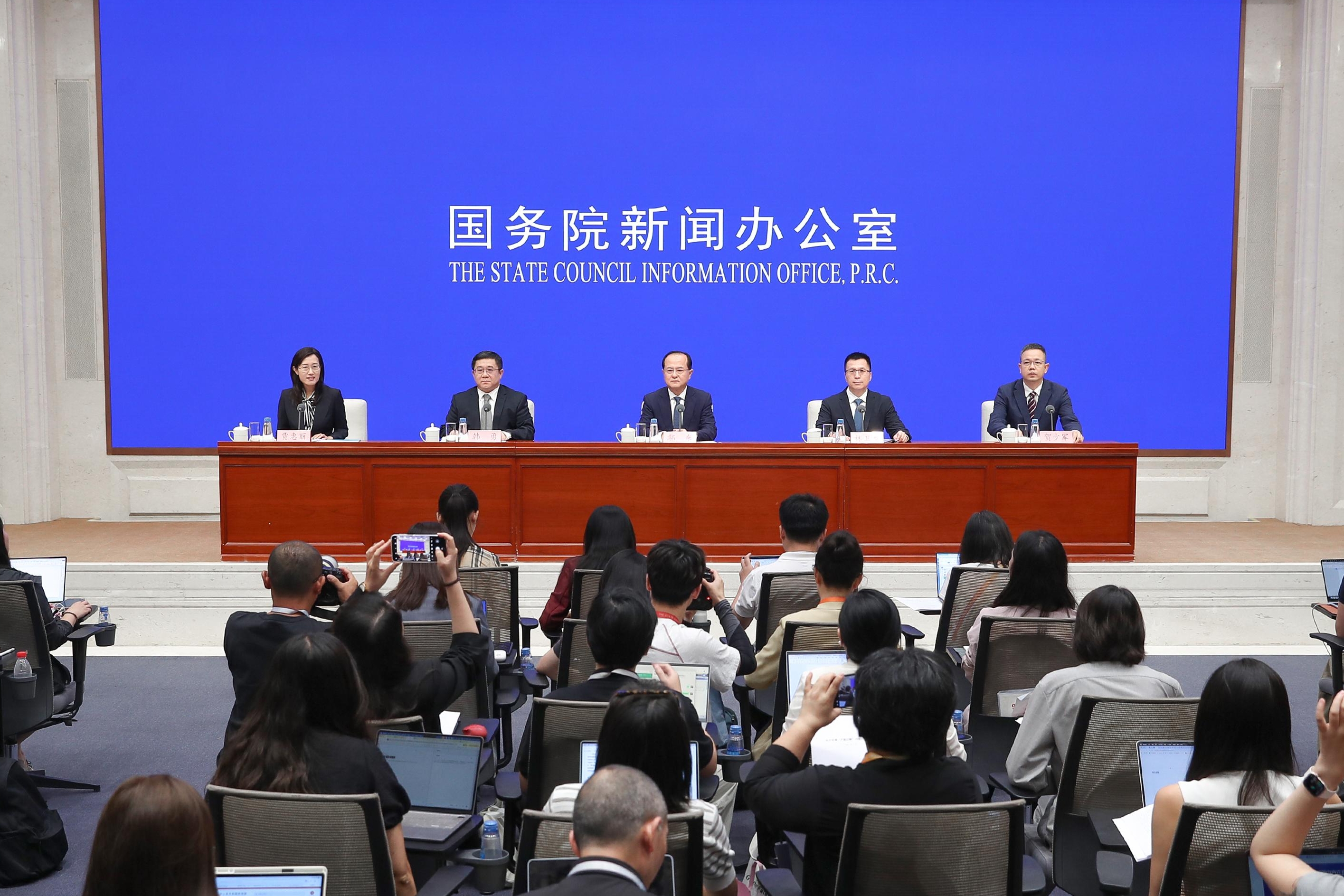
China.org.cn | September 22, 2026


China News Service:
In recent years, there has been an international narrative that "subsidies have caused excess capacity." How does China comment on such claims? In addition, what is the relationship between industrial subsidies and excess capacity? Thank you.
Yan Dong:
Thank you for your questions. I would like to invite Mr. Han to answer these.
Han Yong:
Thank you for your questions. Many countries introduce tailored industrial policies in light of their national conditions and development needs. For example, R&D subsidies for emerging industries and risk management subsidies for the agricultural sector are legitimate industrial and trade policy tools for WTO members. Multiple reports from the United Nations Conference on Trade and Development (UNCTAD) point to the rapid increase in industrial policies worldwide over the past five years. Providing R&D subsidies, tax incentives and low-interest loans for emerging industries has become a widely accepted international practice. It should be pointed out that industrial subsidies per se are not a problem, and there is no necessary connection between industrial subsidies and excess capacity. Sound industrial subsidy policies help correct market failures, advance technological innovation, protect the environment, reduce poverty and promote balanced development, rather than cause the so-called "excess capacity."
On the other hand, if protectionist measures are adopted, non-compliant industrial policies are introduced and a beggar-thy-neighbor approach is taken to restrict competition, the global economic and trade order will be disrupted. The U.S. Inflation Reduction Act, which plans to provide a total of $750 billion in various subsidies from 2022 to 2031, requires that electric vehicles eligible for these subsidies shall be produced and sold in the U.S. or North America, effectively excluding other countries and regions. In addition, according to available statistics, the European Commission is set to provide more than 1.44 trillion euros in various subsidies between 2021 and 2030. The European Union's Industrial Accelerator Act links local content to fiscal support through the E.U. origin requirement, constituting a serious investment barrier and institutional discrimination. Major countries, as leaders in global industrial development, should set an example by using subsidies reasonably in accordance with the principles of openness, fairness and compliance. They should refrain from adopting discriminatory subsidy policies and avoid artificial intervention in the global layout of industrial and supply chains.
China always strictly observes WTO rules and strives to build and improve a system of subsidies in accordance with international practice. For years, China has constantly regulated and improved relevant policies to ensure that its subsidies are compliant, science-based and transparent. It has also reviewed and standardized some unsound local practices and established a unified administration system for local government subsidies based on negative lists. China has comprehensively fulfilled its WTO commitments on transparency in a timely manner, and its notifications on subsidy policies have achieved nationwide coverage. China's subsidies are mainly used for scientific R&D, initiatives on industrial application of technology and market consumption. China uses market-based and indirect guidance more often, such as public services, technical standards and skills training, to support priority areas like technological R&D and innovation, the development of small and medium-sized enterprises (SMEs), and green and energy-efficient development. China's subsidies apply equally to all types of market entities, and domestic and foreign-invested enterprises actively participate and benefit equally.
Development is a timeless theme for humanity. It is imperative that all countries make the pie of global development bigger and introduce industrial policies in a rational and compliant manner, rather than use them as a tool to constrain the development of others. China stands ready to engage in discussions on the relevant industrial policies with all sides under the WTO framework to jointly bring relevant practices into compliance and advance multilateral rules in a manner that keeps pace with the times. Thank you.