China.org.cn | September 22, 2026


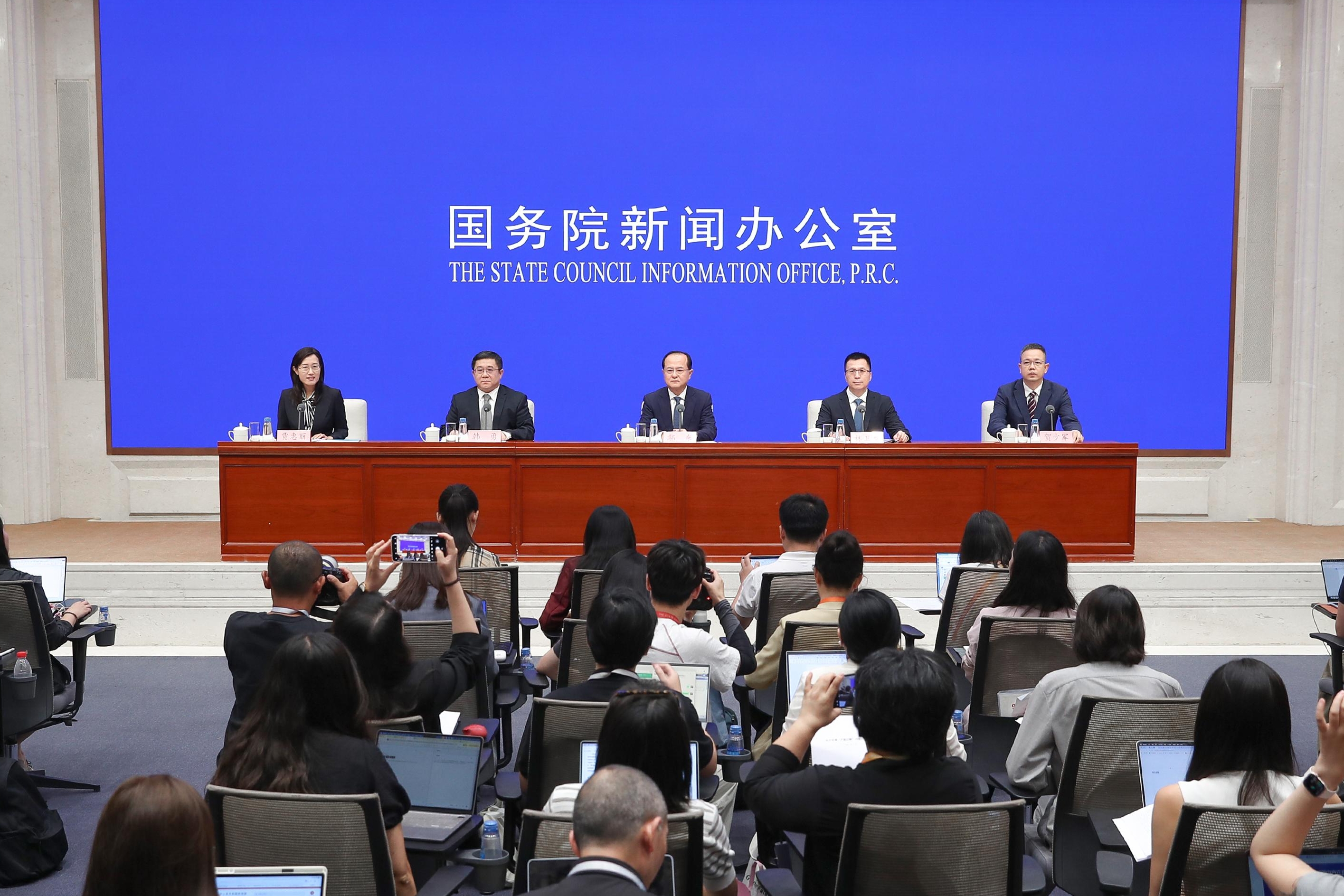
National Business Daily:
Regarding China's industrial development and technological innovation, two distinct narratives have emerged in the international community: "China Shock 2.0" and "China Opportunity 2.0." How do you view them? Is China's industrial development a shock or an opportunity for the world? Thank you.
Yan Dong:
Thank you for your question. I will take this one. This topic has attracted widespread attention and is being discussed extensively. Certain countries have floated the so-called "China Shock 2.0" narrative, groundlessly claiming that China's industrial development threatens the dominant position of Western countries and squeezes the development space of Global South countries. That claim does not square with the facts and is untenable.
For over a decade, China has remained a major engine of global economic growth, consistently contributing around 30%. By leveraging its market advantages, industrial development and technological progress, China is providing the world with increasing "market dividends," "development dividends" and "innovation dividends." As these dividends converge and compound, they bring more development opportunities and greater room for growth worldwide, which is what a growing number of rational and objective voices in the international community call "China Opportunity 2.0." This can be seen from the following four dimensions.
First, China's industrial development serves as a ballast for stable global industrial and supply chains. China has the world's largest and most complete industrial manufacturing system, continuously and efficiently supplying a wide range of manufactured goods, underpinning stable global supply and offsetting local supply gaps caused by protectionism and geopolitical conflicts. China has demonstrated remarkable resilience and a strong sense of responsibility, serving as a stabilizing anchor and a key hub in global industrial cooperation. China exports high-quality, affordable production equipment and components, lowering the barriers to entry for manufacturing in developing countries. From 2012 to 2024, China's exports of textile machinery to developing countries exceeded $30 billion, helping some Southeast Asian and South Asian countries become important textile producers and exporters.
Second, China's industrial development is a new engine for global innovation cooperation. Committed to innovation-driven development, China has forged an effective path where technological innovation leads industrial innovation, and industrial upgrading in turn drives technological advancement. Backed by China's manufacturing strength, any valuable scientific or technological achievement can be quickly turned into an actual product, providing the best testing ground for the "0 to 1" verification and "1 to N" scale-up of new products and services. China keeps its doors open to innovation, and its fast-growing innovative enterprises have brought investors from all countries returns of several times or even dozens of times their initial investment. Many of China's innovations, such as large AI models, have embraced an open-source approach and gained global popularity. Open-source large models have been downloaded more than 10 billion times globally, enabling more countries, especially developing ones, to access and afford new technologies.
Third, China's industrial development is a driving force for the global green transition. China is accelerating a comprehensive green transition and promoting green, low-carbon industrial growth. By the end of the 15th Five-Year Plan period, China's green industry is expected to be worth more than 20 trillion yuan. The country's green industry is developing rapidly, and its new energy products have enriched global supply, boosting the global green, low-carbon transition. According to a report from the International Renewable Energy Agency, over the past decade, the average cost per kilowatt-hour of global wind power projects has decreased by more than 60% and that of PV power projects by more than 80%. The reductions are largely attributable to Chinese manufacturing and production capacity. With global energy supplies tight and AI driving up electricity demand, the International Energy Agency predicts that global electricity consumption by data centers will approach 1 trillion kilowatt-hours by 2030, with 40% of new demand relying on renewable energy. China's significant scale and technological edge in solar energy, energy storage and electrification position it well to meet future global demand for green energy and industrial development.
Fourth, China's industrial development is a catalyst for improving the well-being of people in all countries. China's rapid industrial development has provided the world with a wealth of high-quality, high-efficiency and cost-effective products, offering global consumers more stable and diverse choices. Chinese manufacturing has improved the quality of life for people around the world, reduced the cost of living and eased global inflationary pressures. For example, Chinese air conditioners have recently become bestsellers across Europe, bringing relief to local households sweltering in summer heatwaves. A report released by the European Central Bank estimates that if E.U. imports from China increase by 10% in 2026, the bloc's overall import prices will fall by 1.6%. China's trade and investment are increasingly empowering industrialization across the developing world. China has established more than 50,000 enterprises overseas, with an investment stock of more than $3 trillion, nearly 90% of it in developing economies. Through local production, procurement, and employment, alongside upstream and downstream support and regional supply chain connectivity, Chinese enterprises have facilitated the implementation of numerous projects across sectors like light industry, textiles, and home appliances. At the same time, they are driving growth in emerging digital and green sectors while boosting the contribution of host-country exports to local value creation. According to calculations by the Chinese Academy of Sciences, from 2012 to 2025, the local export value added driven by Chinese enterprises in 24 developing economies rose from $24.4 billion in 2012 to $142.4 billion in 2025, a nearly fivefold net increase. The "China squeeze" narrative fabricated by certain countries is a fresh repackaging of the "China threat" rhetoric. Rather than genuinely helping developing countries, their aim is to undermine China's cooperation with the Global South and to deflect their own past and present responsibilities. Facts and data demonstrate unequivocally that China's industrial development brings the world opportunities, not shocks, and empowerment, not threats, helping pave the way for developing countries on their path to modernization. Thank you.