China.org.cn | January 26, 2026


Beijing Youth Daily:
The current global economic situation is characterized by insufficient growth momentum intertwined with structural transformation. Under these circumstances, how should we view the trajectory of China's economy in 2026? Thank you.
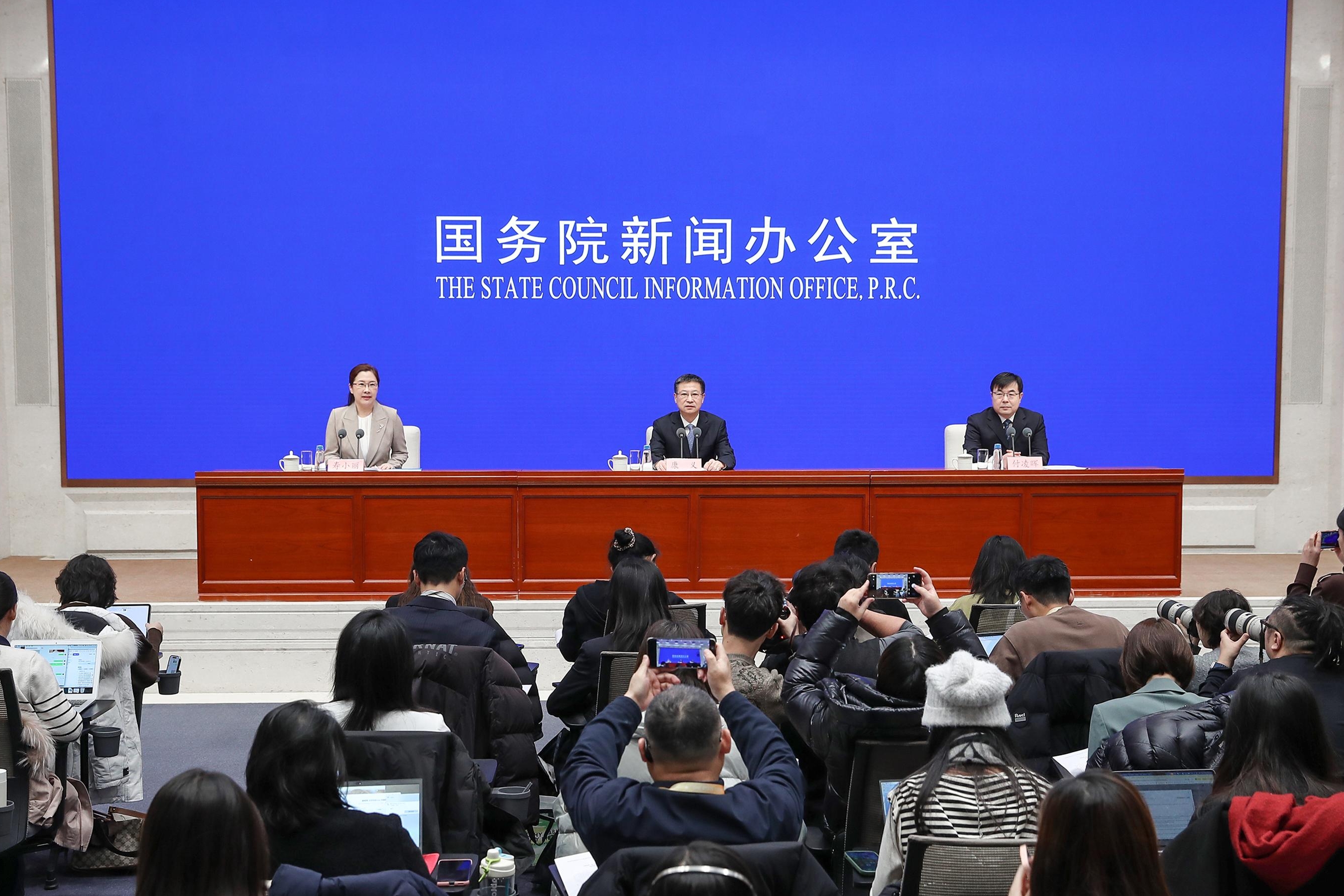
Kang Yi:
Thank you for your question. The year 2026 marks the beginning of the 15th Five-Year Plan, and China's development has reached a new starting point. Despite the deepening impact of external changes and challenges to domestic stability and development, China's economy has a solid foundation, many advantages, strong resilience, and great potential. The long-term supportive conditions and fundamental trend of positive development remain unchanged. Overall, the opportunities outweigh the challenges, and favorable factors outnumber unfavorable ones. China's economy has both the conditions and support to achieve stable, positive growth in 2026.
In terms of development foundations, China achieved solid results in high-quality development during the 14th Five-Year Plan period. China's economic, scientific and technological strength, and overall national strength all reached new heights. Economic output grew by more than 36 trillion yuan over the past five years, and R&D investment intensity rose 0.44 percentage point. With stronger foundations and broader development space, China enters the 15th Five-Year Plan period with clear advantages and confidence. The long-term stable development of China's economy results from multiple factors working in synergy. These include institutional advantages, market strengths, a complete industrial system, and human resource advantages. This is both an overarching logic and a major underlying trend.
In terms of development momentum, steady economic progress in 2025 has created favorable conditions for further development. In 2025, China's economy forged ahead despite pressures, achieving 5.0% growth amid deepening adverse external influences, demonstrating its resilience and vitality. Since September, core CPI has risen more than 1% year on year for four consecutive months. In December, the manufacturing PMI returned to expansion territory. The flow of people, goods and information maintained relatively rapid growth. Moreover, positive factors driving steady, positive economic development are accumulating.
In terms of development momentum, the cultivation of new quality productive forces and the positive effects of reform continue to emerge. We are in a critical period of transitioning from old to new growth drivers. While the growth rate of some traditional industries and sectors is indeed slowing, emerging drivers are accumulating momentum, helping to offset downward pressure and boost upward momentum. For example, domestic large AI models are developing rapidly, AI technology is being widely applied, and the digital economy is driving rapid advancement in new quality productive forces. In 2025, the value added of digital product manufacturing enterprises above designated size increased 9.3% year on year. An average of 45,000 new energy vehicles rolled off production lines every day, and more than 500 million express parcels were delivered. Humanoid robots went from appearing on the Spring Festival Gala stage to showcasing at the World Humanoid Robot Games, and then to entering factories in an organized fashion. All of these developments are accumulating momentum. Meanwhile, China is advancing the construction of a unified national market, driving down logistics costs across society, and enacting the private sector promotion law. Many well-developed, concrete reform measures are being rolled out, which will further stimulate economic dynamism and vitality.
In terms of development support, more proactive and effective macroeconomic policies will safeguard stable economic operations. The fact that China's economy maintained steady growth in a complex environment in 2025 was largely due to the important role these policies played. The "two major" initiatives (major national strategies and the enhancement of security capacity in key areas) and "two new" initiatives (large-scale equipment renewals and trade-in of consumer goods) were expanded and strengthened. The Policies and Measures on Stabilizing Employment, Ensuring Stable Growth and Promoting High-quality Development were introduced, and comprehensive efforts were made to curb involution-style competition. These actions effectively expanded demand, optimized supply and stabilized the economy. In 2025, total retail sales of consumer goods grew 0.2 percentage point faster than the previous year, and industrial value added grew 0.3 percentage point faster. In 2025, the Central Economic Work Conference clearly stated that China should adhere to the principle of seeking progress while maintaining stability and improving quality and efficiency, give full play to the combined effect of existing and new policies, and strengthen counter-cyclical and cross-cyclical adjustments. The year 2026 marks the start of the 15th Five-Year Plan. All sectors will focus on key objectives and vigorously advance major projects, helping generate powerful momentum for development.
Recently, major international organizations have raised their forecasts for China's economic growth, indicating that the international community is optimistic about China's economic prospects. The Chinese economy is a vast ocean, not a small pond, capable of withstanding wind and waves, even violent storms. Looking back over the years, challenges facing the Chinese economy have never been absent, but opportunities have always accompanied them. We must strengthen our confidence and resolve, build consensus and improve our internal capabilities, enhance innovation-driven development, and deepen reform and opening-up. We must continuously strengthen the domestic economic cycle, promote effective qualitative improvement and reasonable quantitative growth, and strive to get the 15th Five-Year Plan off to a good start.
Thank you.