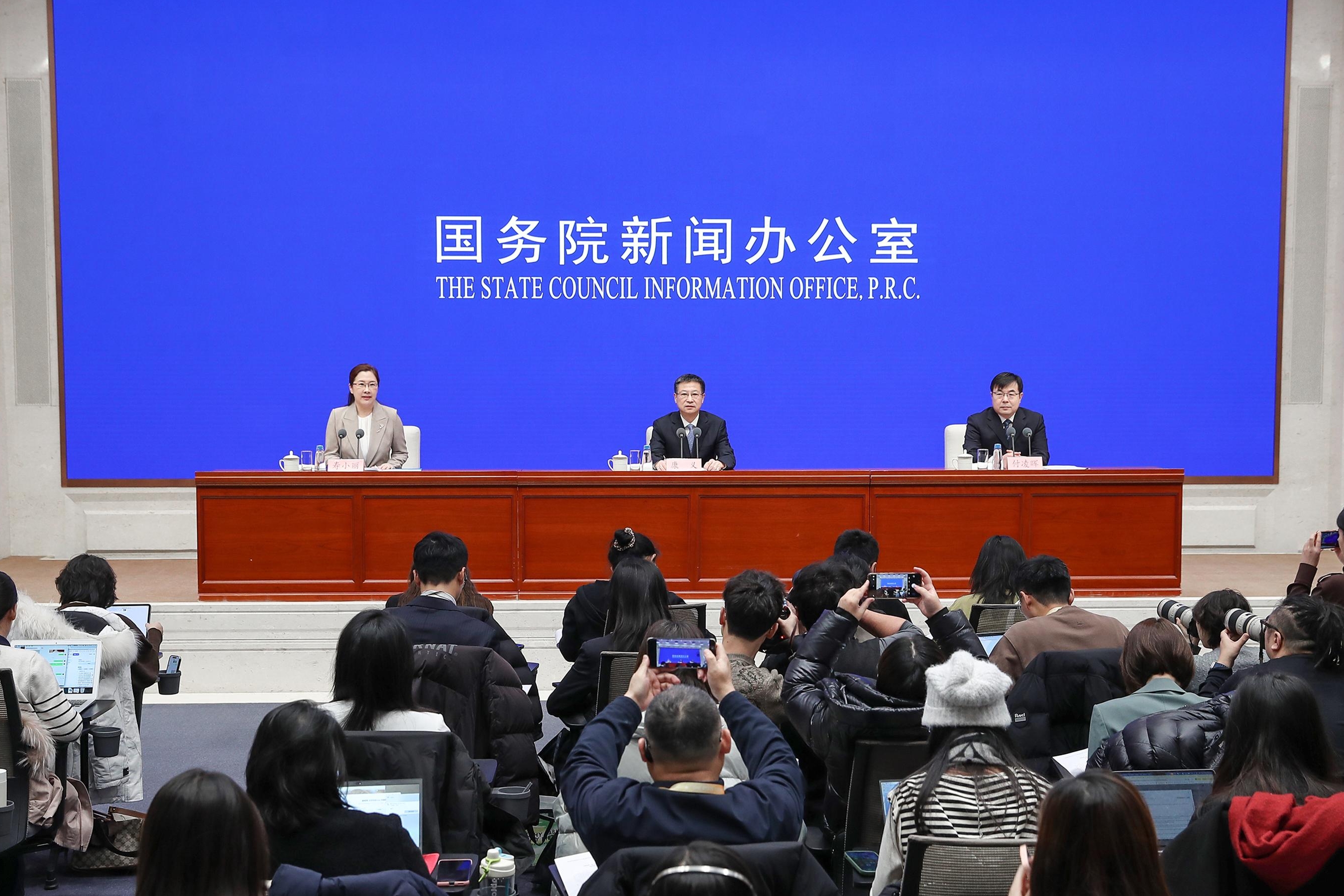
China.org.cn | January 26, 2026


Zhinews of Shenzhen Satellite TV:
In 2025, many regions across China actively pursued innovative practices and fostered new quality productive forces. What new highlights and changes have new quality productive forces brought to economic development? Thank you.
Kang Yi:
Thank you for your question. In 2025, China made considerable progress in innovation-driven development, industrial upgrading, digital empowerment and green transformation. New quality productive forces evolved from conceptual consensus into tangible development results, enhancing both the quality and sustainability of economic growth, and underscoring China’s firm resolve and concrete actions to proactively adapt and pursue new breakthroughs amid a complex external environment. Regarding new quality productive forces, I would summarize them with four key strengths.
First, our technological strength continued to improve. In 2025, China's total R&D expenditure reached 3.9262 trillion yuan, ranking second in the world for many years. China became the first country to reach more than 5 million valid domestic invention patents and has ranked first globally in PCT international patent applications for six consecutive years. High-value patent reserves in key core technology fields have been continuously strengthened. Major national projects delivered frequent breakthroughs, with numerous original and disruptive innovative results emerging. The Jiutian unmanned aerial vehicle completed its maiden flight, Tianwen-2 embarked on its asteroid exploration mission, the first electromagnetic catapult-type aircraft carrier was officially commissioned, and the CR450 high-speed train set a new "China Speed." These achievements demonstrate that China is taking solid, powerful steps toward high-level scientific and technological self-reliance.
Second, industries built momentum toward new strengths. Investment and production expansion continue in emerging fields such as high-end equipment, green energy and intelligent manufacturing, and the integration of technological and industrial innovation is bearing fruit. In 2025, equipment manufacturing and high-tech manufacturing enterprises above designated size accounted for 36.8% and 17.1% of total industrial value added, respectively. The low-altitude economy is taking flight, and embodied intelligence is enabling smart and efficient operations. The output of civilian drones and industrial robots increased 37.3% and 28%, respectively, compared to 2024. Intelligent manufacturing projects advanced steadily, the number of intelligent factories continued to rise, and the integrated application of the industrial internet achieved full coverage across all 41 major industrial sectors.
Third, digital penetration significantly increased. The digital industry, digital consumption and digital infrastructure have expanded across all domains, integrating into production and operations across countless industries and into the daily lives of millions of households. In 2025, the value added of digital product manufacturing enterprises above designated size increased 9.3% year on year, and the value added of information transmission, software and information technology services grew 11.1%. AI has become a trusted partner and helper for more people in their work and daily lives, genuinely adding convenience to everyday life. New consumption models and scenarios expanded rapidly, driving online retail sales growth of 8.6%. Construction of new infrastructure, such as 5G, gigabit optical networks, and the Internet of Things, progressed in an orderly manner.
Fourth, green leadership was fully demonstrated. China accelerated the construction of a clean, low-carbon, safe and efficient new energy system. In 2025, clean energy power generation — including hydropower, nuclear, wind and solar — by industrial enterprises above designated size increased 8.8% year on year. The share of non-fossil energy in total energy consumption rose about 2 percentage points year on year, and the output of green energy equipment, green materials and other products achieved rapid growth. The competitiveness of the new energy industry continued to improve, with annual production and sales of new energy vehicles both exceeding 16 million units, and green production and lifestyles becoming more widespread. The green transformation of traditional industries also achieved notable results. In 2025, enterprises above designated size in major energy-intensive industries, including building materials, steel, and non-ferrous metals, significantly reduced energy consumption per unit of value added compared to the previous year.
Thank you.