China.org.cn | November 2, 2026


Elephant News:
Currently, AI is being adopted at speed across a wide range of industries, profoundly reshaping consumption scenarios and industrial ecosystems. The guidelines call for promoting digital and intelligent transformation in renowned traditional industries. How can AI be used to help these industries achieve a deep integration of traditional crafts and modern technology? Thank you.
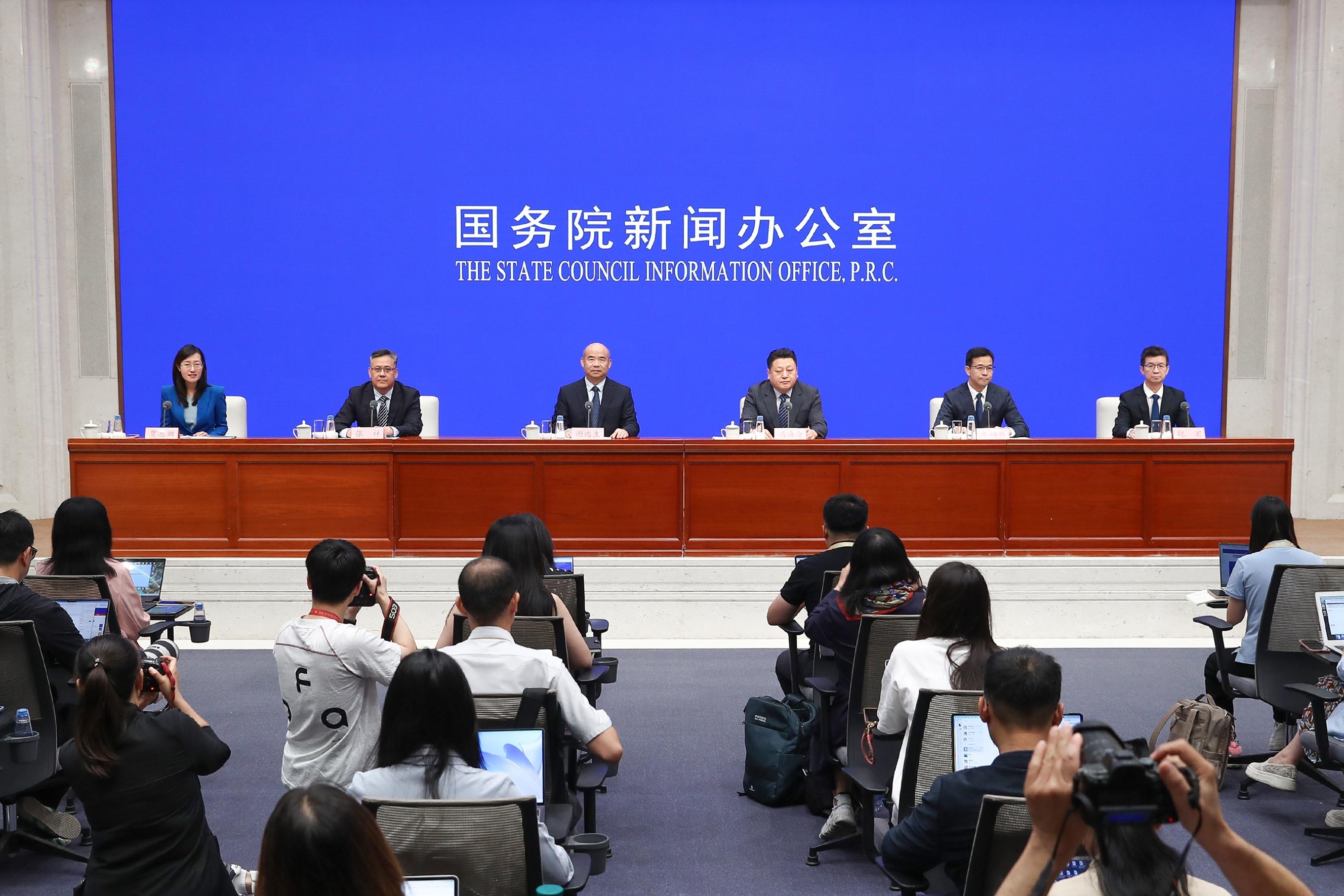
Xie Yuansheng:
Thank you for your question. AI is now bringing tangible changes to the way people work, live and study in all walks of life. The 15th Five-Year Plan clearly outlines the full implementation of the "AI Plus" initiative. Renowned traditional industries draw strength from craftsmanship passed down through generations. Embracing AI is not to abandon old crafts, but to give a pair of technological wings to these millennia-old skills, allowing them to flourish again and achieve new growth in the new era. The guidelines set out an overall approach of data-driven development, model support and real-world application. The document aims to ensure that traditional crafts retain their character, technological empowerment is grounded in practice and industrial development yields tangible results.
First, we should solidify the data foundation for renowned traditional industries. The craft knowledge and skills accumulated by renowned traditional industries are still largely locked in the experience and intuition of artisans. For example, the temperature curve of tea fermentation, the ratio of ceramic glaze ingredients and the processing standards for TCM have not yet been digitized or systematically collected. We are supporting major production areas in building "industrial brains." Through systematic data collection, standardized annotation and systematic organization, traditional craftsmanship passed down through generations can be turned into reusable and shareable data assets. This promotes the living inheritance of exquisite skills, rather than preserving them only in the memories of individual artisans.
Second, we should use large AI models to decode the principles behind traditional craftsmanship. We support close cooperation between research institutions and renowned enterprises in traditional industries, using large AI models to analyze traditional craftsmanship and map it into knowledge graphs. Step by step, this uncovers and organizes the tacit knowledge of processing tips, operating procedures and fault diagnosis passed down through generations. By doing so, we are able to unify production standards and stabilize product quality at the source. For example, in silk weaving, AI-assisted design can generate thousands of patterns in minutes, greatly shortening the product development cycle and making it possible for everyone to be a designer.
Finally, we should ensure that AI technology can take root in application scenarios. We encourage regions with the right conditions and leading enterprises to build a number of "future factories," such as smart pharmacies and intelligent kilns. These plants can track production in real time from raw materials to finished goods, trace any batch back through its production record and schedule output smartly and flexibly. For example, in tea making, AI visual recognition can accurately identify the color and shape of tea leaves and grade and sort them automatically. In porcelain making, AI algorithms can dynamically adjust kiln temperature parameters and reduce defect rates. In short, when craftsmanship meets technology, traditional crafts will flourish again, like old trees sprouting new buds.
That's all from me. Thank you.
Jia Huili:
In the interest of time, we will take only two more questions.