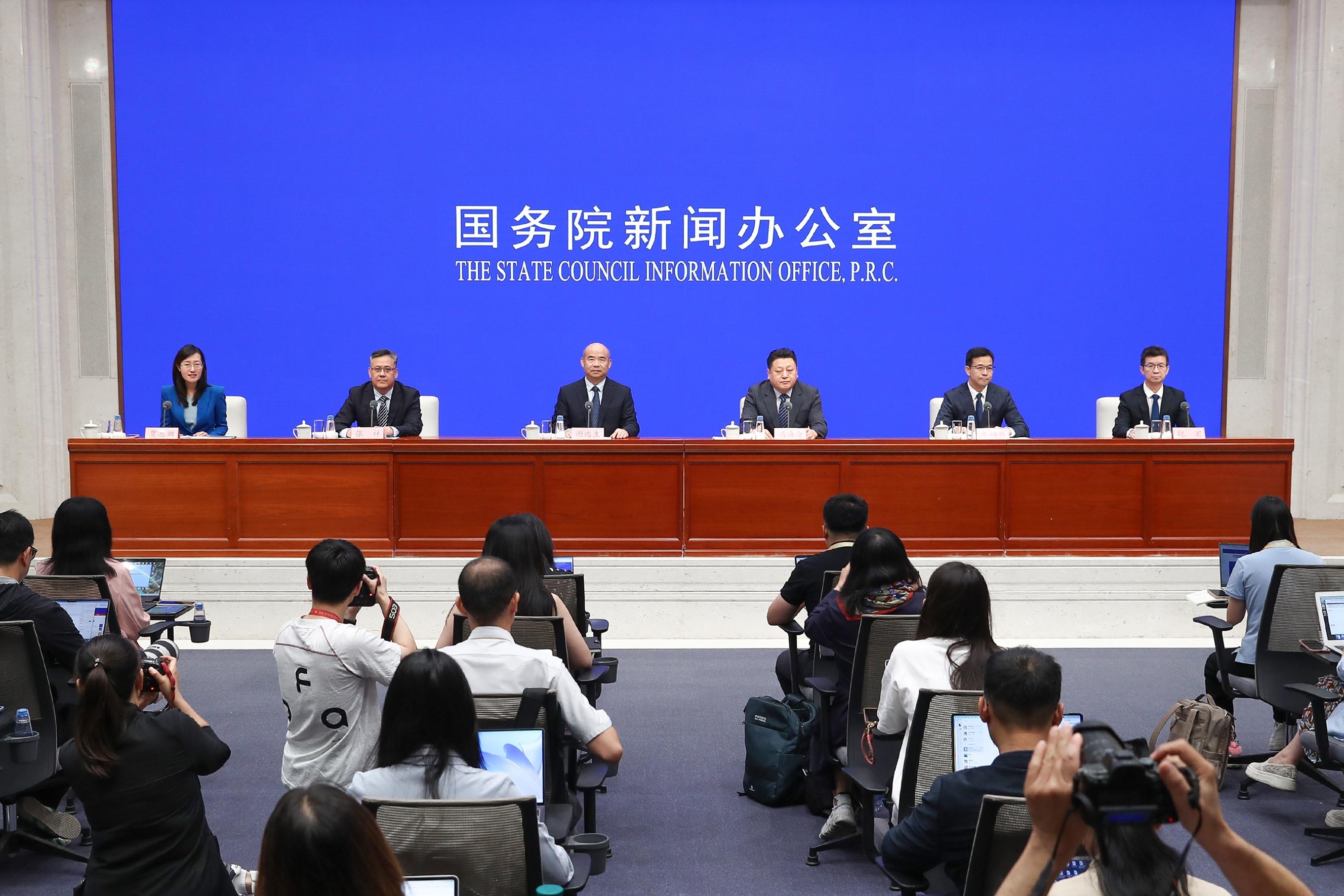
China.org.cn | November 2, 2026


CCTV:
Renowned traditional industries carry forward China's fine traditional culture and serve as an important vehicle for boosting consumption. What specific measures has the MIIT taken to unlock the consumption potential of these industries and to improve the quality and expand the scale of consumption? Thank you.
Xie Yuansheng:
Thank you for your question. Consumption is a hot topic drawing widespread public attention. The Central Economic Work Conference has listed "taking the expansion of domestic demand as priority and building a strong domestic market" as this year's primary task. Currently, Chinese consumers are increasingly shifting from "buying more goods" to "seeking better services and experiences." Renowned traditional industries align closely with the direction of consumption upgrading in the new era. While meeting material needs, they can also stir emotional resonance and offer cultural enrichment and aesthetic enjoyment, precisely satisfying demand for quality-oriented, cultural and experience-based consumption. Unlocking the consumption potential of these industries takes more than putting old products on shelves. It requires a coordinated push across products, settings and distribution channels to bring traditional crafts back to life, make them popular and take them into ordinary homes.
In product innovation, we aim to make the classic fashionable. Many classic products look dated and struggle to capture young people's attention. We will support time-honored enterprises in working with leading designers, well-known brands and fashion houses to combine traditional elements with modern aesthetics and practical function, creating high-value products that carry both cultural depth and contemporary appeal. Crossovers between traditional crafts such as celadon and wood carving and the animation and gaming sectors, for example, have produced many products popular with young people. Product design also needs to be updated to become more modern, stylish and international, so that traditional crafts can open up overseas markets through a visual language closer to international tastes.
In consumption settings, we aim to bring experiences to life. Consumption today is not just about buying a product; it is about buying the setting, the atmosphere and the feeling. We support the opening of creative markets and smart experience stores in commercial districts, pedestrian streets, scenic spots and cultural industrial parks. These venues put traditional crafts at center stage, from tea-making to embroidery and porcelain. Consumers can then try traditional techniques for themselves and immerse themselves in classic culture. We also encourage local authorities to develop nighttime spaces that combine exhibitions, garden tours and light shows, giving people somewhere to enjoy traditional culture and unwind after work and at weekends, thereby unlocking the consumption potential of the night-time economy.
On distribution channels, our goal is to bring good products closer to consumers. Through initiatives such as building a matrix of premium Chinese consumer brands, we are cataloging the country's renowned traditional industry resources, mapping where those industries are concentrated and encouraging local authorities to move faster in developing specialty production areas that play to their strengths. At the same time, we support opening dedicated display and sales areas for classic premium goods in key commercial districts, urban cultural venues and similar locations. The use of new channels such as e-commerce, livestreaming and short video is also encouraged to tell the story of these industries well and lift sales of their products. By bringing premium time-honored brands into port duty-free shops, downtown duty-free stores and high-end retailers, we will expand the outbound consumption and high-end gifting markets, so that consumers at home and abroad are willing to pay for China's premium time-honored brands. Thank you.