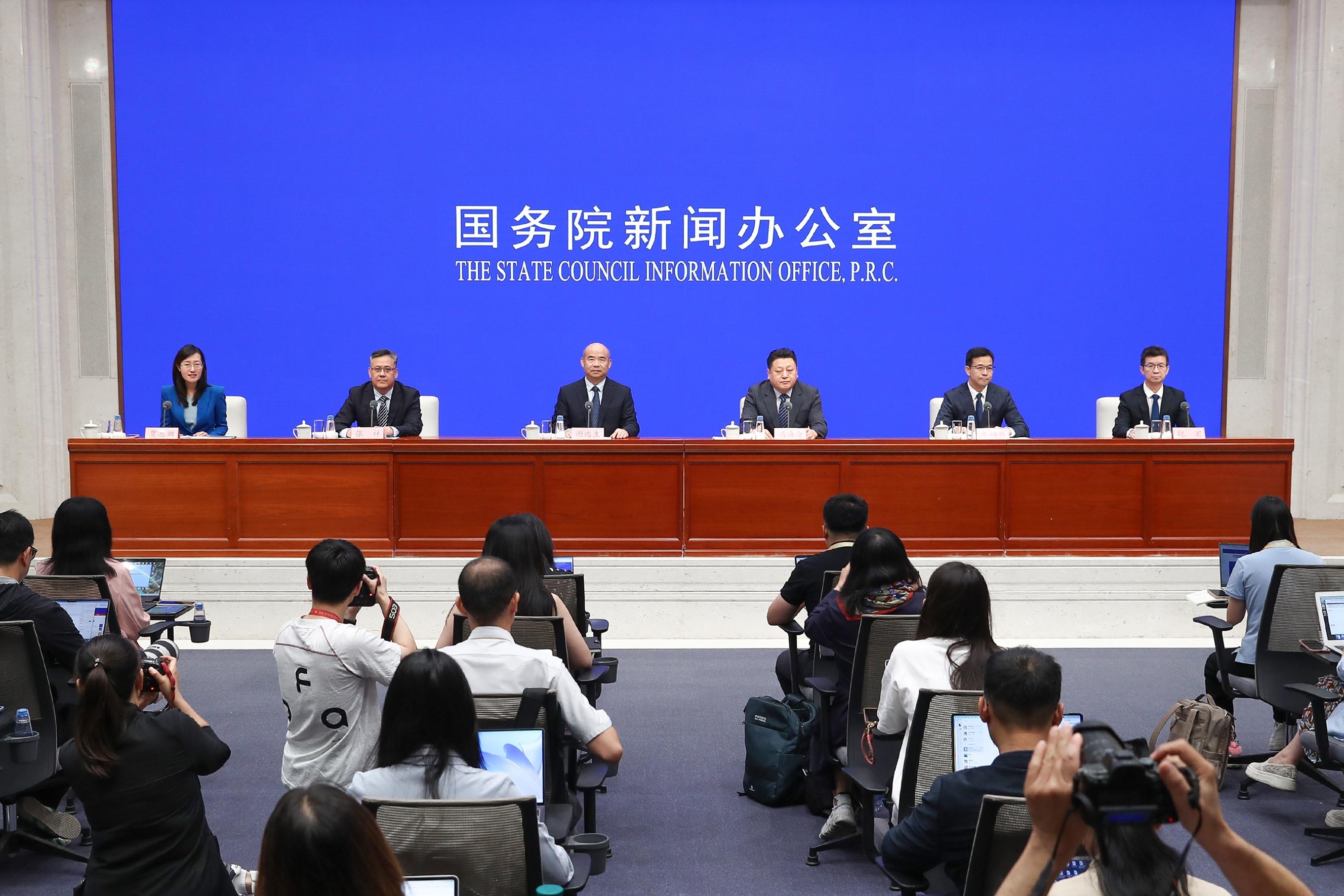
China.org.cn | November 2, 2026


Economic Herald:
Silk, tea, porcelain, TCM and other renowned traditional industries are closely tied to intangible cultural heritage (ICH). In recent years, the MCT has carried out a great deal of work on protecting ICH. What role has that played in promoting the development of these industries? Thank you.
Shan Gangxin:
Thank you for your interest in the protection and inheritance of ICH. As we all know, ICH is a vivid testament to the enduring continuity of Chinese civilization. Today happens to be the White Dew, one of the 24 solar terms, so I wish everyone good health and a fruitful year. As is known to all, ICH carries the production wisdom, life traditions and humanistic spirit accumulated by the Chinese nation over thousands of years. In particular, categories such as traditional fine arts, traditional crafts and traditional medicine share the same origin and are inherited from the same lineage as the renowned traditional industries you just mentioned, such as silk, tea and porcelain. The protection and inheritance of ICH provides core technical support and profound cultural heritage for industrial development, and they work together to carry forward and promote China's fine traditional culture. In recent years, acting on the important instructions of General Secretary Xi Jinping on strengthening the systematic protection of ICH, we have prioritized protection, actively promoted the integration of ICH into modern life, continuously empowered socio-economic development and met the public's expectations for a better life. We have focused our work on three key areas.
First, we have strengthened the protection of ICH items. Protection is the prerequisite for inheritance and serves as the root of industrial development. Only by safeguarding the root can the industry flourish. From the early stages of rescue safeguarding, to today's holistic, productive, digital and everyday protection efforts, a large number of highly valuable ICH items have achieved living inheritance these years. This has provided the industry's development with roots that can be followed and sources that can be traced. Currently, China has 45 ICH items inscribed on UNESCO's ICH lists and has recognized more than 100,000 ICH items at the national, provincial, municipal and county levels. "Sericulture and silk craftsmanship of China," "traditional firing techniques of Longquan celadon," "acupuncture and moxibustion of traditional Chinese medicine" and "traditional tea processing techniques and associated social practices in China" have been successively inscribed on the Representative List of the Intangible Cultural Heritage of Humanity. This July, the "Jingdezhen Handicraft Porcelain Industry Sites" project was inscribed as a World Heritage site, opening up vast opportunities for renowned traditional industries, especially the silk, ceramics, TCM and tea industries, to go global.
Second, we have cultivated a pool of ICH inheritors. People are the core of the protection and inheritance of ICH, and also the key to its industrial development. We have focused on investing in people, and have continuously strengthened the training of ICH inheritors. In recent years, we have implemented the Chinese Intangible Cultural Heritage Inheritor Training Program and the Youth Inheritor Cultivation Initiative. Over the past decade, more than 200 colleges and universities nationwide have participated in the training program, benefiting more than 200,000 inheritors. Over the years, we have been delighted to see that some second-generation inheritors, third-generation inheritors and young inheritors, who have mastered traditional skills and have innovative ways of thinking, have taken over the baton of inheritance. Among them are well-known figures such as Yang Changqin, an inheritor of Chishui bamboo weaving, and Jin Ruirui, an inheritor of Chuxiong Yi embroidery. These inheritors born in the 1980s and '90s have even become deputies to the National People's Congress (NPC). It is precisely the dedication of successive generations of craftspeople, across the older, middle-aged and younger generations, that has provided solid talent support for the passing down of renowned traditional industries.
Third, another particularly important aspect, is the integration into modern life. The scientific and rational utilization and the embodiment of contemporary value are the sources of ICH revitalization and the driving force for industrial development. Over the years, we have continued to uphold fundamental principles while breaking new ground. We have implemented the traditional craft revitalization plan, and held a series of ICH consumption promotion activities, such as the "China Intangible Cultural Heritage Expo," the "International Festival of Intangible Cultural Heritage, Chengdu, China," and the "Intangible Cultural Heritage Goods and Chinese Trends — Four Seasons Intangible Cultural Heritage Shopping Month," continuously meeting new consumer needs under the guidance of brand building. By the end of last year, there were 14,900 ICH workshops nationwide, helping more than 1.3 million people find employment and increase their incomes. The media often say that our small workshops are connected to large markets and that traditional crafts have given rise to new industries. These small workshops have gradually grown in popularity and reached thousands of households. Willow weaving in Linyi, Shandong province is a particularly typical example. It has evolved from traditional wicker baskets in the past to fashionable ICH toys and novel products such as cat trees. It has formed a product system with more than 300 patents and over 20,000 styles, with its products being sold overseas to more than 80 countries and regions through e-commerce platforms. In addition, there are many other ICH items such as batik from Danzhai in Guizhou province and purple pottery from Jianshui in Yunnan province, forming a cluster of workshops, driving distinctive local cultural industries from "fingertip skills" to a "fingertip economy" and becoming an industrial development advantage that enriches and benefits the people.
During our field research, an embroiderer at one of the workshops shared a wonderfully evocative phrase: "During the busy farming season, we work the fields; during the slack season, we embroider. This craft keeps us healthy and supports our family." This statement reflects their cultural confidence and has also become a new normal in their rural life. Today's ICH not only embodies cultural inheritance, but also reflects the warmth of people's livelihoods and market popularity. As you may have seen, Hainan Li brocade and Guangdong gambiered silk have graced the stages at international fashion weeks. Another highlight this year is that creative products from eight ICH workshops, including Ningxia hemp weaving, Zhejiang Huzhou writing brushes and Guangxi Zhuang brocade, were selected as officially licensed products for this year's FIFA World Cup. In particular, the Ningxia hemp weaving workshop produced a horse made from black hemp rope, symbolizing a "victorious dark horse," which proved very popular and has become a hot product online. People have found that the growing popularity of ICH has started to produce benefits for related industries. It has not only allowed the world to see China's craftsmanship, but also helped renowned traditional industries integrate into modern life and step onto the global stage, showing the world our boundless potential and vigorous vitality. Of course, all of this is inseparable from the publicity and promotion by our friends from the media here today. I would like to thank all of you for your continued interest, support and reporting on the protection and inheritance of ICH. Thank you.