China.org.cn | November 2, 2026


ThePaper.cn:
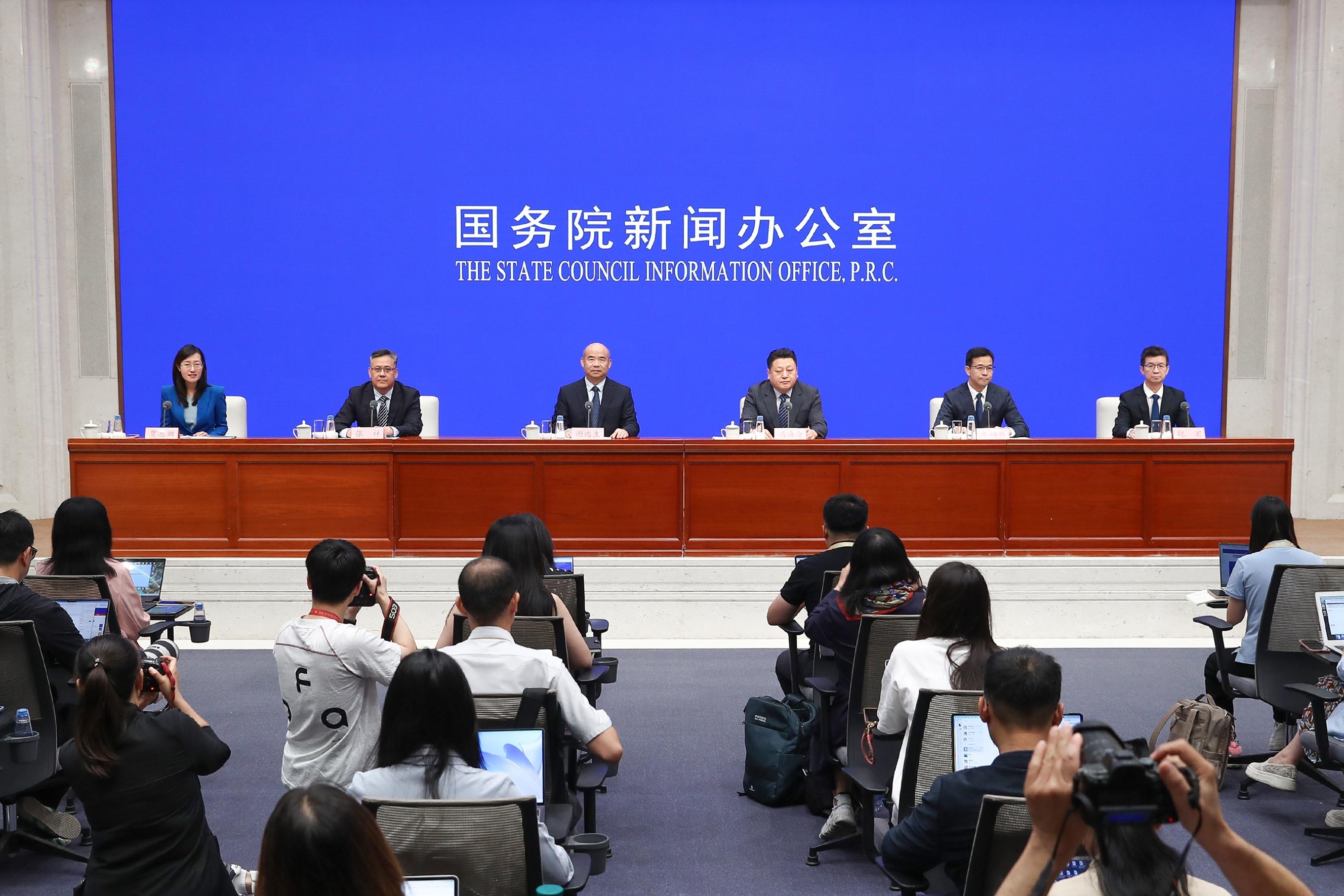
We have noticed that while renowned traditional industries have deep cultural roots and strong craftsmanship, there is still room to improve their overall brand competitiveness. The document just released proposes creating 100 famous Chinese consumer brands by 2028 and cultivating a number of world-class enterprises and well-known brands by 2030. How can that cultural depth be turned into market competitiveness? Thank you.
Feng Haicang:
Thank you for your question. This is a very important issue. As we know, renowned traditional industries carry profound historical and cultural roots, unique traditional skills, and distinctive regional characteristics, and they embody a broad sense of national cultural identity. For a long time, though, brand building has lagged, and value added has remained low. Fine craftsmanship has not commanded high prices, and good products have not become strong brands. Silk is one example. Some 90% of our silk products are exported, but most of them only involve primary processing of raw materials and contract manufacturing. Chinese brands have little say in the market, and their international competitive edge is not fully apparent. Turning cultural depth into market competitiveness, making traditional crafts both admired and commercially successful, and restoring renowned traditional products to a high-end position in international markets are the challenges we have to solve. The MIIT is focusing on two areas.
The first is brand cultivation. For enterprises, we will move faster to build a lineup of famous Chinese consumer brands to include more renowned traditional enterprises, and help build a number of world-class classic brands. At the sector level, most producers of Suzhou embroidery and Longquan celadon are highly skilled but operate at small scale, mainly small- and medium-sized enterprises. We will encourage these firms to refine and deepen their expertise. We will also support them in adopting modern management and production methods and in following a path of specialized, refined, distinctive and innovative development. At the industry level, our main focus is on optimizing the regional layout. We are determined to cultivate a number of renowned traditional industry clusters, each worth 100 billion yuan, raising the level of regional industrial agglomeration.
The second is brand promotion, where we will focus on four initiatives: a conference, namely the first national exposition of renowned traditional industries; an event, the National Tour of Famous Chinese Consumer Brands; a competition, the China Famous Consumer Brands Industry Innovation Competition; and a new organization, the International Silk Organization. We will encourage enterprises to take part in national expos and displays, widen the overseas promotion channels open to renowned traditional industries, and work to bring their products into the international high-end consumer market. In addition, we are running a "four hundreds" promotion campaign, which involves appointing 100 brand ambassadors, filming 100 micro-documentaries, producing 100 AI short dramas and developing 100 experience routes built around renowned traditional products. Through these measures, we will draw on the real material behind the growth of Chinese brands and tell the stories of renowned traditional industry brands rooted in Chinese culture and built on innovation in the new era. Thank you.