China.org.cn | March 17, 2026


21st Century Business Herald:
Fiscal and tax policies are a vital tool to support sci-tech innovation. The Ministry of Finance rolled out a series of initiatives in 2025 to bolster self-reliance and strength in science and technology. What are the outcomes? What are the key priorities for the next step to speed up fostering new growth drivers? Thank you.
Liao Min:
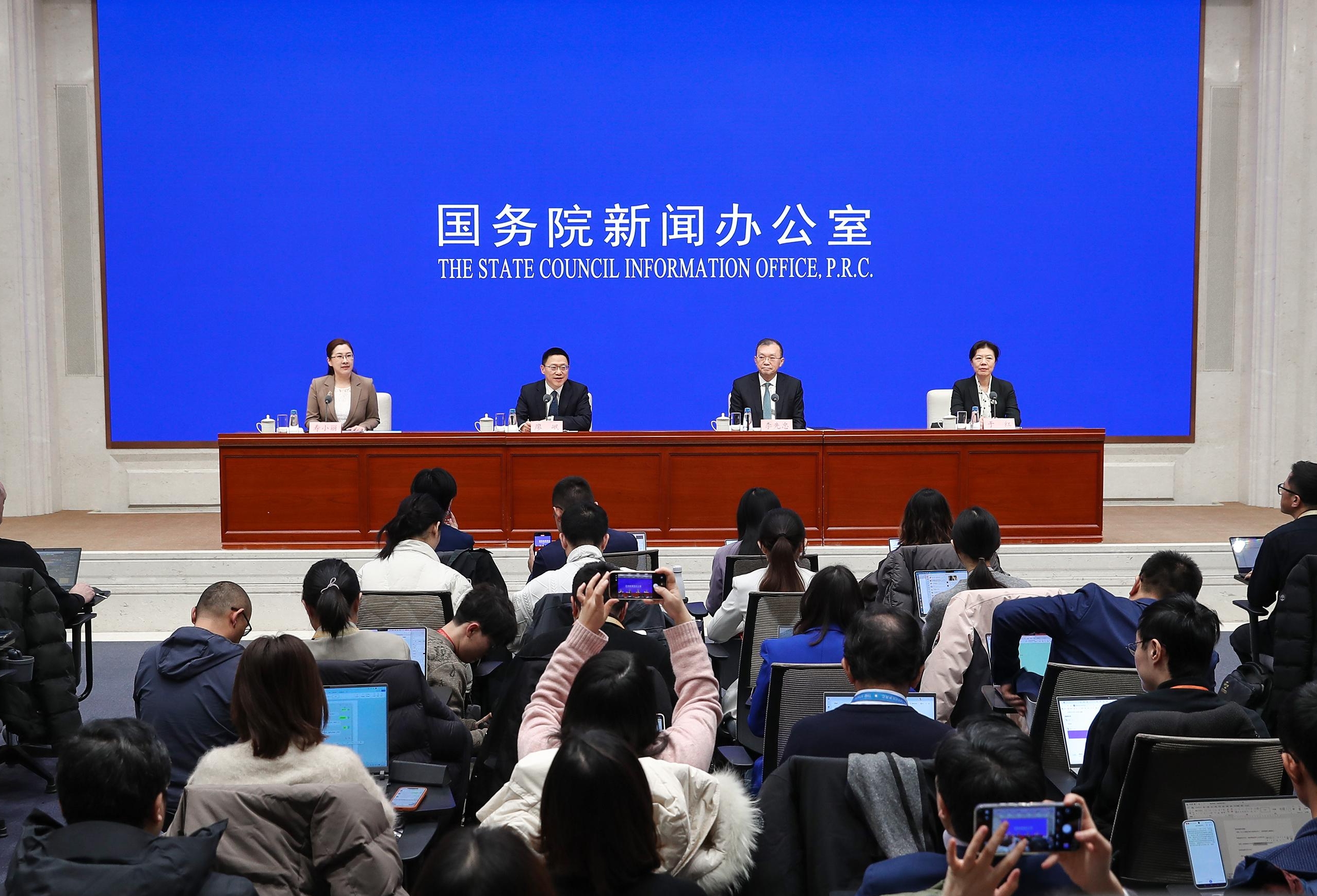
Thank you for your question. I'd like to invite Ms. Yu to answer.
Yu Hong:
Thank you for your question. You have raised a very good question. To advance high-quality development, the top priority is to accelerate high-level self-reliance and strength in science and technology, while actively developing new quality productive forces. In 2025, in accordance with the decisions and arrangements of the Party Central Committee and the State Council, the Ministry of Finance leveraged a full range of policy tools. These included funding support, tax incentives, fiscal finance and government procurement to bolster the integrated development of scientific and technological innovation and industrial innovation. This will accelerate efforts to achieve greater self-reliance and strength in science and technology.
First, we boosted the volume of funding input. Central government spending on science and technology rose by 10%, a rate well above that of its general public budget. At the same time, the mechanisms for allocating, managing and utilizing central government sci-tech funds was refined, with funding prioritized for basic research, applied basic research and national strategic science and technology tasks. Fiscal expenditures have driven rapid growth in R&D investment across society, with total investment reaching 3.63 trillion yuan in 2024, steadily ranking second in the world.
Second, we reduced innovation costs. Tax incentives covering multiple tax types and various innovation stages were effectively implemented to alleviate the tax burden on enterprises engaged in scientific and technological innovation. At the same time, we activated the government financing guarantee system, guided localities to roll out special sci-tech innovation guarantee programs, and lower financing thresholds and costs for tech-based SMEs. As Mr. Liao noted earlier, these measures helped 34,400 enterprises secure over 140 billion yuan in bank loans for the year, with overall financing costs falling below 5%.
Third, we amplified the impact of technological application. We boosted demand-driven innovation, promoted a purchaser-supplier collaborative innovation model in government procurement, and rolled out insurance compensation policies for first-set equipment and first-batch products. These measures have brought more innovative achievements from the labs to production lines, creating a value multiplication effect. Supported by relevant policies, major landmark tech products including AI and robotics have entered the global stage, while sectors such as integrated circuits have achieved innovation breakthroughs across the entire industry chain. China has emerged as one of the economies with the most rapid growth in innovation capacity. In 2025, China entered the world's top 10 of the Global Innovation Index (GII) for the first time.
Next, we will continue to vigorously promote high-level technological self-reliance and self-strengthening, accelerate the cultivation of new drivers of growth, and promote the optimization and upgrading of the economic structure, with a focus on the following four aspects.
First, we will make good use of government investment funds. We will support the national venture capital guidance fund in "investing early, investing small, investing long-term, and investing in hard technology". We will also support enterprises in focusing on cutting-edge fields to carry out original and disruptive technological research.
Second, we will support the advancement of quality improvement and upgrading of key industries. We will strengthen fiscal and financial coordination to support technological innovation by providing fiscal interest subsidies for loans related to technological innovation. The central bank will also provide relending support. We will continue to promote new technological transformation in manufacturing and the digital transformation of small and medium-sized enterprises, thereby accelerating intelligent, green, and integrated development. This will consolidate and strengthen the foundation of the real economy.
Third, we will ensure the principal position of enterprises in sci-tech innovation. We should fully implement structural tax and fee reduction policies, with priority given to supporting sci-tech innovation and the development of the manufacturing sector. We will continue to leverage the reward and subsidy policy to promote the development of specialized, refined, distinctive, and innovative "little giant" enterprises, as well as policies such as the National Fund for SME Development. This aims to improve the innovation capacity and professionalism of SMEs, and help cultivate more specialized, refined, distinctive, and innovative enterprises, enterprises leading an individual field of the manufacturing industry, and gazelle and unicorn enterprises.
Fourth, we will accelerate the efficient transformation and application of major scientific and technological achievements. We will implement the insurance compensation policy for newly-developed equipment and materials, and continuously support the iteration, updating, application and promotion of eligible sci- tech innovation products.
Thank you for your questions.