China.org.cn | March 17, 2026


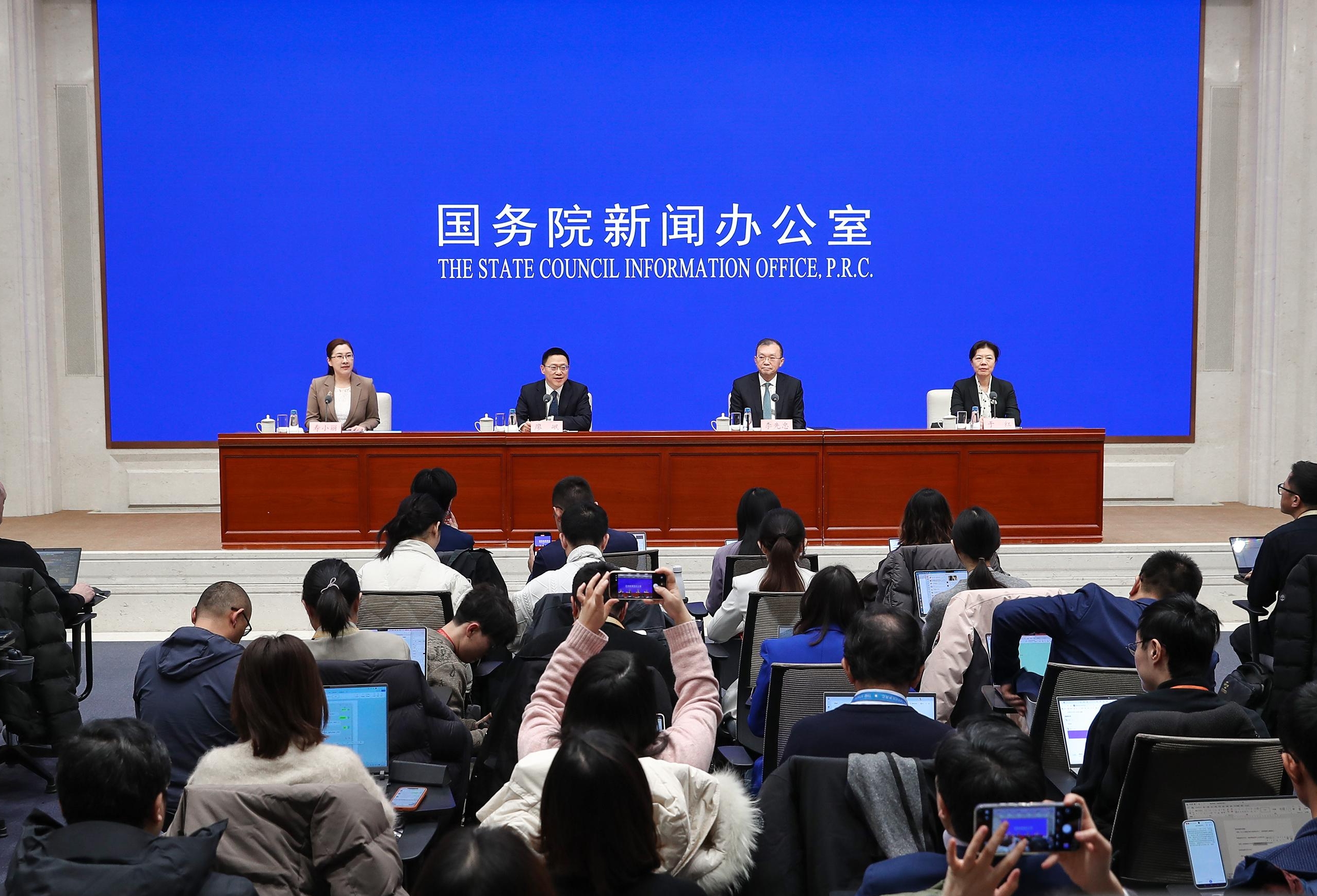
Shanghai Securities News:
Among the package of measures, four are focused on stimulating private investment. What tangible benefits will these policies bring to enterprises?
Liao Min:
Thanks for your question. I will answer it. Stimulating private investment is the centerpiece of this policy package. These four policies designed to support private investment cover a wide range of sectors and provide substantial backing. They deploy a diverse toolkit, including credit support, interest subsidies, guarantees, and compensation mechanisms. These measures will work together to deliver two main direct benefits to enterprises:
On one hand, they reduce financing costs, addressing the issue of expensive financing for private enterprises. Both the newly introduced interest subsidy for micro-, small- and medium-sized enterprise loans and the optimized equipment upgrade loan subsidy can provide 1.5 percentage points off loan amounts. We have also significantly expanded the scope of eligible sectors and loan purposes to facilitate business financing. Let me give you an example. Say an agricultural machinery manufacturer wanting to build an intelligent production line to meet demand from new orders. Suppose the project loan is 50 million yuan. With the 1.5 percentage point interest subsidy over two years, this manufacturer could reduce its interest costs by 1.5 million yuan in total. This significantly helps enterprises lower costs and increase profit margins, making them more willing and able to pursue such investments.
On the other hand, they lower the financing threshold, addressing the difficulty of obtaining financing for private enterprises. This is mainly achieved through special guarantees and bond issuance risk-sharing, helping enterprises secure funding. For indirect financing, we've established a special guarantee program for private investment. This new policy raises the guaranteed line of credit, increases the risk-sharing ratio and lifts compensation caps, giving banks the confidence and willingness to lend more. Let me give another example. Suppose a company wants to apply for a medium-to-long-term loan of 20 million yuan, but its own creditworthiness may be insufficient, requiring guarantee support. Under the traditional guarantee model, the maximum quota for a single enterprise is typically capped at 10 million yuan. With the new program raising this to 20 million yuan, the company's guarantee needs are easily met. Meanwhile, the national financing guaranty fund's risk-sharing ratio will increase from the current cap of 20% to 40%. This means national-level risk-sharing for the loan just mentioned will rise from 4 million yuan to a maximum of 8 million yuan. In other words, for a 20 million yuan loan, the national-level guarantee could reach up to 8 million yuan, which is a substantial level of backing. For direct financing, we recognize that private enterprises still face difficulties issuing bonds. The central government has therefore allocated risk-sharing funds that, combined with relevant central bank policy tools, can absorb most of the related bond issuance risks. This will help more private enterprises access diverse financing channels.
In summary, we expect that through this combination of measures, we can substantially reduce financing costs for enterprises, boost their profitability, and ultimately inject new dynamism into private investment. Thank you.
Bloomberg News:
The ministry announced this month the cancellation or reduction of export tax rebates for more than 200 categories of goods. This policy has been interpreted by some as intended to counter involution and address trade imbalances. Will there be additional fiscal policy measures on these fronts this year? And do you have any information to elaborate on them? Thanks.
Liao Min:
Thank you for your questions. I would like to invite Mr. Li to answer these questions.
Li Xianzhong:
Thank you for your questions. Export tax rebates are an important component of the tax system. For a long time, China has implemented export tax rebate policies for most products, with timely adjustments in accordance with the needs of economic and social development. As you mentioned, the MOF and the State Taxation Administration recently issued a joint announcement clarifying that starting from April 1, 2026, export tax rebates for products such as photovoltaics and phosphorus chemicals will be canceled, and export tax rebates for battery products will be canceled over two years. This is a further policy adjustment based on China's actual situation, following the reduction of export tax rebate rates for photovoltaics, batteries and other products in December 2024. Currently, China's economy and society have entered a stage of accelerated, green and low-carbon oriented, high-quality development. This adjustment to the export tax rebate policy will facilitate efficient resource utilization, reduce environmental pollution and carbon emissions, and promote a comprehensive green transformation of economic and social development. At the same time, it will also help guide rational adjustment of the industrial structure, promote industrial transformation and upgrading, comprehensively address involution-style competition, and drive high-quality economic development. Next, the MOF will work with relevant departments to ensure the effective implementation of the policies. That's all from me for the questions. Thank you.