China.org.cn | November 3, 2026


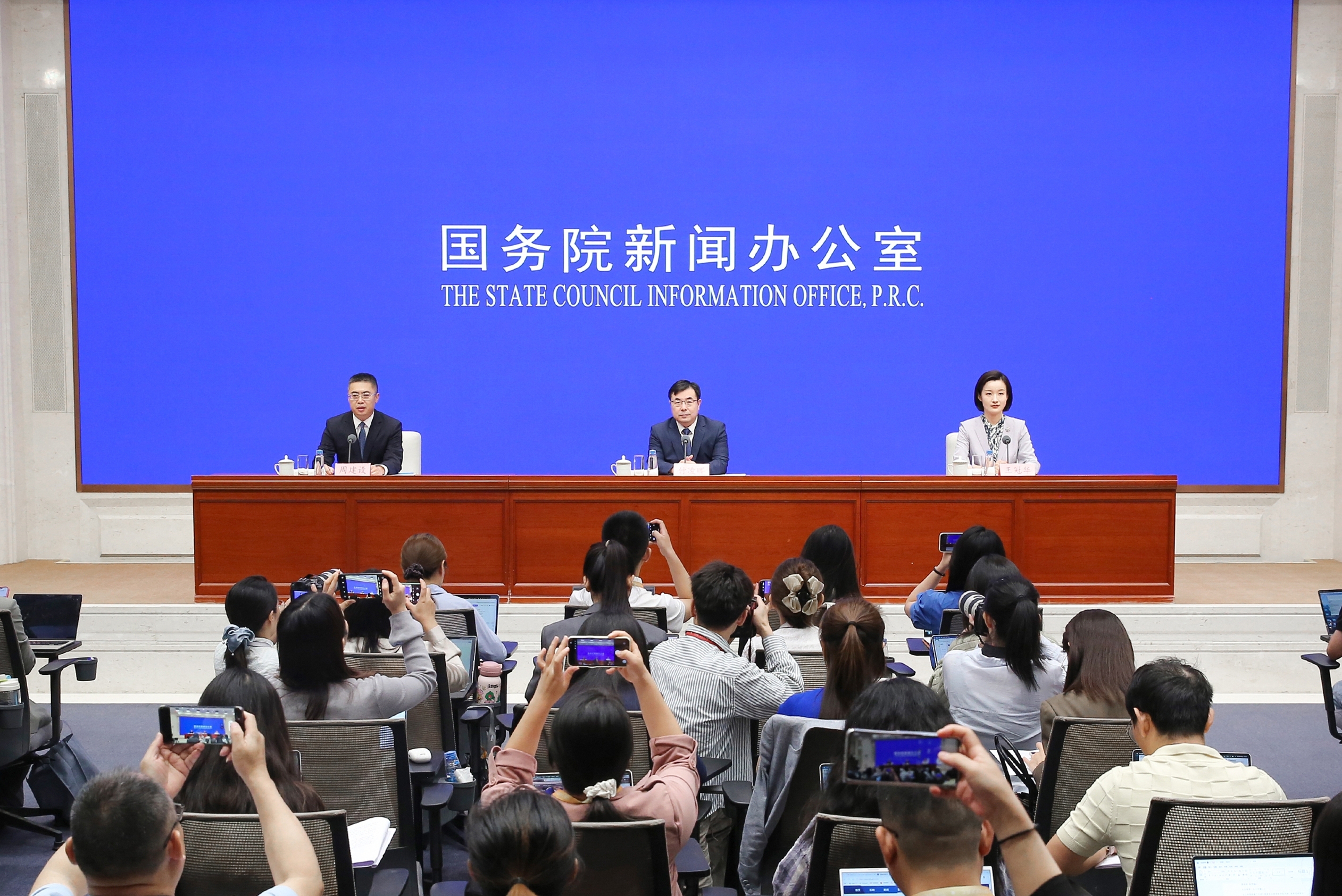
Market News International:
August trade data showed relatively strong growth in both exports and imports, while the official manufacturing PMI remained in contractionary territory at 49.8. How does the NBS explain this divergence? What does it say about the relative strength of external and domestic demand in the economy? And what policy implications does this have? Thank you.
Fu Linghui:
Thank you for your questions. This is a question that many media outlets are paying close attention to, with much of the focus on the relationship between domestic and external demand. The state of China's domestic and external demand needs to be assessed objectively.
Internationally, there is considerable pressure on trade growth. The global landscape this year has been rather complex, especially with the volatility in the global energy markets caused by geopolitical conflicts in the Middle East, which has increased global inflationary pressures. This kind of situation leads to rising inflation that dampens trade, investment and production, weakening the momentum of global economic growth. Major international organizations have lowered their forecasts for global economic growth for the year, and such downward revisions also imply a headwind for global trade growth. In this complex and turbulent environment, production activities in many countries have been disrupted, pressure from supply shortages has intensified, and economic activities have encountered difficulties. Domestically, relying on its complete industrial system and stable and strong production capacity, China has not only ensured the smooth operation of its domestic economy, but also made a positive contribution to addressing global supply shortages, thereby driving relatively rapid growth in China's imports and exports of goods. China's rapid growth in foreign trade is based on its ability to adapt to changing global demand and its own relatively stable and strong supply capacity.
In China's case, the trend of expanding demand remains unchanged. Despite the rapid growth in foreign trade, China's economic growth has mainly been driven by domestic demand. In the first half of this year, domestic demand contributed over 80% to economic growth. Despite external shocks, China's economy has remained generally stable, with the consumer market steadily expanding and service consumption maintaining robust growth, supporting the expansion of domestic demand. In the first eight months, total retail sales of consumer goods and services increased by 2.5% year on year, with retail sales of services increasing by 4.9%. The effect of expanding demand in driving production has continued to emergey, with industrial production maintaining relatively rapid growth and the service sector growing steadily. In the first eight months, the value added of industries above the designated size increased by 5.3% year on year, and the index of service production increased by 4.7% year on year, maintaining relatively rapid growth. Market supply and demand have also remained stable. In the first eight months, the CPI rose by 0.9% year on year, and the producer prices for industrial products rose by 2% year on year. These developments indicate that domestic demand in China is expanding, and the economy has continued to operate steadily.
The manufacturing PMI has been in contraction territory for the past two months. This is mainly due to recent extreme weather events in some regions, which disrupted the stable continuity of production, together with some manufacturing industries entering their off-season, which also affected the manufacturing PMI. In August, both production activities and demand in the manufacturing sector improved. The production index in the manufacturing PMI was 50.4%, up from the previous month; while the new orders index also rebounded to 50.6%, with both indexes in expansion territory.
Based on the above, we can see that the economic situation cannot be assessed based on just one or a few indicators. We must analyze the factors behind the changes in these indicators, and more importantly, conduct a comprehensive and objective assessment before drawing the correct conclusions. Thank you.