China.org.cn | November 3, 2026


South China Morning Post:
Fixed-asset investment fell 7.2% year on year from January to August, while the market had originally expected the launch of major projects to drive investment higher this year. How does the NBS interpret the current figures, and what are its predictions for investment trends going forward? Thank you.
Fu Linghui:
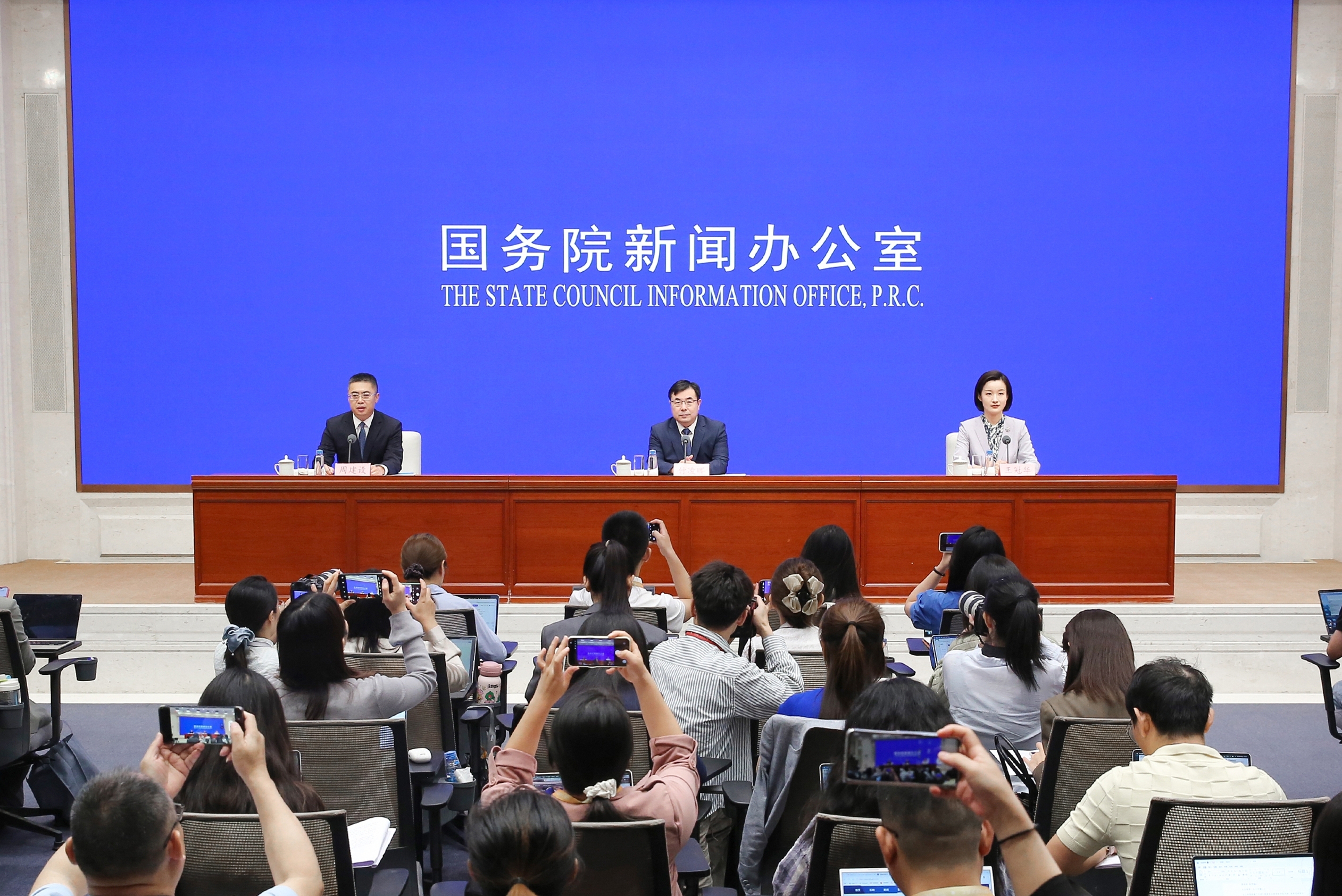
I would like to invite Ms. Wang to answer your questions.
Wang Guanhua:
Thank you for your questions. Investment is something everyone's been watching closely. China's fixed-asset investment fell 7.2% year on year in the first eight months of this year, which was the result of a combination of factors. On the one hand, extreme weather such as high temperatures, typhoons and flooding occurred frequently during the summer, disrupting project construction in some regions. On the other hand, the external environment remained complex and volatile, with increasing uncertainties and unpredictable factors, while China was still in the process of growth drivers transformation, making companies more cautious in their investment decisions. It should be noted that as China's economy moved into a new stage of development, investment efficiency can no longer be judged simply by the speed of growth. Whether investment is effective, whether it is directed toward areas of transformation and upgrading, and whether it can build up momentum for long-term economic development — these are the dimensions that deserve greater attention. In the first eight months, China's fixed-asset investment remained considerable in scale, approaching 30 trillion yuan. A closer look at its structure and quality shows that investment in new growth drivers expanded against the odds, with investment growth even accelerating in many sectors. Investment shifted from a past focus on size and scale to greater emphasis on scientific and technological innovation, industrial upgrading and foundational support. This optimization in where the funds are directed is precisely what we hope for and need in pursuing high-quality development. Let me break it down:
First, investment shifted toward innovation-related areas such as R&D. As the innovation-driven development strategy was further implemented, enterprises steadily increased their R&D spending and placed greater emphasis on building up investment in intellectual property products. Investment in intellectual property products increased 9.2% year on year in the first eight months, 0.1 percentage point faster than in the January-to-July period, accounting for 15.2% of total investment, up 2.3 percentage points year on year. Within this, investment in computer software and databases grew 10.9%, and R&D investment rose 7.8%. Together, these two parts accounted for more than 95% of investment in intellectual property products, making them the core engine driving such investment. The main output of investment in intellectual property products is knowledge-based assets such as technology, software and databases, which can both facilitate the transformation and application of sci-tech achievements and effectively empower industrial transformation and upgrading and improve production efficiency. This is a form of energy-storing investment that benefits both the present and the long term.
Second, investment clustered in advanced manufacturing, the digital economy, and green and low-carbon sectors. In the first eight months, investment in high-tech industries grew 5.2% year on year, 0.2 percentage point faster than in the January-to-July period, marking the third consecutive month of accelerating cumulative growth. This shows that, driven by both policy guidance and market demand, localities moved faster to deploy emerging and future industries, and investment increasingly clustered in new sectors. Breaking it down by industry, rapid growth in core AI technologies and application demand drove companies to increase their investment in related industrial chains. Investment in specialized electronic materials manufacturing and integrated circuit manufacturing increased 8.5% and 12%, respectively. The development of the new energy vehicle industry, coupled with the strong market demand for energy storage, drove investment in lithium-ion battery manufacturing up 20.6%. At the same time, large-scale equipment renewal policies continued to take effect, with enterprises more willing to renew equipment and accelerate upgrading. In the first eight months, investment in equipment purchases increased 9.3% year on year, 0.3 percentage point faster than in the first seven months, accounting for 19.5% of total investment.
Third, investment was channeled toward modernized infrastructure. This year marks the start of the 15th Five-Year Plan (2026-2030), and construction has begun on a series of major projects, including those under the "Six Networks" which are water networks, new-type power grids, computing power networks, next-generation communication networks, urban underground pipeline networks and logistics networks. Steady progress was achieved in the construction of projects including cross-regional transportation arteries, major energy and water conservancy projects, new-type infrastructure and urban renewal, and these efforts played an increasingly vital role in supporting high-quality development. In the first eight months, investment in internet and related services, which is related to the "Six Networks" initiative, increased 42% year on year. Investment in air and water transport grew 16.7% and 14.7%, respectively, while investment in the power supply sector rose 12.7%. Official data shows that as of late June, China had built more than 70 computing transmission channels connecting computing hubs.
Overall, China's investment structure is moving toward innovation-driven and high-quality development, with investment quality and returns steadily improving. At present, central budgetary investment has been largely disbursed, the issuance and use of local government special-purpose bonds are accelerating, and funds from new policy-based financial instruments will be deployed without delay. Construction on the "Six Networks" is moving forward smoothly, and policies are carried out in a more coordinated way. Together, these will help further unlock investment potential and drive high-quality economic and social development through effective investment. Thank you.