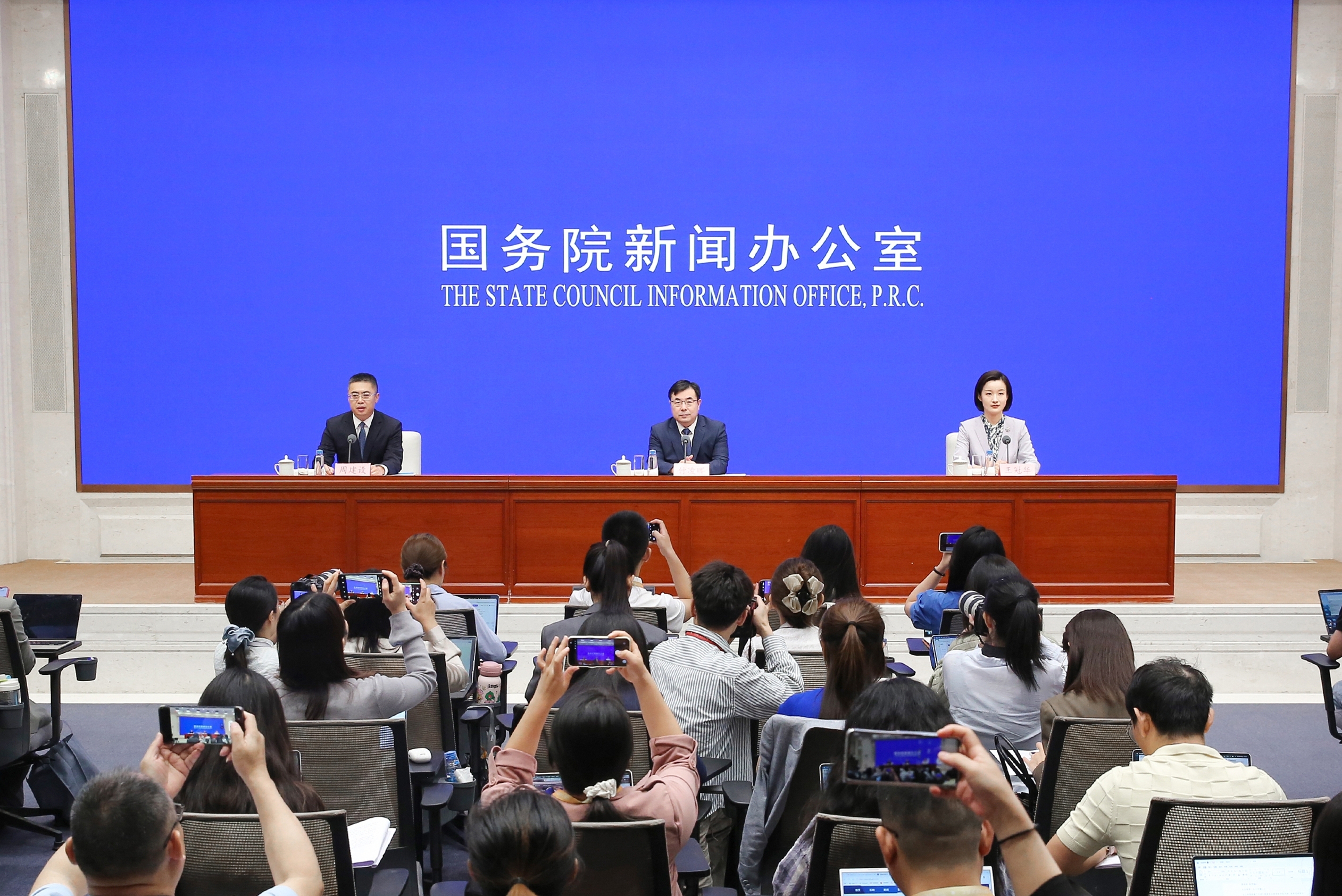
China.org.cn | November 3, 2026


CCTV:
We have seen that since the beginning of this year, the external environment has been marked by changes and turbulence, but China's economy has proved remarkably resilient in the face of such a complex situation. I would like to ask the spokesperson: How would you assess the performance of the national economy in August, and what highlights and positive changes have emerged? Thank you.
Fu Linghui:
Thank you for your question. People are paying close attention to the economic performance in August. In August, international geopolitical conflicts continued, while global commodity markets, especially energy markets, experienced persistent price fluctuations, posing challenges to the stability of global industrial and supply chains. Domestically, some regions have been hit by frequent natural disasters, increasing the pressure on disaster prevention, mitigation and relief efforts. Amid this complex environment, more proactive and effective macroeconomic policies have continued to take effect. With the further advancement of a unified national market, China's economy has withstood pressure and maintained an overall stable and positive development trajectory.
Based on the major economic indicators for August, the economy was mainly characterized by three areas of stability and two areas of rapid growth. The three areas of stability were seen in production, employment and prices.
First, production remained stable. The international crude oil market continues to fluctuate amid ongoing geopolitical conflicts in the Middle East, and supplies of some key raw materials remain constrained. As a major global energy importer and manufacturing nation, China faces considerable pressure to ensure a stable energy supply and maintain steady enterprise production. China has stepped up efforts to ensure domestic energy supply and promoted diversified imports. In addition, the significant progress made in China's green energy transition in recent years has effectively guaranteed domestic energy supply and helped support stable production. In August, the value-added output of industrial enterprises above designated size rose 5.2% and the services production index grew 4.1%, both remaining generally stable.
Second, the job market remained generally stable. Stable production has laid a solid foundation for stable employment. Steady production at enterprises has helped stabilize labor demand. Meanwhile, the service sector has considerable capacity to absorb workers. Emerging service industries such as information services and software and information technology services have grown rapidly, making an important contribution to employment stability. In August, the surveyed urban unemployment rate stood at 5.3%, up 0.1 percentage point from July, mainly due to the seasonal influx of newly graduated students into the labor market. The rate for the main working-age population, namely the 30-59 age group, was 3.9%, unchanged from both the previous month and the same period last year, remaining generally stable. From an industry perspective, although employment in some sectors declined year on year due to structural adjustments, the overall number of employees in China's manufacturing sector remained stable. Employment in information transmission, software and information technology services increased significantly. Driven by the development of domestic cultural tourism and leisure, the accommodation and catering industry also expanded employment, thereby contributing to overall employment stability.
Third, prices remained stable. Stable production has helped create favorable conditions for price stability. International geopolitical conflicts have exacerbated volatility in global commodity markets, impacting price stability in major countries worldwide. Inflation in major developed economies has also risen significantly this year. In China, in response to these pressures and challenges, we have stepped up efforts to ensure market supply, strengthened the production of essential goods, effectively guaranteed market supply and promoted price stability. In August, the CPI rose 0.8% year on year while the PPI increased 3.8%, both remaining relatively stable compared with international levels.
There were also two areas of rapid growth: emerging industries and imports and exports. First, emerging industries grew rapidly. Driven by the integration of technological and industrial innovation, the deepening of green transformation, and the rapid development of artificial intelligence and energy transformation transition worldwide, China's emerging industries, led by high-tech manufacturing, digital manufacturing and information technology services, are expanding rapidly. This has made significant contributions to accelerating the shift from old to new growth drivers and improving the quality of development. In August, the value added of high-tech manufacturing and digital product manufacturing above designated size increased 16.7% and 15.7% year on year, respectively. New growth drivers accounted for more than 60% of the growth of industrial enterprises above designated size, and their contribution continues to rise. The production index for information transmission, software and information technology services grew 9.6%, contributing more than 20% to the overall growth of the service sector production index.
Second, imports and exports grew rapidly. Leveraging its complete industrial system, improving technological capabilities and product quality, and expanding economic and trade cooperation on the basis of mutual benefit and win-win results, China has taken the initiative to expand imports and promote more balanced foreign trade. As a result, imports and exports of goods have continued to grow rapidly. In August, China's total imports and exports of goods increased 19.8% year on year. On the export side, China's exports of green products such as new energy vehicles and lithium batteries have grown rapidly, effectively supporting the global green transition and development. On the import side, imports from developing regions such as ASEAN, Africa and Latin America increased significantly, providing new opportunities for the industrial development of developing countries.
Overall, despite the turbulent external environment and many factors that bring instability and uncertainty, China's economy has overcome difficulties and maintained stable performance. New growth drivers are gathering momentum, demonstrating strong resilience and vitality, and making the country an important engine and source of stability for global development. Looking ahead, amid a complex international environment and the pressure of domestic transformation and adjustment, we must follow the decisions and arrangements of the CPC Central Committee and the State Council. We will strengthen counter-cyclical adjustments, expand domestic demand and improve supply, deepen reform and opening up, increase momentum and vitality, and continue to promote the innovation-driven and high-quality development of the economy. Thank you.