China.org.cn | November 3, 2026


CNBC:
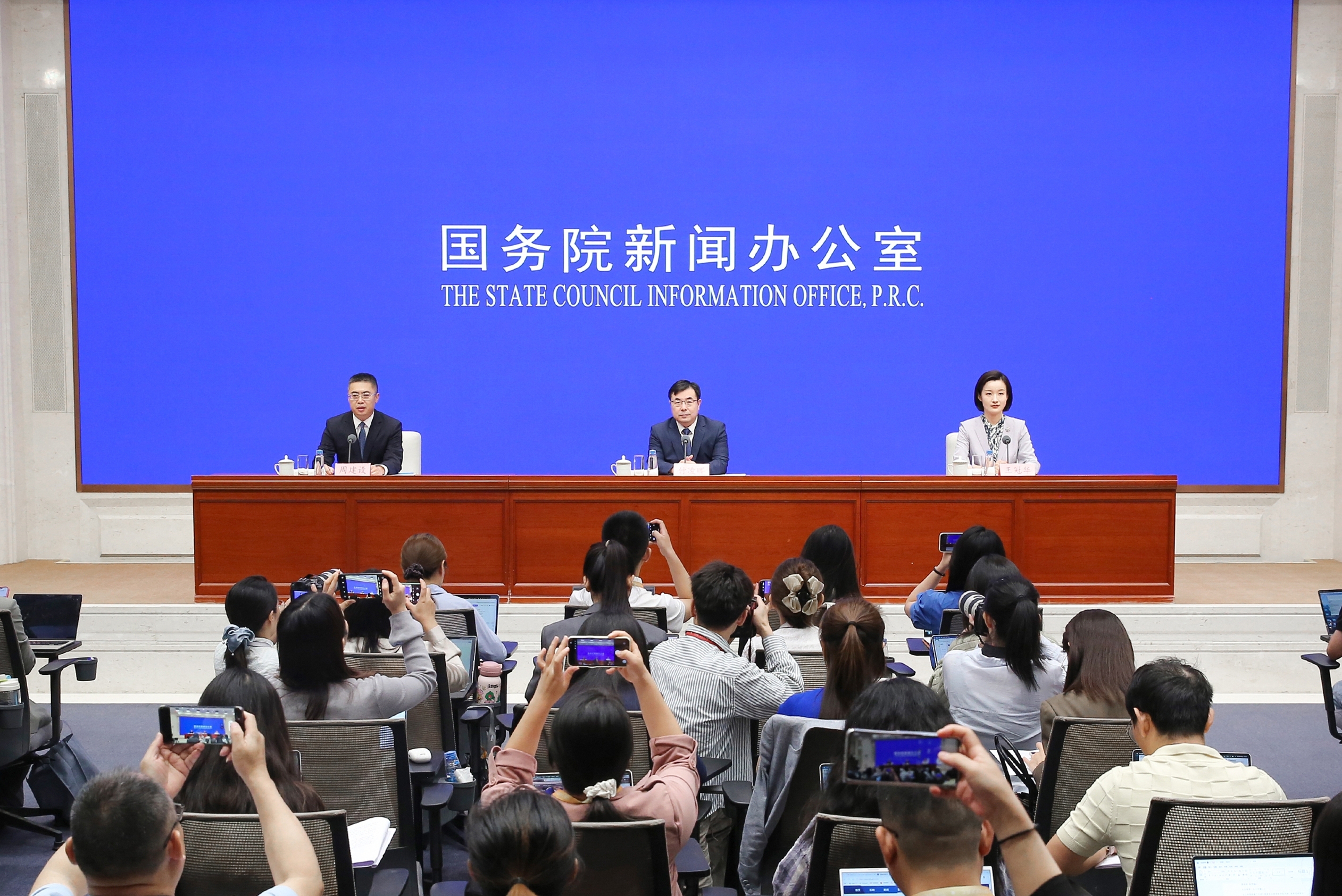
I have two questions. Are there any new signs that the real estate market is stabilizing? Also, what are the main reasons behind the recent rapid growth in imports, and what does this say about domestic demand? Thank you.
Fu Linghui:
Thank you for your questions. You are mainly concerned about two issues: first, the situation in the real estate market, and second, the reasons behind the relatively rapid growth in imports.
Since the beginning of this year, local authorities and government departments have adhered to city-specific policies, adjusted and optimized real estate policies, and continued to control new housing projects and reduce the stock while improving the supply of houses. We have explored various avenues for utilizing commodity housing stock and reducing the stock. We have made solid progress in urban renewal, actively promoted the adjustments and improvements to the housing system, and accelerated the building of a new model for real estate development. The effects are gradually becoming apparent. This is evident in the following aspects:
First, overall real estate transactions have improved. As China's real estate market enters a new stage of development, the market transaction pattern is undergoing a profound adjustment. The market, once dominated by new-home transactions, is gradually shifting to one dominated by existing-home transactions. This is an important change. According to recent data released by the Ministry of Housing and Urban-Rural Development, the floor area of existing-home transactions registered online reached 550 million square meters in the first eight months of the year. For several consecutive months, the figure exceeded that of new homes sold. In terms of growth rate, the floor area of newly built commercial housing sold fell 12.1% year on year from January to August, while the floor area of existing-home transactions registered online increased 10.6% year on year. Despite a decrease in transactions of newly built commercial housing, growth in existing-home transactions has helped stabilize the overall volume of real estate transactions.
Second, the year-on-year decline in house prices has narrowed. For newly built commercial residential properties, among the 70 large and medium-sized cities, the year-on-year decline in prices of newly built residential properties in 38 cities narrowed compared with the previous month. By tier, the year-on-year decline in new-home prices narrowed by 0.2 percentage point in first-tier cities and by 0.1 percentage point in both second- and third-tier cities from the previous month. For existing homes, in August, among the 70 large and medium-sized cities, the year-on-year decline in home prices narrowed in 48 cities compared with the previous month. By tier, the year-on-year decline in existing-home prices narrowed by 1 percentage point in first-tier cities and by 0.2 percentage point in both second- and third-tier cities from the previous month.
Third, inventories of newly built commercial housing have continued to fall. Local authorities have actively adopted measures to reduce commercial housing inventories, including housing purchase subsidies, policies supporting people in "selling old and buying new" housing exchanges, and converting unsold housing into government-subsidized housing. The measures have produced positive results. At the end of August, the floor area of unsold newly built commercial housing nationwide fell 1.1% year on year, marking the sixth consecutive month of decline this year. The pace of decline has also accelerated in recent months. In particular, the floor area of unsold newly built commercial housing that had been on the market for less than three years fell 4.2%, indicating notable progress in reducing short-term inventories.
It should be noted that the supply-demand relationship in China's real estate market has undergone major changes in recent years, and better meeting people's housing needs has become a new trend in the market's development. Housing demand is becoming increasingly diverse, with people placing greater emphasis on the quality and suitability of their homes. Demand is also growing for smart, green and age-friendly housing. However, the existing operating model of the real estate market is increasingly unable to adapt to these changes, making it necessary to accelerate the transition toward a new development model for the sector. Since the beginning of this year, relevant departments have further deepened the reform of the housing provident fund system and improved the systems governing commercial housing sales and related supporting arrangements, as part of efforts to build a new model for real estate development. Looking ahead, as these policies and measures are fully implemented, they are expected to facilitate the transformation and development of China's real estate market and better meet people's aspirations for a better life.
The second question concerns the relatively rapid growth in imports in August, which was mainly due to three factors:
First, it was driven by global industrial and technological innovation. With the accelerated application of new technologies, particularly AI, global demand for production and investment in related fields is expanding. As a major manufacturing country, China plays an important role in global industrial and supply chains. In the process of globalized production, China's growing demand for upstream raw materials and intermediate goods has driven up imports. In the first eight months, China's imports of copper ore and concentrates rose 28.5% year on year, while imports of integrated circuits rose 55.1%.
Second, it was driven by strong domestic demand. Since the beginning of this year, China's economy has remained generally stable, market demand has expanded, and industrial production has maintained rapid growth, providing strong support for the growth of imports of consumer goods, parts and components, and other products. From January to August, China's imports of agricultural products rose 6.6%, while high-tech product imports increased 40.1%.
Third, it was driven by China's efforts to proactively expand imports. China has taken the initiative to open wider and advanced unilateral opening up in a well-ordered way, granted zero-tariff treatment to all African countries with which it has diplomatic relations, and hosted international exhibitions such as the China International Import Expo, the China International Consumer Products Expo and the China International Supply Chain Expo, creating favorable conditions for quality products from around the world to enter the Chinese market. In the first eight months, China's imports from ASEAN rose 20.3%, imports from Africa grew 14.2% and imports from Latin America increased 21%.
Overall, China's imports have maintained relatively rapid growth, which not only helps meet domestic needs for production and daily life but also helps expand the space for international economic and trade cooperation, contributing to mutual benefit and win-win results. Thank you.