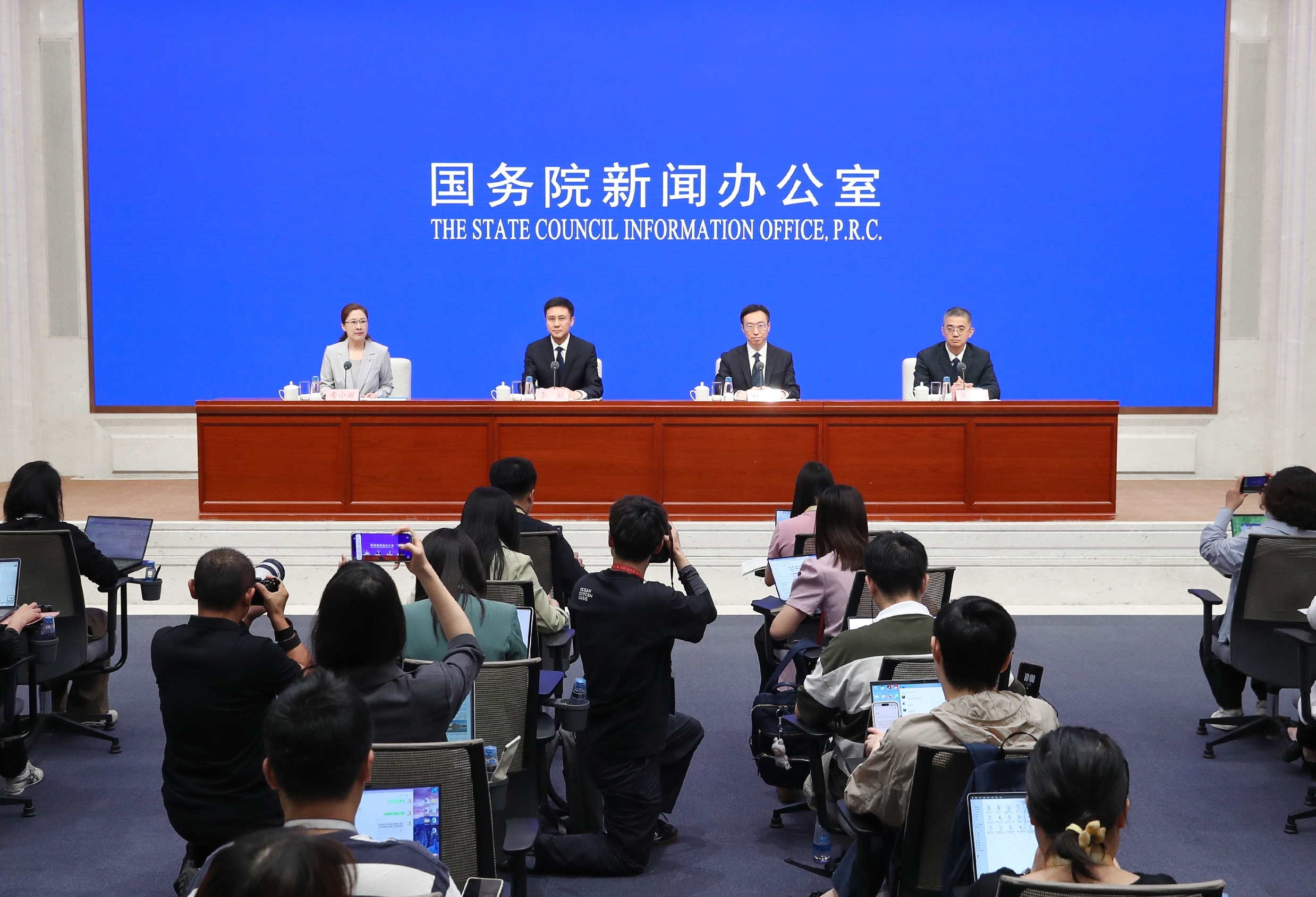
China.org.cn | September 2, 2026


CCTV:
In recent years, China's external assets have repeatedly hit record highs and the balance of payments has shown strong inherent stability. What has characterized China's international balance of payments pattern in recent years? What new changes have occurred this year? Thank you.
Li Bin:
Thank you for your questions and for your interest in the balance of payments. The balance of payments records all an economy's external transactions over a given period, including trade in goods, trade in services and various forms of outward investment and use of foreign capital. Foreign trade is recorded in the current account, while investment activities are recorded in the capital and financial account. Because countries differ in economic structure, stage of development and the maturity of their manufacturing and service industries, they produce different balance of payments patterns. There are two common types. In the first, a country's imports exceed its exports and it runs a current account deficit. It must then raise financing abroad to fill the gap, producing a surplus in the capital and financial account that brings the books into balance. In the second, exports exceed imports and the country runs a current account surplus. The resulting net inflow of funds is deployed overseas by domestic entities, showing up as a capital and financial account deficit, while the external assets those entities hold rise accordingly. Seen from the perspective of the overall balance of payments, then, a current account surplus corresponds to a capital and financial account deficit, and the two move in tandem. A wider current account surplus brings a correspondingly wider capital and financial account deficit. That does not mean pressure from cross-border capital outflows is building.
In China, a self-balancing pattern has gradually taken shape, with a current account surplus offset by a capital and financial account deficit. Since 2022, China's current account surplus and its capital and financial account deficit have widened in step. The capital inflows generated by the current account surplus have been allocated to different regions, industries and financial markets around the world through outbound investment by banks and enterprises. That has met the needs of domestic entities for international operations and diversified asset allocation, and it has also supported the development of industries and financial markets in trade and investment partner countries. China's balance of payments has continued this trend this year, with the current account still in surplus. Domestic entities have meanwhile stepped up their overseas investment, adding more than $300 billion in the first five months and further building up external assets. As of the end of March 2026, China's external assets stood at a record high of approximately $12 trillion, and its net external assets exceeded $4 trillion, ranking second worldwide.
China's international balance of payments is expected to remain broadly balanced. China will keep expanding domestic demand, work hard to boost consumption, increase effective investment and promote balanced trade growth, which will keep the current account surplus at a reasonable and balanced level over the medium and long term. At the same time, China is steadily expanding its institutional opening up and creating more room for outbound investment and cooperation. Domestic enterprises will continue to diversify their global operations and asset allocation, and China's external assets will grow steadily.
That is all from me. Thank you.