China.org.cn | September 2, 2026


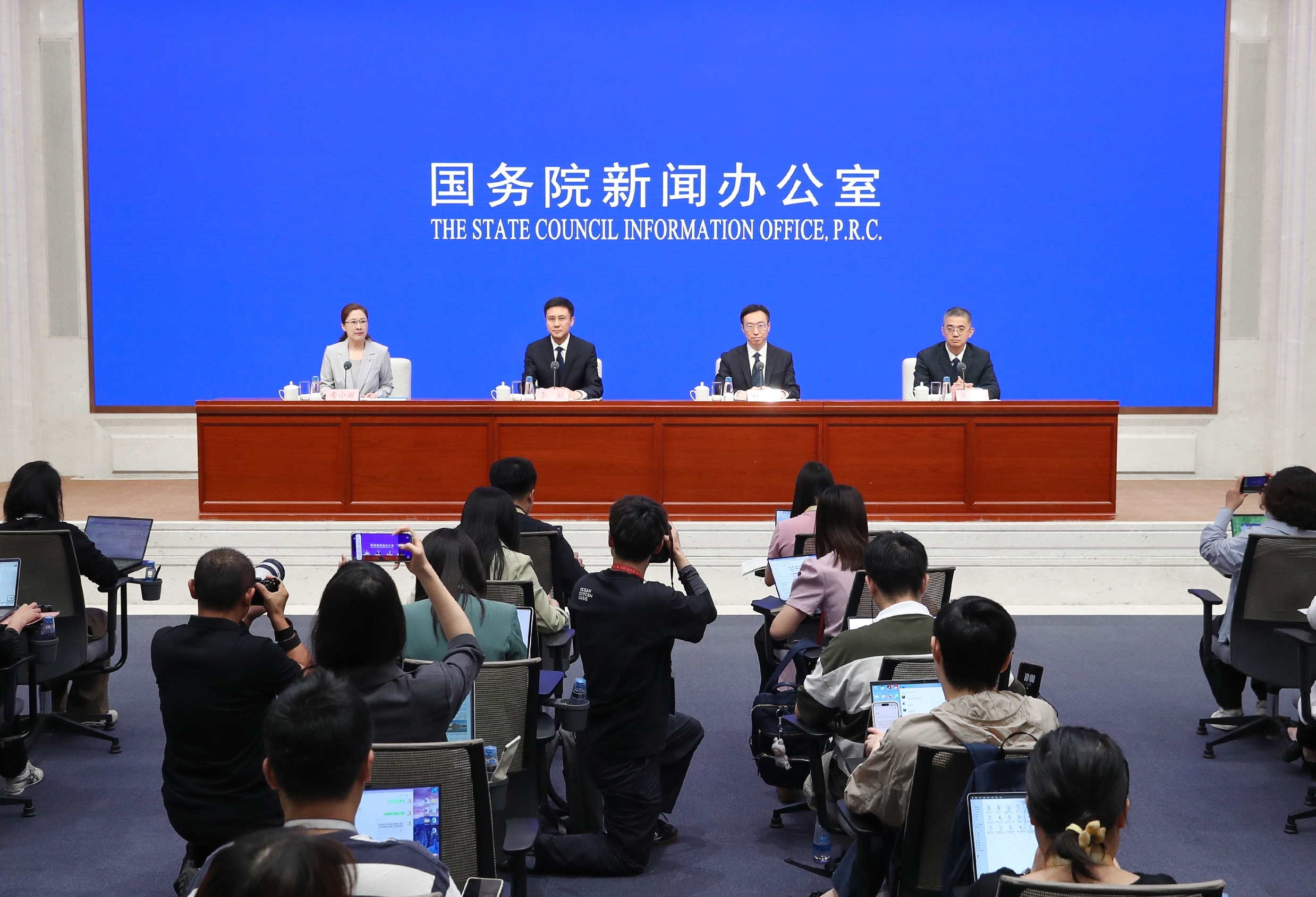
Speakers:
Mr. Li Bin, spokesperson and deputy administrator of the State Administration of Foreign Exchange (SAFE)
Mr. Zhao Yuchao, spokesperson of SAFE and deputy director general of the Balance of Payments Department of SAFE
Mr. Xiao Sheng, director general of the Capital Account Management Department of SAFE
Chairperson:
Ms. Shou Xiaoli, director general of the Press Bureau of the State Council Information Office (SCIO) and spokesperson of the SCIO
Date:
July 17, 2026
Shou Xiaoli:
Ladies and gentlemen, good morning. Welcome to this press conference held by the State Council Information Office (SCIO). Today, we will continue with our regular release of economic data. We are pleased to have with us Mr. Li Bin, spokesperson and deputy administrator of the State Administration of Foreign Exchange (SAFE), who will introduce China's foreign exchange receipts and payments data for the first half of 2026 and answer your questions. Also attending today's briefing are Mr. Zhao Yuchao, spokesperson of SAFE and deputy director general of the Balance of Payments Department of SAFE, and Mr. Xiao Sheng, director general of the Capital Account Management Department of SAFE.
Now, I will give the floor to Mr. Li for his introduction.
Li Bin:
Good morning. Thank you for your continued interest in, support for and coverage of the administration of foreign exchange. I would like to take this opportunity today to first introduce the relevant situation of China's foreign exchange receipts and payments data in the first half of 2026, and will then answer your questions together with my colleagues.
Since the beginning of 2026, the external environment has become increasingly complex and volatile, with intensified and deepened geopolitical conflicts, and greater fluctuations in international financial markets. China has remained committed to pursuing high-quality development, accelerating efforts to foster a new development paradigm, and promoting economic growth toward greater innovation and quality. SAFE has continued to deepen reform and opening up in the foreign exchange sector, increase policy support to facilitate cross-border trade and investment, strengthen foreign exchange market supervision, effectively respond to external shocks and challenges, and support the sound development of foreign-related economic activities. Overall, China's foreign exchange market remained stable in the first half of the year, with active transactions and stronger resilience. Specifically, it demonstrated the following characteristics:
First, foreign-related receipts and payments reached a record high. In the first half of the year, banks' foreign-related receipts and payments on behalf of clients totaled $9.2 trillion, up 21% year on year, reaching a record high for the period. Among them, the proportion of the RMB in cross-border receipts and payments stood at 52.9%, up 1.3 percentage points from the full year of 2025. During the first half of the year, banks' foreign exchange settlement and sales totaled $2.9 trillion, up 24% year on year, also hitting a record high for the same period. These figures demonstrate that China's foreign-related economy has maintained sound momentum, with cross-border trade and investment becoming increasingly active.
Second, foreign exchange market trading volume continued to grow steadily. In the first half of the year, trading volume in China's domestic RMB foreign exchange market totaled $22.1 trillion, up 5% year on year, with growth accelerating by 1.5 percentage points compared with the full year of 2025. Among this total, spot transactions and derivatives transactions amounted to $8.3 trillion and $13.8 trillion, which accounted for 38% and 62% of total foreign exchange market transactions, respectively.
Third, cross-border capital flows recorded a net inflow. In the first half of the year, cross-border capital flows of non-bank sectors, including enterprises and individuals, recorded a net inflow of $247.2 billion. From a monthly perspective, enterprises concentrated their receipts before the Spring Festival during January and February, resulting in relatively large net inflows of cross-border funds. In March, geopolitical conflicts escalated and volatility in international financial markets increased, leading to a small net outflow of cross-border funds from China. The flows subsequently returned to net inflows, while the scale of inflows moderated since June. By category, in the first half of the year, net inflows under goods trade continued to increase year on year; foreign investment in China generally recovered; service trade revenue growth accelerated, while the service trade deficit narrowed; and domestic entities' outbound investment maintained overall growth.
Fourth, foreign exchange market expectations remained stable. In the first half of the year, banks recorded a surplus of $271.2 billion in foreign exchange settlement and sales. Recently, the U.S. dollar index rebounded in June, while the RMB weakened slightly against the U.S. dollar. Some enterprises increased foreign exchange settlements when exchange rates were favorable, driving a month-on-month increase in the surplus of foreign exchange settlement and sales. Since July, foreign exchange settlement and sales have remained broadly balanced. In the first half of the year, the foreign exchange settlement ratio, which measures the willingness of entities to settle foreign exchange earnings, stood at 65%, while the foreign exchange sales ratio, which measures the willingness to purchase foreign exchange, stood at 61%. Both figures showed little change compared with 2025. These figures indicate that the foreign exchange settlement and sales activities of enterprises, individuals and other market entities remained rational and orderly.
Finally, China's foreign exchange reserves increased steadily. At the end of June, China's foreign exchange reserves stood at $3.42 trillion, an increase of $58.4 billion from the end of 2025.
Overall, faced with a volatile and challenging external environment, China's foreign exchange market has withstood external pressures and maintained stable operations since the beginning of this year, demonstrating strong vitality and resilience. Looking ahead, SAFE will resolutely implement the decisions and plans of the Central Committee of the Communist Party of China (CPC) and the State Council, deepen reform and opening up in the foreign exchange sector with stronger efforts and more practical measures, prudently prevent and defuse risks arising from external shocks, and continue to build a foreign exchange administration system that is more convenient, more open, safer and smarter. These efforts will provide strong support for high-quality economic development and lay a solid foundation for making a good start to the 15th Five-Year Plan period (2026-30). That concludes my introduction. Next, my colleagues and I are happy to answer your questions. Thank you.
Shou Xiaoli:
The floor is now open for questions.