China.org.cn | September 2, 2026


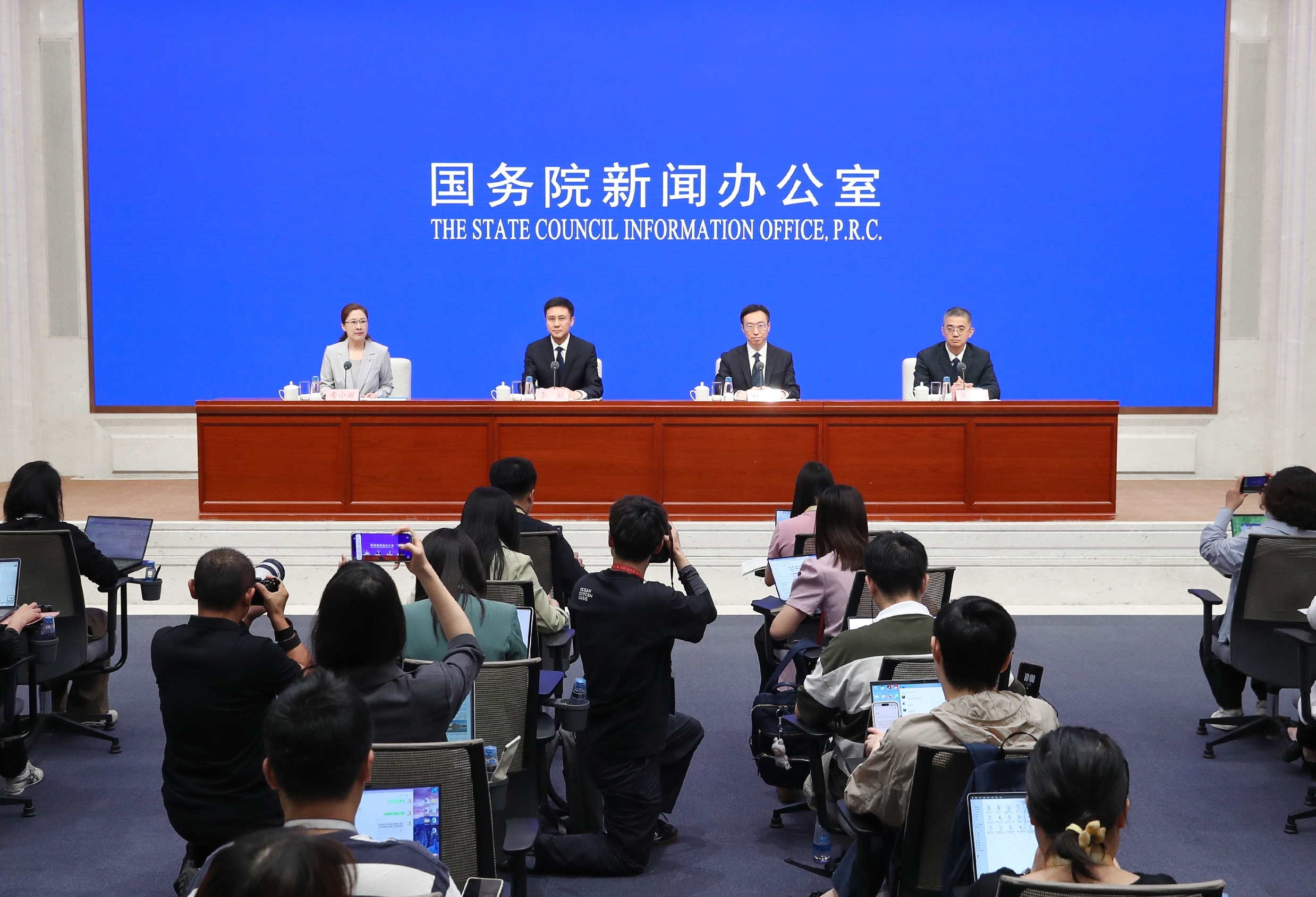
National Business Daily:
In recent years, the SAFE has introduced many measures to facilitate cross-border trade and investment. Could you please elaborate on these measures and the basic considerations and achievements of the reform of foreign exchange management? Thank you.
Li Bin:
Thank you for your question. I'll answer that. In recent years, the SAFE has continued to deepen reform and opening up in the foreign exchange sector and facilitate cross-border trade and investment, with the aim of helping market entities streamline foreign exchange business processes, improve efficiency, and further benefit businesses and people. A review of these facilitation measures shows that the changes in the basic approaches and management methods can be summarized in the following areas:
First, greater emphasis has been placed on facilitating market entities. In the past, facilitation policies were often designed and implemented based on different projects and businesses. In recent years, adhering to the principle of providing more convenience and priority to the honest and compliant entities, we have shifted focus from business management to market entity management, offering more comprehensive facilitation based on enterprises' overall credit profiles, so that honest and compliant entities can enjoy faster and more efficient business processing. For example, in recent years, we have steadily advanced the reform of banks' foreign exchange business operations. For enterprises with good credit, banks can process foreign exchange transactions based on their instructions, instead of reviewing supporting documents on a transaction-by-transaction basis as was previously required, greatly shortening processing time. As of the end of June, the number of banks participating in the foreign exchange business operation reform has increased to 33, basically covering the major banks handling cross-border business. These banks have identified a total of 53,000 high-quality clients, an increase of 27% from the end of 2025. In the first half of this year, the value of transactions processed for these enterprises under the facilitation arrangements exceeded $580 billion, doubling year on year.
Second, greater emphasis has been placed on in-process and ex post management. The handling of foreign exchange transactions is gradually shifting from a focus on ex ante review to ex ante facilitation, ongoing monitoring and ex post verification. In recent years, the SAFE has continued to reduce administrative approval items and streamline approval procedures. At the same time, it has conducted more targeted and more concrete follow-up management measures. This includes monitoring and verification as well as law enforcement inspections, further improving the efficiency of business processing. For example, we replaced SAFE approval with direct processing by banks for the registration of enterprises for trade-related foreign exchange receipts and payments. We also relaxed the requirements for various capital account administrative approvals, such as Qualified Foreign Institutional Investors/RMB Qualified Foreign Institutional Investors (QFII/RQFII) approvals and overseas listing registrations. During the 14th Five-Year Plan period, the number of administrative approval cases processed in the foreign exchange sector fell by 70%. At the same time, we have vigorously promoted the online handling of foreign exchange businesses. Those frequently handled matters can be processed through the digital foreign exchange platform ASOne, which has significantly improved the processing efficiency.
Third, greater emphasis has been placed on coordination between domestic and foreign currency business. With the increasing cross-border use of RMB, the People's Bank of China and the SAFE have followed the principle of "same business, same management," applying an integrated approach to domestic and foreign currency business in policymaking and business processing. For example, we have established an integrated domestic and foreign currency cash pools for multinational companies, enabling corporate groups to coordinate domestic and foreign funds as well as their local and foreign currency funds, thereby reducing financing costs. We have unified the management of domestic enterprises' overseas lending in both local and foreign currencies, making it easier for enterprises to conduct overseas lending based on their financing needs for production and business operation. We have also unified the policies governing local and foreign funds related to overseas listings of domestic enterprises, clarifying that funds raised from overseas listings and proceeds from the reduction or transfer of shares can be repatriated in foreign currencies or RMB. We have promoted the development of a unified bank settlement account system for local and foreign currencies, which has effectively reduced the account management costs for enterprises. Currently, various types of cross-border investment and financing businesses are largely governed by a unified set of rules for local and foreign currency, and can be handled on a one-stop basis at the SAFE or banks.
Fourth, greater emphasis has been placed on leveraging technology. Explore the use of digital technologies and artificial intelligence to make foreign exchange transactions more convenient, risk identification more accurate, and management services more user-friendly. For example, the SAFE has used blockchain technology to build a cross-border financial service platform that can connect and share relevant data on taxation, insurance, enterprises and logistics, making it easier for banks to handle trade financing, exchange rate hedging and other businesses, which has achieved good results.
Fifth, greater emphasis has been placed on policy evaluation. After foreign exchange policies are introduced, the most important thing is to see how they are implemented and whether banks and enterprises truly benefit from the convenience. The SAFE has established two evaluation mechanisms for the effectiveness of foreign exchange policies and regional foreign exchange ecosystem. We have conducted closed-loop management and impact assessment from the policy issuance to its implementation for the benefit of enterprises and residents. Based on the evaluation results, we have then optimized and adjusted relevant policies on a continuing basis to truly benefit enterprises and the people.
Finally, we have stayed focused on both facilitation and risk prevention, firmly safeguarding the bottom line of security as we continue to open up. We have constantly improved the two-pronged framework of macro-prudential management and micro regulation. On the one hand, we have strengthened counter-cyclical adjustments and expectations guidance when necessary, maintaining the stable operation of the foreign exchange market and firmly preventing systemic risks. On the other hand, we have enhanced the supervision of the foreign exchange market and cracked down hard on illegal and irregular foreign exchange activities such as underground banks. In the first half of this year, we investigated and handled more than 300 related cases, with fines and confiscated funds exceeding 400 million yuan, effectively maintaining orderly operation of the foreign exchange market.
Going forward, the SAFE will further expand the availability of facilitation policies and strive to build a foreign exchange management system and mechanism that is more convenient, open, secure and intelligent, so as to better serve high-quality development and high-standard opening up. Thank you.
Shou Xiaoli:
Thanks to Mr. Li and all the speakers. Thanks to our friends from the media for participating. Today's briefing is hereby concluded. Goodbye.
Translated and edited by Liu Caiyi, Cui Can, Dong Qingpei, You Jiaxin, Xu Kailin, Li Xiao, Wang Qian, Zhang Rui, Liu Sitong, Zhang Junmian, Ma Yujia, Huang Shan, Mi Xingang, David Ball, Jay Birbeck, and Tudor Finneran. In case of any discrepancy between the English and Chinese texts, the Chinese version is deemed to prevail.