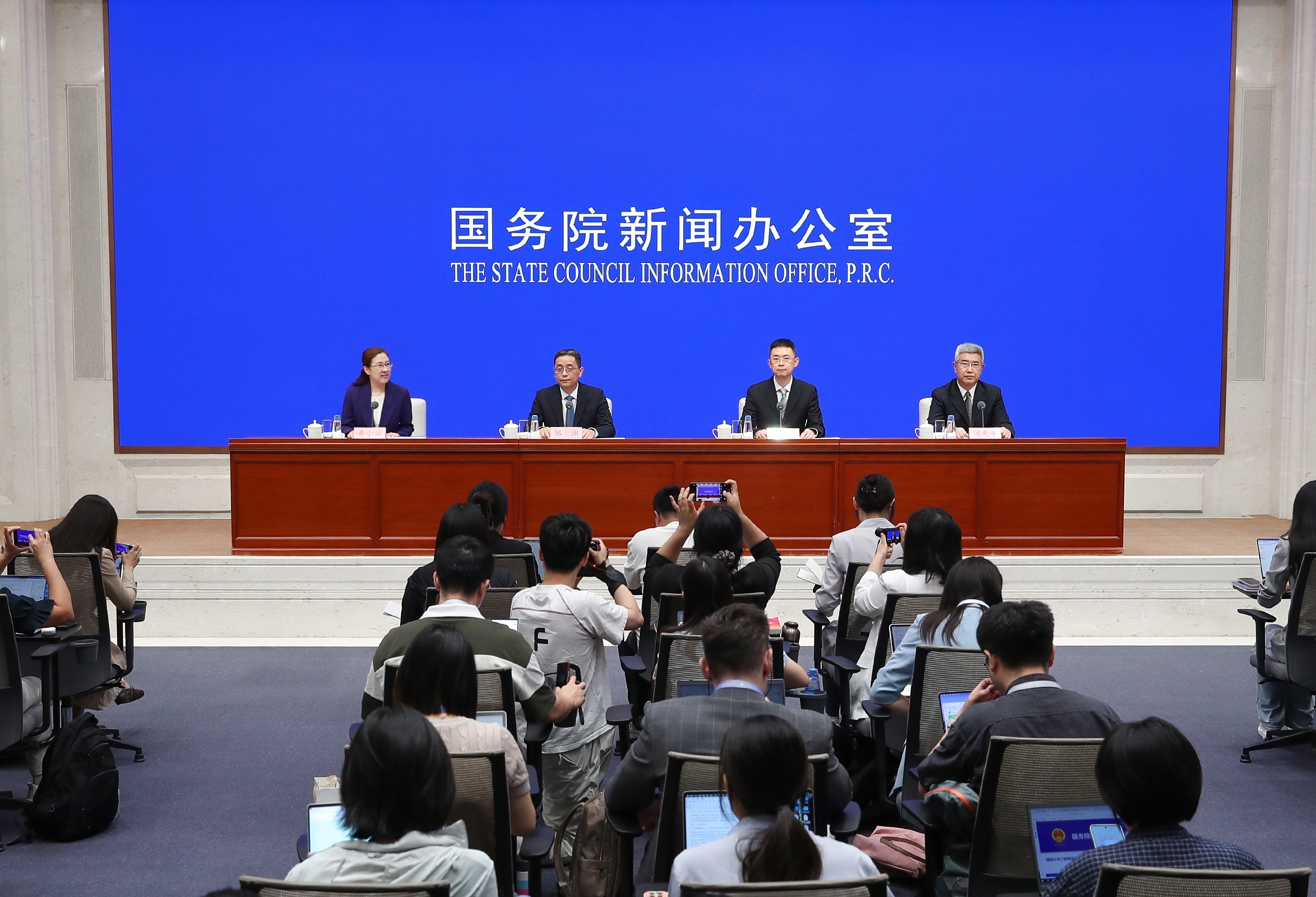
China.org.cn | September 1, 2026


Bloomberg News:
How does the central bank view the global inflation trends and the monetary policy trajectory of major economies in the second half of the year? What impact will this have on China and the RMB exchange rate? Thank you.
Zou Lan:
Thank you for your questions. Since the beginning of this year, geopolitical conflicts have pushed up international energy prices, contributing to higher global inflation, and central banks in some foreign economies have adjusted their monetary policies. In June, the U.S. Federal Reserve kept its interest rate policy unchanged but released hawkish signals; the European Central Bank raised interest rates by 25 basis points as a precaution; and the Bank of Japan raised interest rates again after last December. Currently, international crude oil prices have fallen significantly compared to the previous period. Even if economies such as the U.S. and Europe shift their monetary policy stances, any adjustments are expected to be relatively modest. Of course, the geopolitical situation in the Middle East has been complex and volatile recently, and there is some uncertainty regarding the global inflation situation and the monetary policy trajectory of major economies.
Despite the complex and ever-changing international situation, the RMB exchange rate has remained generally stable, with two-way fluctuations. As of the end of June, the RMB exchange rate against the U.S. dollar appreciated by 3% compared to the end of last year, while the China Foreign Exchange Trading System (CFETS) RMB exchange rate index, which reflects the RMB exchange rate against a basket of currencies, appreciated by 4.7% during the same period. This stems from the supply-demand dynamics in the foreign exchange market, and it also reflects the growing market confidence in China's macroeconomy. Currently, the RMB exchange rate against the U.S. dollar is hovering around 6.8 yuan, roughly at the median level of recent years.
Looking ahead, there are multiple factors influencing the RMB exchange rate, and these factors may drive the RMB's appreciation and depreciation. Therefore, the RMB exchange rate is expected to continue its two-way fluctuations. Internationally, geopolitical risks are prominent, and the monetary policies of major economies are subject to uncertainties. Domestically, China's economic fundamentals have continued to grow steadily, with sustained progress being made in high-quality development. The foreign exchange market has grown increasingly resilient, and market participants have become better equipped to adapt to exchange rate fluctuations. In the first five months of this year, the corporate foreign exchange hedging ratio rose to 34.4%, increasing by 4.5 percentage points compared with 2025, and the proportion of cross-border trade settlement in RMB was around 30%.
Going forward, the PBOC will pay close attention to changes in the international economic and financial situations, implement a moderately loose monetary policy, and create a favorable monetary and financial environment for sustained and high-quality economic growth. At the same time, we will uphold the decisive role of the market in determining the exchange rate, give full play to the role of the exchange rate as an automatic stabilizer in adjusting the macroeconomy and balance of payments, and keep the RMB exchange rate generally stable at an adaptive and balanced level. Thank you.