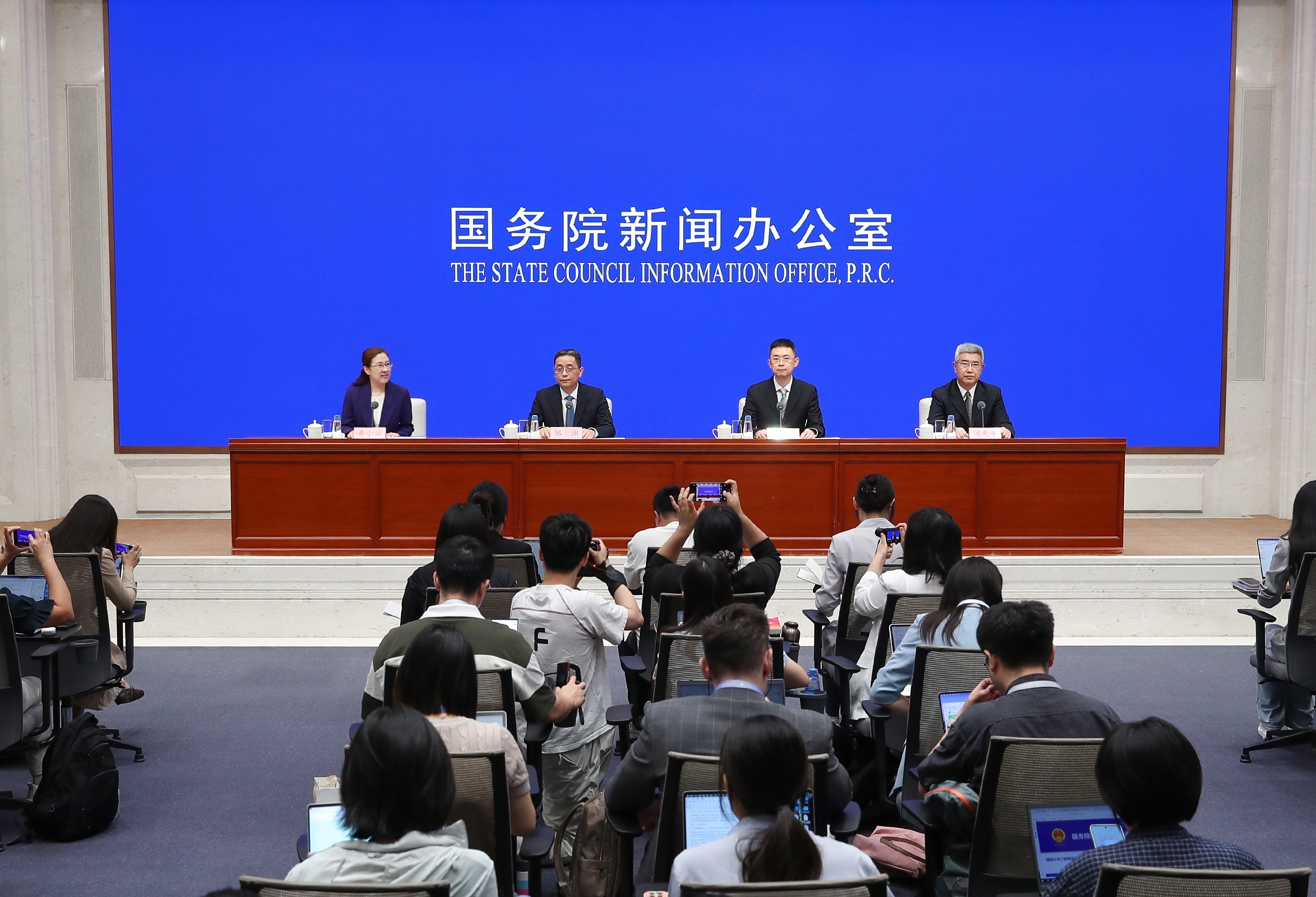
China.org.cn | September 1, 2026


Economic Herald:
We have noticed that Mr. Pan mentioned the development of the offshore RMB market at both the Lujiazui Forum and the Hong Kong Currency and Fixed Income Summit. In what ways will the People's Bank of China take efforts to promote the development of the offshore RMB market? Thank you.
Zou Lan:
Thank you for your questions. I would like to invite Mr. Xie to answer this question.
Xie Guangqi:
I will answer this question. The Third Plenary Session of the 20th CPC Central Committee clearly proposed "developing the offshore RMB market" and building an offshore RMB market with asset allocation and risk management functions. This will help fully meet the global demand for RMB use by various entities and is an important part of promoting the internationalization of the RMB. The People's Bank of China will promote the development of the offshore RMB market from the following aspects.
First, the PBC will maintain ample and stable offshore RMB liquidity. There are currently four main channels to ensure the supply of offshore RMB liquidity. The first is currency swaps at the central bank level, including RMB business funding arrangements launched by the Hong Kong Monetary Authority based on the standing swap arrangement, which have recently increased to 500 billion yuan. Second, at the market level, offshore RMB liquidity is supplied through onshore bond issuance and repo transactions by offshore entities, investment by onshore entities in offshore bonds and equities, and foreign exchange swaps. Third, at the banking level, RMB clearing banks provide liquidity, while overseas banks provide funding to overseas enterprises and banks through cross-border lending and interbank financing. Fourth, at the corporate and individual level, offshore RMB liquidity is supplied through cross-border trade, direct investment, outbound lending by companies and cash-pooling arrangements. The PBC will continue to optimize relevant mechanisms and arrangements to cover short, medium and long-term maturities and ensure stable and multi-tiered RMB liquidity support for the offshore market.
Second, the PBC will enrich the pool of offshore RMB assets. The PBC will continue to issue central bank bills on a regular basis and support the Ministry of Finance in further increasing the scale of offshore RMB government bond issuance, diversifying issuance maturities and increasing the supply of high-quality assets. By further developing and improving the market, the PBC will encourage sovereign entities, financial institutions, multinational corporations and other issuers to issue RMB-denominated bonds, thereby broadening the range of RMB assets available to investors.
Third, the PBC will boost trading activity of offshore RMB financial products. We will develop offshore repo transactions, boost secondary market trading in offshore RMB government bonds and central bank bills, and encourage financial institutions to make markets. We will strengthen the connection between onshore and offshore markets through cross-border repo transactions, Bond Connect and infrastructure connectivity, and promote the pricing of offshore RMB financial assets to converge with that of the onshore market. We will support the launch of offshore RMB treasury futures and develop the interest rate swap market to better meet the needs of market entities to hedge against interest rate risk.
Fourth, the PBC will enrich offshore financial infrastructure services. We will guide the China Foreign Exchange Trading System (CFETS) to cooperate with the Hong Kong Monetary Authority and the Hong Kong Securities and Futures Commission to build a comprehensive financial trading platform that provides infrastructure services for trading in financial markets such as bonds, currencies and foreign exchange.
In addition, as Mr. Zou just mentioned, in June this year, the PBC launched a pilot program for offshore RMB foreign exchange trading in the China (Shanghai) Pilot Free Trade Zone. The head offices of six banks can use the platform of the CFETS to directly conduct RMB foreign exchange transactions with overseas entities. This will help promote greater connectivity and integration between the onshore and offshore markets and drive high-level opening up. Since its introduction, the pilot policy has been well received by the market, with transaction volumes rising significantly and solid progress being made. Thank you.
Shou Xiaoli:
We will take one final question.