China.org.cn | September 1, 2026


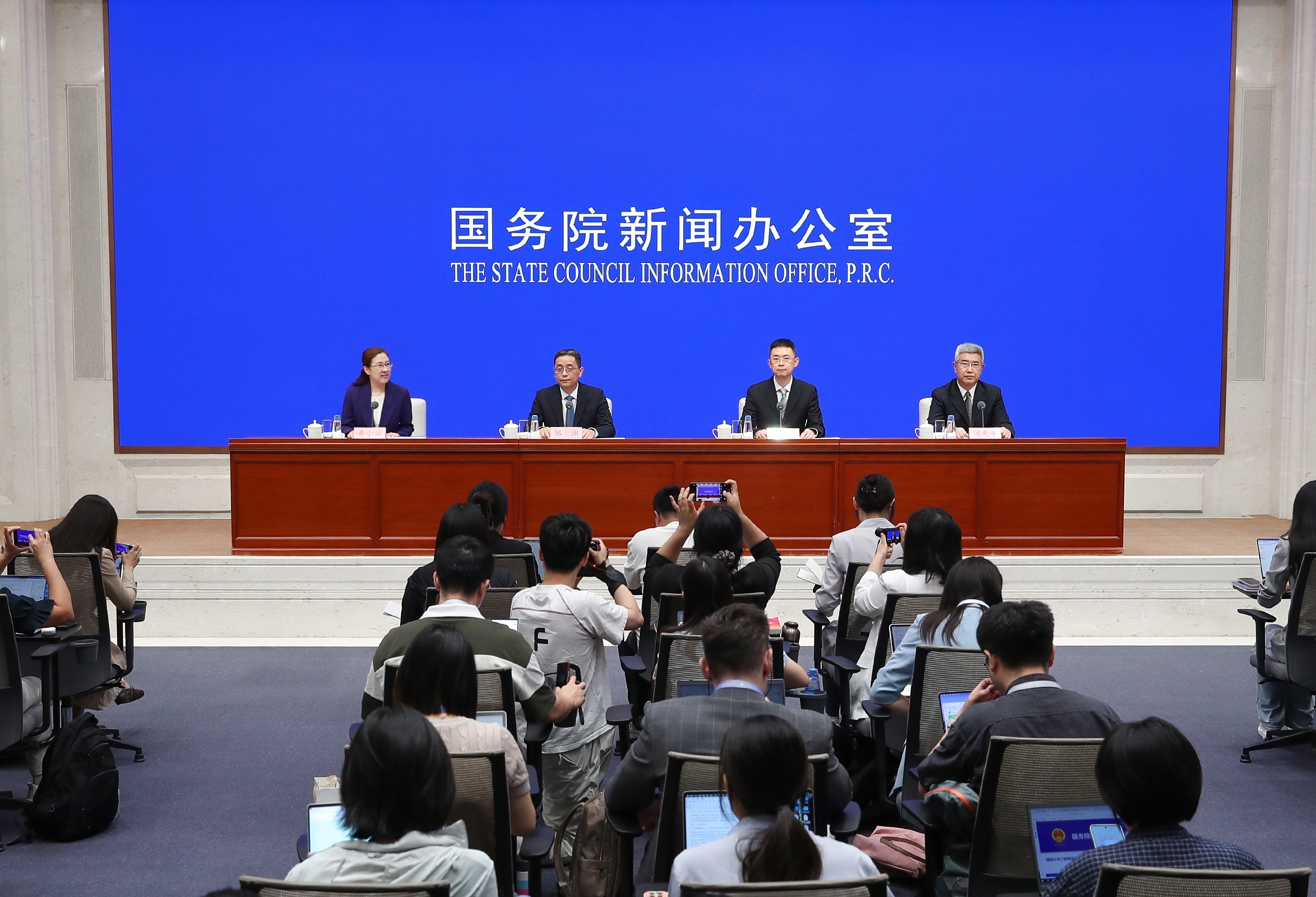
Speakers:
Mr. Zou Lan, spokesperson and deputy governor of the People's Bank of China (PBC)
Mr. Xie Guangqi, director general of the Monetary Policy Department of the PBC
Mr. Yan Xiandong, spokesperson of the PBC and director general of the Statistics and Analysis Department of the PBC
Chairperson:
Ms. Shou Xiaoli, director general of the Press Bureau of the State Council Information Office (SCIO) and spokesperson of the SCIO
Date:
July 15, 2026
Shou Xiaoli:
Ladies and gentlemen, good afternoon. Welcome to this press conference held by the State Council Information Office (SCIO). Today, we are continuing our regular series of briefing on economic data. We are very pleased to have with us Mr. Zou Lan, spokesperson and deputy governor of the People's Bank of China (PBC), who will introduce the implementation of monetary policy and financial statistics in the first half of 2026, and answer your questions. Also present at today's press conference are Mr. Xie Guangqi, director general of the Monetary Policy Department of the PBC; and Mr. Yan Xiandong, spokesperson of the PBC and director general of the Statistics and Analysis Department of the PBC. Now, I'll give the floor to Mr. Zou for his introduction.
Zou Lan:
Friends from the media, good afternoon. Thank you all for your long-standing interest in and coverage of the work of the PBC. I will give you a brief overview of the implementation of the PBC's monetary policy and financial statistics for the first half of 2026.
Since 2026, the PBC has thoroughly implemented the decisions and plans of the Central Committee of the Communist Party of China (CPC) and the State Council, continued to implement a moderately loose monetary policy, and introduced a series of structural monetary policy measures at the beginning of the year on the basis of the existing policies. Recently, Pan Gongsheng, governor of the PBC, announced additional measures to reform and improve the monetary policy framework at the Lujiazui Forum. These initiatives are being implemented at an accelerated pace and are delivering tangible results, creating a favorable monetary and financial environment for steady economic growth, high-quality development and the stable operation of the financial market.
First, we have maintained ample liquidity in the banking system. By comprehensively utilizing various monetary policy tools, such as reverse repos, medium-term lending facilities and bond purchases, we have maintained ample liquidity. In the first half of the year, the central bank's various tools effectively offset the 1 trillion yuan liquidity gap caused by factors such as reserve requirement payments and cash injections. The average overnight interbank repo rate (DR001) was 1.31% in the first six months, and the overall operation was stable. To better meet short-term liquidity management needs of the banks and enhance the precision and effectiveness of money market interest rate adjustments, we introduced overnight reverse repurchase operations to our open market operations at the end of June, further diversifying our policy toolkit. We also narrowed the range of interest rates for temporary repos and reverse repos from 70 basis points to 50 basis points. In addition, we launched a repurchase facility for overseas central banks to facilitate their RMB liquidity management and RMB bond asset allocation. The first transaction has been completed recently.
Second, we have kept the overall financing cost across society at a low level. At the beginning of the year, we lowered interest rates on structural monetary policy tools by 0.25 percentage point. We continued driving transparency in corporate borrowing costs and reducing intermediary financing fees. We also strengthened the enforcement and supervision of interest rate policies to better leverage the role of the market interest rate pricing self-regulatory mechanism, maintain fair market competition and enhance banks' capacity for independent and rational pricing.
Third, we have increased financial support for key sectors. We introduced and implemented a series of structural monetary policy measures, expanded the scale and scope of existing tools, and improved policy elements to further facilitate the transformation and optimization of the economic structure. We increased the quota for relending on sci-tech innovation and technological upgrading, as well as quota for relending for supporting agriculture, and micro and small businesses. We also set up a separate 1-trillion-yuan relending facility for private enterprises to guide financial institutions toward increasing credit allocation to these areas. We actively implemented a one-time credit repair policy to support eligible individuals with overdue records to restore their credit status efficiently and conveniently.
Fourth, we have maintained steady operation of the financial market. We upheld the decisive role of market supply and demand in exchange rate formation and maintained the basic stability of the RMB exchange rate at a reasonable and balanced level. We encouraged financial institutions to enhance their foreign exchange risk management services. Recently, we launched an offshore RMB trading pilot in the Shanghai Free Trade Zone, enabling the head offices of six banks to conduct RMB foreign exchange transactions directly with overseas entities, thereby promoting the integration of onshore and offshore RMB markets. We also continued deploying two tools designed to support the stable development of capital market and consistently maintained the market's stable operation. We established a high-quality "tech board" for the bond market, unified risk-sharing tool for tech innovation and private enterprise bonds, and officially launched the interbank market data reporting database to promote the stable operation of the bond market.
Financial data for the first half of the year demonstrates that monetary policies has been highly effective in supporting the real economy. First, aggregate credit and money supply grew at a reasonable pace. At the end of June, broad money supply (M2) grew by 8.0% year on year, while outstanding aggregate financing to the real economy (AFRE) grew by 7.4% year on year, with both indicators outpacing nominal GDP growth. In the first half of the year, new RMB loans amounted to 10.72 trillion yuan, and new bond financing reached 8.51 trillion yuan. The increased share of bond financing underscores robust financial backing for the real economy. Second, overall social financing costs remained at a historically low level. In June, the weighted average interest rate for new corporate loans was approximately 3.0%, about 20 basis points lower than the same period last year; and the interest rate for newly issued personal housing loans was approximately 3.1%, basically the same as the same period last year. Third, the credit structure continued to improve. At the end of June, the outstanding balance of inclusive loans to micro and small businesses increased by 8.3% year on year; the outstanding balance of medium and long-term loans to industry increased by 5.9% year on year; and the outstanding balance of medium and long-term loans to the service sector (excluding the real estate industry) increased by 9.2% year on year, all outstripping overall loan growth. Fourth, financial market operated smoothly. The capital market remained active. The bond market operated smoothly, with the yield on 10-year government bonds currently around 1.73%. The RMB exchange rate remained stable with an upward trend. At the end of June, the RMB appreciated by 4.7% against a basket of currencies and by 3% against the U.S. dollar compared to the end of last year.
Going forward, the PBC will continue to implement an appropriately accommodative monetary policy. Taking into account worldwide economic and financial developments and financial market conditions, the PBC will calibrate the intensity, pace and timing of monetary policy implementation, and strengthen counter- and cross-cyclical adjustments. It will strive to expand domestic demand and optimize supply, enhance the endogenous drivers of economic growth, continue to consolidate and expand the sound momentum of economic stability and growth, and effectively help ensure a good start to the 15th Five-Year Plan period.
That concludes my introduction. My colleagues and I are now ready to take your questions.
Shou Xiaoli:
Thank you, Mr. Zou. Now, the floor is open for questions. Please identify the media organization you represent before asking questions.