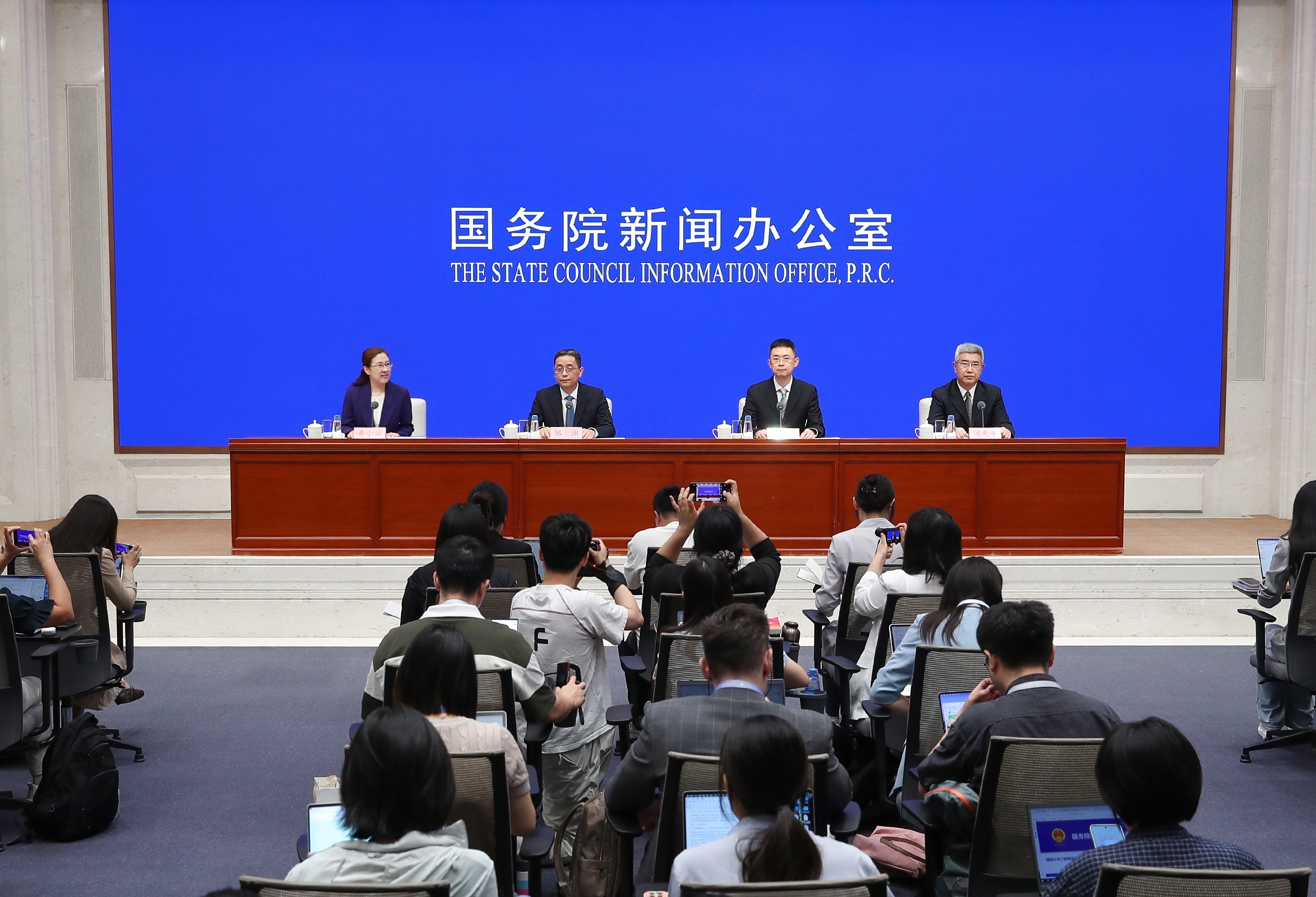
China.org.cn | September 1, 2026


CCTV:
I would like to know about the use of structural monetary policy tools in the first half of this year. How have relending programs for private enterprises and technological innovation been implemented? In addition, will the PBC continue to develop new tools for targeting key areas? Thank you.
Zou Lan:
Thank you. Mr. Xie will take your questions.
Xie Guangqi:
I will answer these questions. Structural monetary policy tools are the PBC's market-based incentive mechanism for financial institutions, with the aim of guiding the optimization of the credit structure. They work like this. After financial institutions issue loans to key areas and weak links that require policy support, they can obtain relending from the PBC at more favorable interest rates. Currently, structural monetary policy tools have covered five important areas of finance, namely technology finance, green finance, inclusive finance, pension finance and digital finance.
In January, the PBOC launched a series of structural monetary policy measures, including lowering interest rates, increasing credit quotas and expanding the scope of applications to step up support for key areas and weak links in the economy. For example, a re-lending facility for private enterprises with a quota of 1 trillion yuan was established, and medium-sized private enterprises were included within the scope of the re-lending policy support. The quota for re-lending facility for sci-tech innovation and technological transformation has been increased, a risk-sharing tool for sci-tech innovation and private enterprise bonds has been established by merging them, and the support scope of tools such as carbon emission reduction support tools and re-lending facility for service consumption and elderly care has been expanded. At the same time, the interest rate on structural instruments was lowered by 0.25 percentage point. All of these moves are aimed at increasing incentives.
The reporter asked just now about the implementation of the re-lending facility for private enterprises and re-lending facility for sci-tech innovation and technological transformation. I would like to provide some supplementary information.
Concerning the re-lending facility for private enterprises: Since the policy was introduced at the beginning of the year, the PBOC has actively organized policy briefings, conducted its first operation in February, and launched online operations in June, which has greatly improved the efficiency of re-lending services for private enterprises. Currently, outstanding loans to private enterprises have exceeded 760 billion yuan, and the loans have been channeled to locally incorporated financial institutions. In terms of the incentive effect, at the end of the first quarter of this year, loans extended by locally incorporated financial institutions to micro, small and medium-sized private enterprises increased by 4.2% compared with the beginning of the year, which was about 1 percentage point higher than the growth rate of total loans of financial institutions over the same period. In terms of interest rates, the weighted average interest rate of loans to micro, small and medium-sized private enterprises issued by locally incorporated financial institutions in the first quarter decreased by 45 basis points compared with the same period last year, which was 24 basis points higher than the decrease in the interest rates of all loans from financial institutions.
Concerning the re-lending facility for sci-tech innovation and technological transformation:. Currently, this facility has a total quota of 1.2 trillion yuan, and its main purpose is to encourage financial institutions to strengthen financial services for technology-based SMEs and large-scale equipment renewal, which has achieved good results. As of the end of this April, loans extended by banks for sci-tech innovation and technological transformation had totaled 1.5 trillion yuan, of which 218.8 billion yuan were loans for sci-tech innovation. A total of 21,000 technology-based SMEs that had never received loans before have obtained loans for the first time. These enterprises are often in the start-up or growth stages. With their first loan recorded, subsequent financing will be much easier. Outstanding loans extended for technological upgrading and equipment renewal reached 1.3 trillion yuan, providing financial support for 8,250 equipment renewal projects in key areas. The weighted average interest rate for loans is about 2.7%, which is relatively low and has effectively stimulated investment and financing demand. This tool has been well received on both the financial and industrial sides. This year, loans to technology-based SMEs have maintained a relatively high growth rate of around 20%. Statistics show that in the first five months, investment in equipment, tools and instruments increased by 9.3% year on year, 2.2 percentage points higher than that of the same period last year.
Going forward, the PBOC will continue to leverage the incentive and guiding role of structural monetary policy tools, and guide financial institutions to optimize their credit structure in a market-oriented manner. At the same time, we will strengthen the coordination between monetary and fiscal policies, ensure smooth transmission of monetary policy, and continue to evaluate, improve and optimize structural monetary policy tools so that they play their role effectively. Thank you.