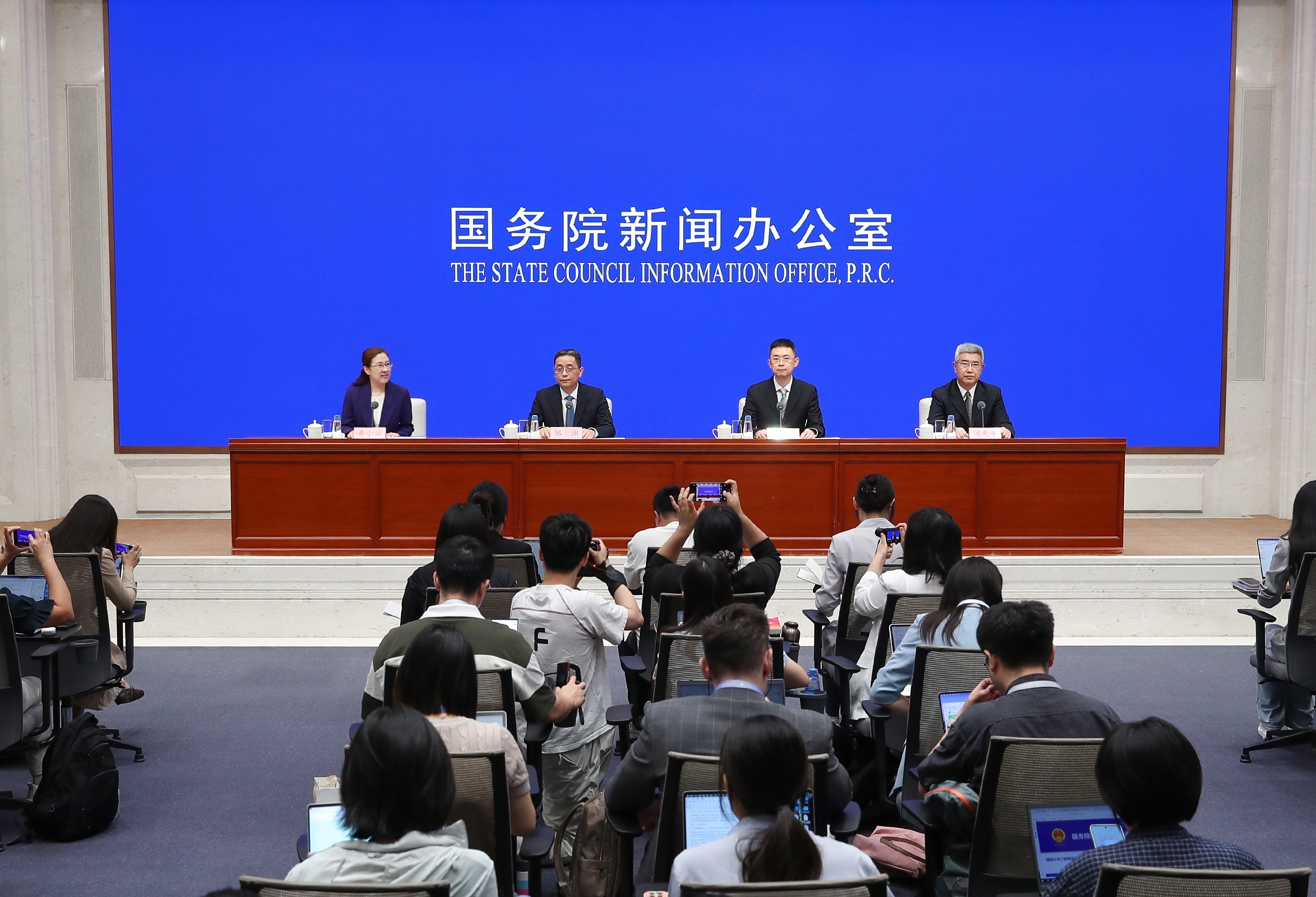
China.org.cn | September 1, 2026


Financial Times:
We have noticed that the panda bonds market is expanding rapidly, and overseas issuers are showing increasing willingness to participate. What considerations does the central bank have in supporting the issuance of panda bonds?
Zou Lan:
Thank you for your question. I'll take this last question. Panda bonds are RMB bonds issued in China by foreign governments, international development institutions, large multinational corporations and other overseas institutions. In recent years, the RMB has been used more widely in cross-border trade, investment and financing and other fields, and overseas entities' demand for RMB financing has increased.
Against this backdrop, the PBC has, in line with market-oriented, law-based and internationally aligned principles, improved arrangements for registration and issuance, information disclosure and the use of proceeds. These efforts have provided a stable institutional environment for overseas issuers to participate in the panda bonds market and facilitated fundraising for overseas institutions. In the first half of 2026, over 160 billion yuan in panda bonds were issued, up by 69% year on year. As of the end of June 2026, over 1.3 trillion yuan in panda bonds were issued by more than 110 issuers from 24 countries and regions across five continents: Asia, Europe, Africa, South America and North America.
In terms of issuers, more and more internationally renowned institutions are participating in the panda bonds market. International development institutions such as the Asian Infrastructure Investment Bank (AIIB) and the Asian Development Bank (ADB), as well as large multinational institutions such as Deutsche Bank, Credit Agricole and Bayer, have become regular foreign issuers in the panda bonds market. In recent years, foreign government agencies such as those from Hungary and Kazakhstan, as well as large multinational institutions such as Morgan Stanley, UBS and Brazil's Suzano, have successively participated in China's panda bonds market. Governments of countries such as Brazil and Indonesia are also preparing to issue panda bonds.
From the perspective of investors, panda bonds have gained widespread recognition among domestic investors such as commercial banks, funds and wealth management companies in China. Overseas institutional investors, who are more familiar with the issuers of panda bonds, also regard them as a major investment and trading instrument. Activity in the panda bonds market has gradually increased. In the first half of 2026, the cumulative transaction volume of panda bonds reached 342.6 billion yuan, up 49% year on year, with 2,493 institutions participating in panda bonds trading, an increase of 599 year on year.
International institutions have issued RMB-denominated panda bonds, and the proceeds have been directed to real economy sectors, such as cross-border trade settlement, physical projects investment and supply chain working capital turnover. This reflects their strong confidence in China's institutional environment, development prospects and the RMB. It also broadens the range of RMB-denominated assets available to global investors and helps foster a sustainable ecosystem for the use of the RMB. Going forward, the PBC will continue to steadily promote the high-quality development of the panda bonds market and facilitate overseas institutions' participation in the issuance and trading of panda bonds in China's onshore market. Thank you.
Shou Xiaoli:
Thank you to all the speakers and friends from the media. Today's briefing is hereby concluded. Goodbye.
Translated and edited by Yang Xi, Zhu Bochen, Xu Kailin, Lin Liyao, Li Congrong, Liu Jianing, Li Huiru, Liu Sitong, Zhang Rui, Liu Qiang, Zhou Jing, Wang Qian, Zhang Junmian, David Ball, and Tudor Finneran. In case of any discrepancy between the English and Chinese texts, the Chinese version is deemed to prevail.