China.org.cn | September 1, 2026


Xinhua Finance:
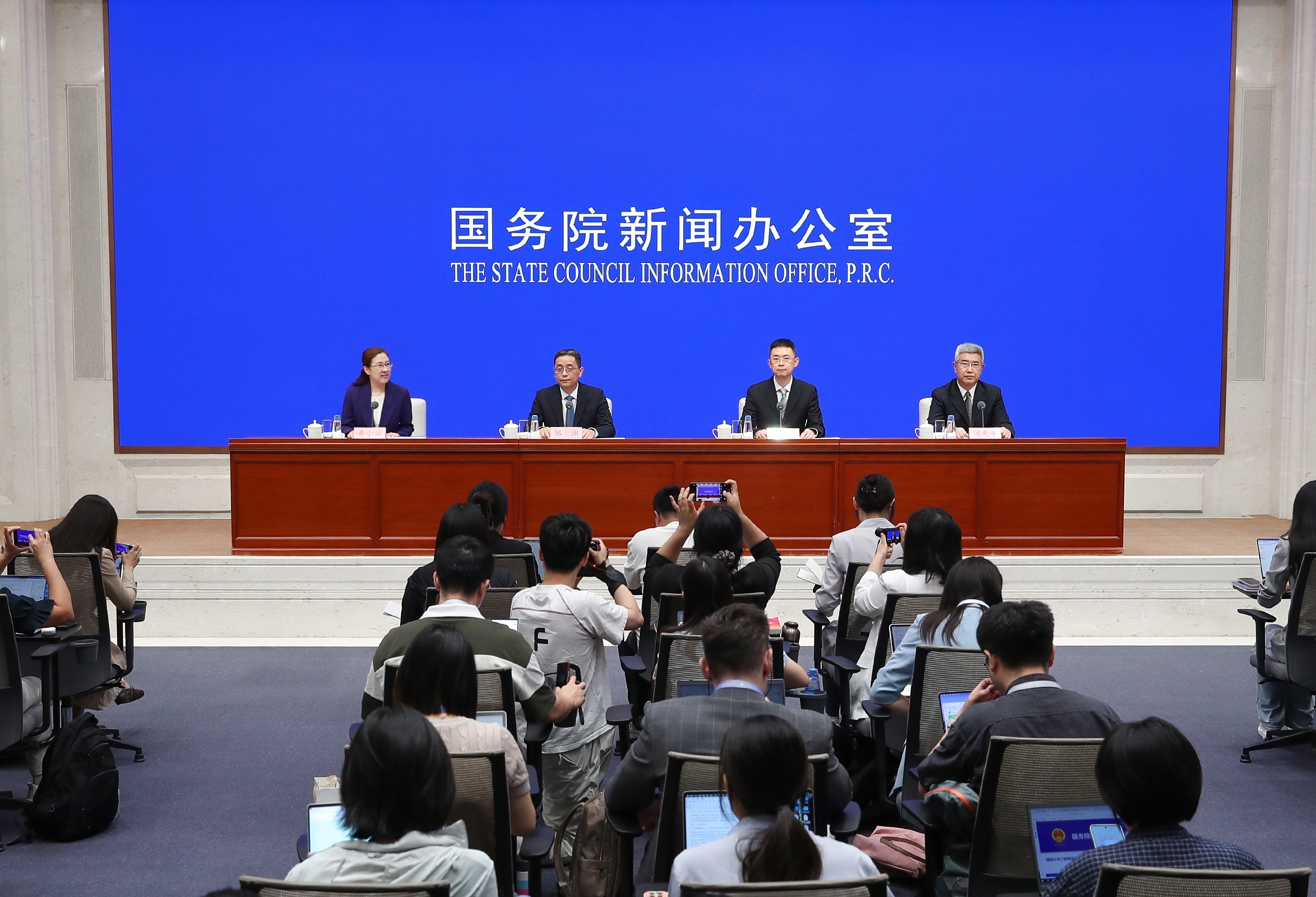
At the Lujiazui Forum this year, PBC Governor Pan Gongsheng proposed improving the short-term interest rate regulation mechanism and moving toward a price-based monetary policy framework. Could you elaborate on the PBC's considerations in exploring and improving the interest rate regulation mechanism? Thank you.
Zou Lan:
Thank you for your question. At this year's Lujiazui Forum, Governor Pan announced two specific measures to improve the short-term interest rate regulation mechanism. As there has been considerable interest in this issue recently, here I would like to take this opportunity to offer a brief explanation.
The first measure is to improve the use for ad hoc repo/reverse repo facility. The ad hoc repo/reverse repo facility establishes an interest rate corridor. When short-term market interest rates remain outside this corridor for a sustained period, the PBC will promptly conduct necessary liquidity operations, which can effectively reduce fluctuations in market interest rates. This round of improvements mainly involves three aspects. First, the operation interest rates have been adjusted. Previously, the rate for the ad hoc repo was set at 20 basis points below the policy rate, while the rate for the ad hoc reverse repo was set at 50 basis points above the policy rate, forming a rate corridor with a width of 70 basis points. The corridor has been further optimized into a symmetric range of 25 basis points above and below the policy rate, narrowing its width to 50 basis points. The adjustment reflects both the more stable operation of short-term interest rates in the money market and the PBC's more precise control of short-term interest rates. Second, the triggering conditions have been made clearer. When DR001 (the interest rate on overnight repos between depository banking institutions with rate securities as pledge) continues to deviate from the rate of ad hoc repo operation, the PBC will initiate corresponding operations to ensure that DR001 operates within the rate corridor. Third, the operation time has been moved earlier. The operation time for ad hoc repo/reverse repo has been adjusted to 3:00 p.m. to 3:30 p.m., one hour earlier than before. This adjustment mainly responds to the needs of primary dealers, offering financial institutions more time to respond, and better aligning with the market practice of conducting most repo transactions before 3:30 p.m.
The second measure is to add more types of overnight reverse repo operations to the regular open market toolkit. In recent years, such overnight operations have accounted for nearly 90% of repo transactions in the money market. Overnight financing has become an important tool for financial institutions to manage liquidity and the market demand has been strong, especially at the end of the month when short-term demand fluctuates greatly. To further improve the interest rate regulation mechanism and enrich the variety of instruments and maturities, the PBC has introduced overnight reverse repo operations to better match the short-term liquidity needs of financial institutions. The first operations were conducted at the end of June, with transactions worth 300 billion yuan and 600 billion yuan operated on June 29 and 30, respectively. Overnight reverse repo operations can smooth out fluctuations at certain special times. Some institutions may have short-term liquidity needs lasting only two or three days. If the PBC only conducts seven-day reverse repo operations, liquidity may accumulate to some extent. In such cases, conducting overnight reverse repo operations can improve the efficiency of liquidity management and reduce costs of financial institutions. Currently, the focus of overnight reverse repo operations is not on the interest rate, but the ability to adjust ultra-short-term liquidity. At this stage, the interest rate of seven-day reverse repo operation remains the primary policy rate, and in practice, it has served well as an anchor for market pricing.
The above two measures are conducive to enhancing the accuracy and effectiveness of the PBC's liquidity management and short-term interest rate regulation. Following the implementation of these measures, short-term interest rates remained stable. At the end of June, DR001 stood at 1.36%, and the fluctuations were relatively small compared with previous quarter-end periods in recent years.
I would also like to make a further clarification here. The volume of open market operations varies considerably, and there are also various maturity types of operations. This is mainly because the factors affecting banks' liquidity supply and demand are quite complex. Fiscal revenue and expenditure, banks' deposits of required reserves, and cash input can all pose a significant impact. The PBC will take these factors into overall consideration and make reasonable arrangements for the types and scale of open market operations. Sometimes liquidity will be withdrawn and sometimes it will be injected. The ultimate goal is to maintain aggregate liquidity at an appropriate level, thereby facilitating the stable operation of short-term interest rates around the policy rate. The volume of any single operation is determined by the needs of aggregate liquidity management, and it is inappropriate to judge the PBC's policy stance based on the size of an individual operation alone. Compared to the PBC's operation volume, short-term market interest rates are a more suitable indicator to observe.
Moving forward, the PBC will continue to advance the reform and improvement of the monetary policy operating framework, steadily and orderly, and better guide the overnight interest rates on the market to operate stably around the policy rate. With regards to the needs of primary dealers, the PBC will explore measures that gradually increase the frequency of overnight reverse repo operations and maintain effective communication with market players. Thank you.