China.org.cn | July 27, 2026


Dazhong Daily:
In recent years, significant progress has been made in promoting standard spoken and written Chinese language throughout the country, especially in ethnic minority areas. What are the main considerations behind the provisions for promoting standard Chinese in the Ethnic Unity and Progress Promotion Law? At the same time, how will the rights of all ethnic groups to use and develop their own languages be guaranteed? Thank you.
Lei Jianbin:
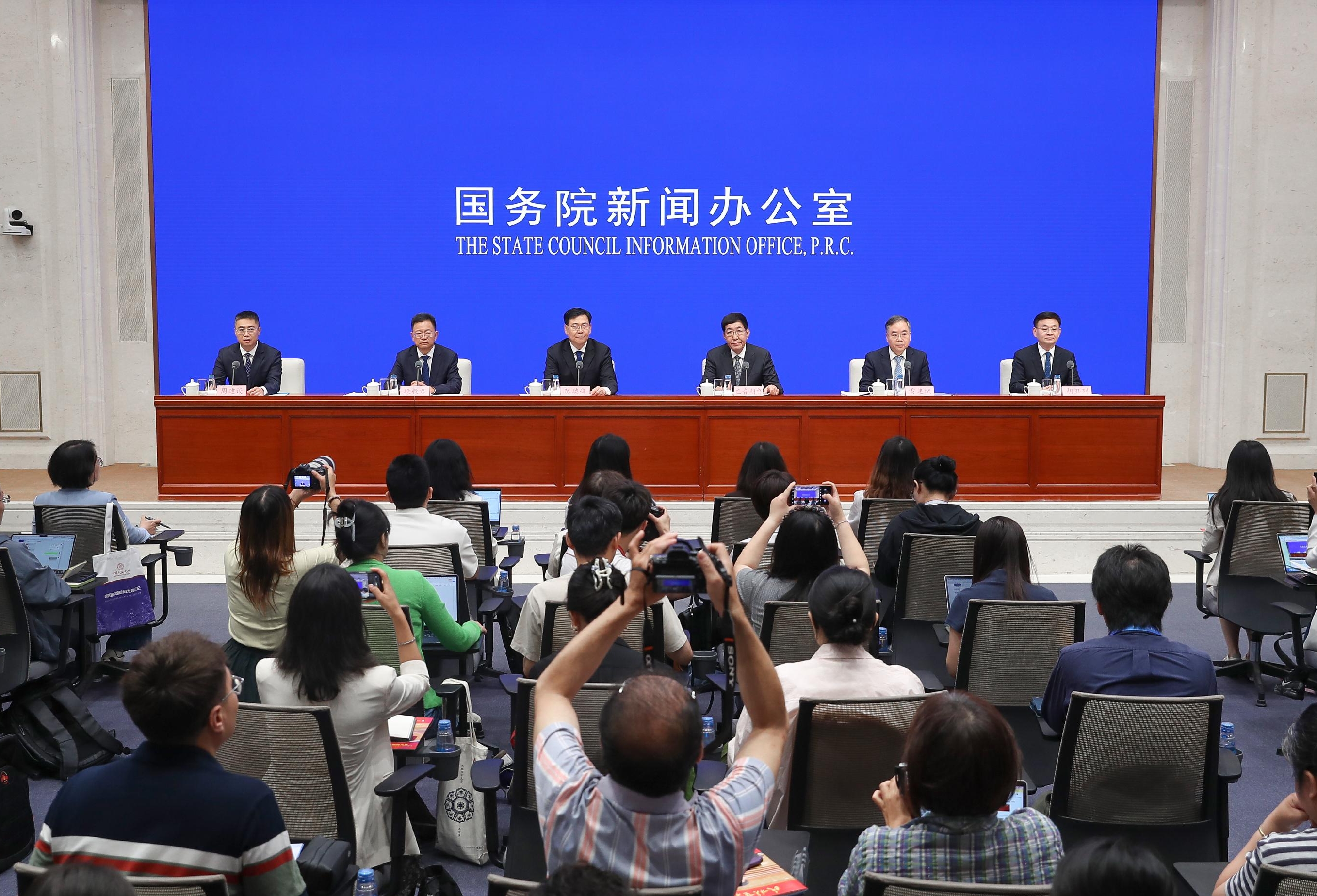
I will take your questions. Thank you. Language is a very complex social phenomenon, which can be viewed from different perspectives. For example, some say language is the shell of thought, while others say it is the carrier of culture; there are all sorts of different opinions. Today I will focus on the perspective of communication. A shared language is an important precondition for people to communicate. Without a shared language, people are unable to communicate effectively or understand each other. Therefore, promoting a national common language is a fundamental task of national development faced by all countries around the world. Why do I say so? Here are some figures: There are more than 2,500 ethnic groups and over 7,000 languages in more than 200 countries and regions around the world. As you can see, promoting a common language in such multi-ethnic countries is a very important and fundamental task. Another statistic shows that more than 100 sovereign countries have provisions in their constitutions regarding a common, official or national language. This gives such languages a clear legal status. For example, the French Constitution stipulates that the language of the French Republic is French. Likewise, many countries have relevant provisions in their constitutions, such as Russia, Switzerland, India and Turkey. The United States stipulates in a presidential executive order that English is the official language of the United States. These are the practices of some other countries. In China, the Constitution stipulates that the country promotes Putonghua, the standard spoken and written Chinese language, as the national common language. Therefore, the promotion of the standard Chinese language becomes a constitutional responsibility. In accordance with the relevant provisions of the Constitution, the Standing Committee of the country's top legislature, the National People's Congress, formulated the Law on the Standard Spoken and Written Chinese Language, a special law concerning the national common language. This law was last revised in December 2025. This is the overall situation.
From a practical perspective, on the current journey toward building a great country and advancing national rejuvenation, the promotion of the national common language plays a fundamental role in improving the scientific and cultural literacy of people of all ethnic groups, helping them to march in tandem toward modernization, and strengthening the sense of community for the Chinese nation. To further highlight the importance of promoting the national common language, Article 15 of the Ethnic Unity and Progress Promotion Law clearly stipulates that the standard spoken and written Chinese language shall be promoted across the country, and used and taught at schools and other educational institutions. No organization or individual shall hinder citizens from learning and using standard Chinese language. It also clarifies requirements for official use, and specifies requirements for the use of standard spoken and written Chinese in public places. These regulations are all in line with the constitutional requirements for promoting the national common language, and also dovetail with the newly revised Law on the Standard Spoken and Written Chinese Language. This is central to building a cultural home shared by all and strengthening the sense of community for the Chinese nation. It also helps leverage the important role of the national common language in advancing the building of this community, and enables all ethnic groups to participate in the push toward national rejuvenation and share its fruits. This is the overall situation.
In addition, you mentioned the issue of protecting the rights of ethnic minorities to learn and use their own spoken and written languages. I think it is important to note that we should not pit the nationwide promotion of the standard spoken and written Chinese language against the learning and use of ethnic minority languages. That all ethnic groups shall have the freedom to use their own spoken and written languages is explicitly guaranteed in the Constitution. Article 4 stipulates that all ethnic groups have the freedom to use and develop their own spoken and written languages. Furthermore, as mentioned earlier, Article 9 of the Law on the Standard Spoken and Written Chinese Language stipulates that all ethnic groups have the freedom to use and develop their own spoken and written languages, and the use of ethnic minority languages shall be in accordance with the relevant provisions of the Constitution, the Law on Regional Ethnic Autonomy and other laws. Article 15 of the Ethnic Unity and Progress Promotion Law also clearly stipulates that the state respects and protects the learning and use of ethnic minority languages, promotes the standardization, normalization and informatization of minority languages, and supports the protection, collation, research and utilization of ancient books of ethnic minorities. Article 29 of the Ethnic Unity and Progress Promotion Law also stipulates that the state encourages all ethnic groups to learn each other's languages. These provisions demonstrate our commitment to the learning and protection of ethnic minority languages. As you all know, the NPC has nearly 3,000 deputies, 442 of whom are from ethnic minorities, accounting for 14.85%. In accordance with the Constitution and the Law on Deputies to the National People's Congress and to the Local People's Congresses at Various Levels, as Mr. Chen just mentioned, "no ethnic group should be left behind." Every ethnic minority, no matter how small its population, must have at least one NPC deputy. Every time the NPC convenes, there are numerous deputies from ethnic minorities. Some require ethnic minority languages for work. The NPC guarantees their right to use such languages when performing their duties as deputies. For example, many conference documents are available in multiple ethnic minority language versions. For today's briefing, I have brought along documents regarding the NPC's deliberations on the Ethnic Unity and Progress Promotion Law for your reference. During the NPC's deliberations on the draft Ethnic Unity and Progress Promotion Law, the draft was translated into seven ethnic minority languages: Mongolian, Tibetan, Uygur, Kazakh, Korean, Yi and Zhuang. As you can see, these are versions of the draft Ethnic Unity and Progress Promotion Law translated into various ethnic minority languages for the NPC's deliberations. The NPC fully guarantees that deputies from all ethnic minorities can perform their duties in their own ethnic languages. The promotion and popularization of the standard spoken and written Chinese language, as well as the guarantee of ethnic minorities' rights to use their own ethnic languages, are provisions laid down in the Constitution and laws, with legal safeguards in place. The two should never be set against each other.
Thank you.