China.org.cn | July 27, 2026


Zhou Jianshe:
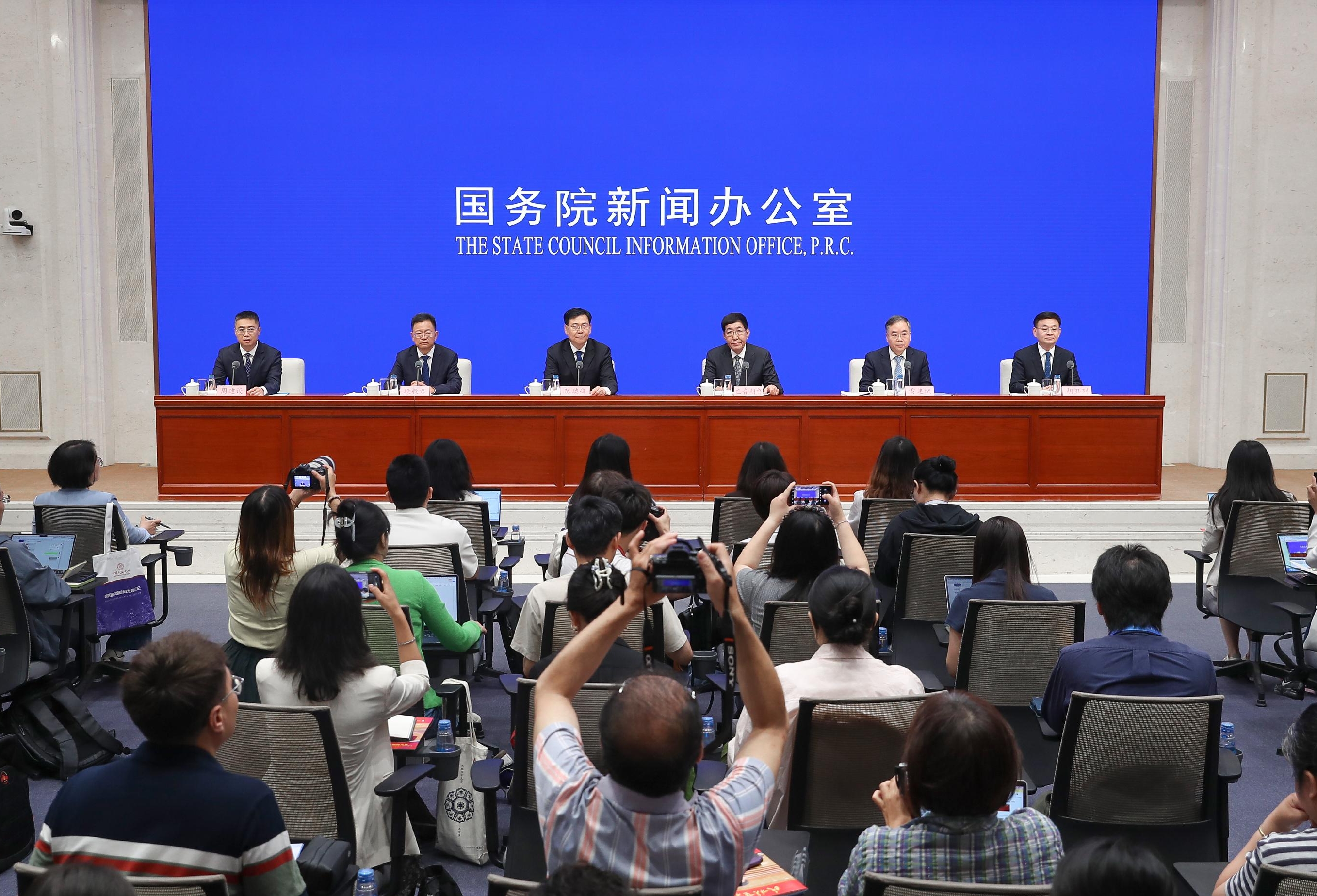
Thank you, Mr. Chen, for your introduction. I would now like to welcome Mr. Bayin Chaolu to present his introduction.
Bayin Chaolu:
Ladies and gentlemen, friends from the media, good morning. It is my pleasure to introduce the basic legislative process of the Ethnic Unity and Progress Promotion Law. Formulating this law is a major political and legislative task deployed by the CPC Central Committee with Comrade Xi Jinping at its core. In August 2023, the CPC Central Committee approved the legislative plan of the 14th NPC Standing Committee, which included the Ethnic Unity and Progress Promotion Law as a legislative project of the current NPC. In July 2024, the third plenary session of the 20th CPC Central Committee clearly proposed formulating a law to promote ethnic unity and progress. In August 2025, General Secretary Xi Jinping chaired a meeting of the Political Bureau of the CPC Central Committee to study the draft law. This was the first draft law studied by the Political Bureau of the CPC Central Committee in more than 30 years. The centralized and unified leadership of the CPC Central Committee has been upheld through the entire process of legislation, from project initiation and drafting to deliberation. Since the legislative process was launched in November 2023, the law has completed all legislative procedures in just over two years before being adopted by an overwhelming majority at the NPC session. Fundamentally, this was made possible by the strong leadership of the CPC Central Committee and General Secretary Xi Jinping, as well as the scientific guidance of Xi Jinping Thought on Socialism with Chinese Characteristics for a New Era, and particularly General Secretary Xi Jinping's key theory on strengthening and improving work on ethnic affairs.
The NPC Standing Committee thoroughly implemented the important instructions of General Secretary Xi Jinping and the decisions and plans of the CPC Central Committee, fully leveraged the leading role of the people's congresses in legislative work, and adhered to scientific, democratic and law-based legislation. During this process, Zhao Leji, chairman of the NPC Standing Committee, twice presided over meetings of the leading Party members group of the NPC Standing Committee to study major issues related to the legislation. Under the leadership of the leading Party members group of the NPC Standing Committee, a legislative leading group was established, headed by Vice Chairman Li Hongzhong, with Vice Chairmen Peng Qinghua, Losang Jamcan and Shohrat Zakir serving as deputy heads. Such a high-level group has been rare in legislative work in recent years, underscoring the significance of this law. At the same time, a dedicated task force was set up under the legislative leading group, along with a working mechanism involving officials from relevant departments to draft the law. Extensive research and field studies were carried out. The four vice chairmen led legislative research teams to 15 provinces, autonomous regions and municipalities, while relevant departments carried out surveys across the country, directly listening to the legislative needs of officials and people of all ethnic groups and gaining an in-depth understanding of their suggestions and recommendations. The NPC Ethnic Affairs Committee, the NEAC and other relevant departments systematically reviewed and studied more than 1,400 policy documents, laws and regulations related to ethnic work. Nineteen special research projects were commissioned to experts in relevant fields. Particular efforts were made to collect and analyze legislation and implementation practices concerning ethnic affairs in 46 countries. Opinions from all sectors were extensively solicited throughout every stage of the legislative process. On two occasions, comments on the draft law were sought from more than 380 central government departments, local authorities and other institutions across provinces, autonomous regions and municipalities. Opinions from NPC deputies were also solicited on multiple occasions. The full text of the draft law was published twice to solicit public comments, drawing suggestions from nearly 50,000 participants. These efforts helped build the broadest possible consensus on the legislation, making the law more consistent with the spirit of the Constitution and winning public support. They ensured that the law is effective, workable and enforceable, fully demonstrating the notable strengths of the system of people's congresses and serving as a vivid example of putting into practice the key concept of whole-process people's democracy.
The Ethnic Unity and Progress Promotion Law is a fundamental law in the new era for implementing relevant provisions of the Constitution, handling ethnic affairs and carrying out ethnic work. Structurally, it contains a preamble, making it the first law in more than 30 years to include such a feature. This arrangement further highlights the law's political significance, principled nature, declaratory function and guiding role. It is distinguished by a clear political orientation and a well-defined main theme, while embodying political vision, historical depth, theoretical richness and broad practical relevance. In terms of content, the law defines the overall requirements and important principles for promoting ethnic solidarity and progress, as well as the responsibilities of relevant entities. It sets forth specific provisions on fostering a culture home shared by the Chinese nation, promoting exchanges, interactions and integration among ethnic groups, and advancing common prosperity and development for all ethnic groups. It also specifies safeguard and oversight measures as well as legal liabilities. The law further improves the institutional mechanisms urgently needed for governance in the field of ethnic work, essential for promoting ethnic solidarity and progress, and necessary for effectively preventing and defusing risks and hidden dangers in the ethnic affairs field. It establishes clear and stable standards of conduct and provides a predictable framework for the long term. This law marks the first time that General Secretary Xi Jinping's key theory on strengthening and improving work on ethnic affairs has been incorporated into national legislation. It is also the first law to explain, from a legal perspective, core concepts such as forging a strong sense of community for the Chinese nation and advancing the building of this community, as well as the first to define, in legal form, the framework for the Party's ethnic work in the new era. It marks a successful practice of translating the Party's major theoretical and practical achievements in ethnic work into the will of the state through national legislation. The implementation of this law will provide solid legal safeguards for the sustained advancement of the cause of ethnic solidarity and progress and help unite the tremendous strength of all ethnic groups nationwide in advancing national rejuvenation and building China into a great country through Chinese modernization.
The above is a brief introduction to the formulation of this law. Thank you.