China.org.cn | July 27, 2026


Zhou Jianshe:
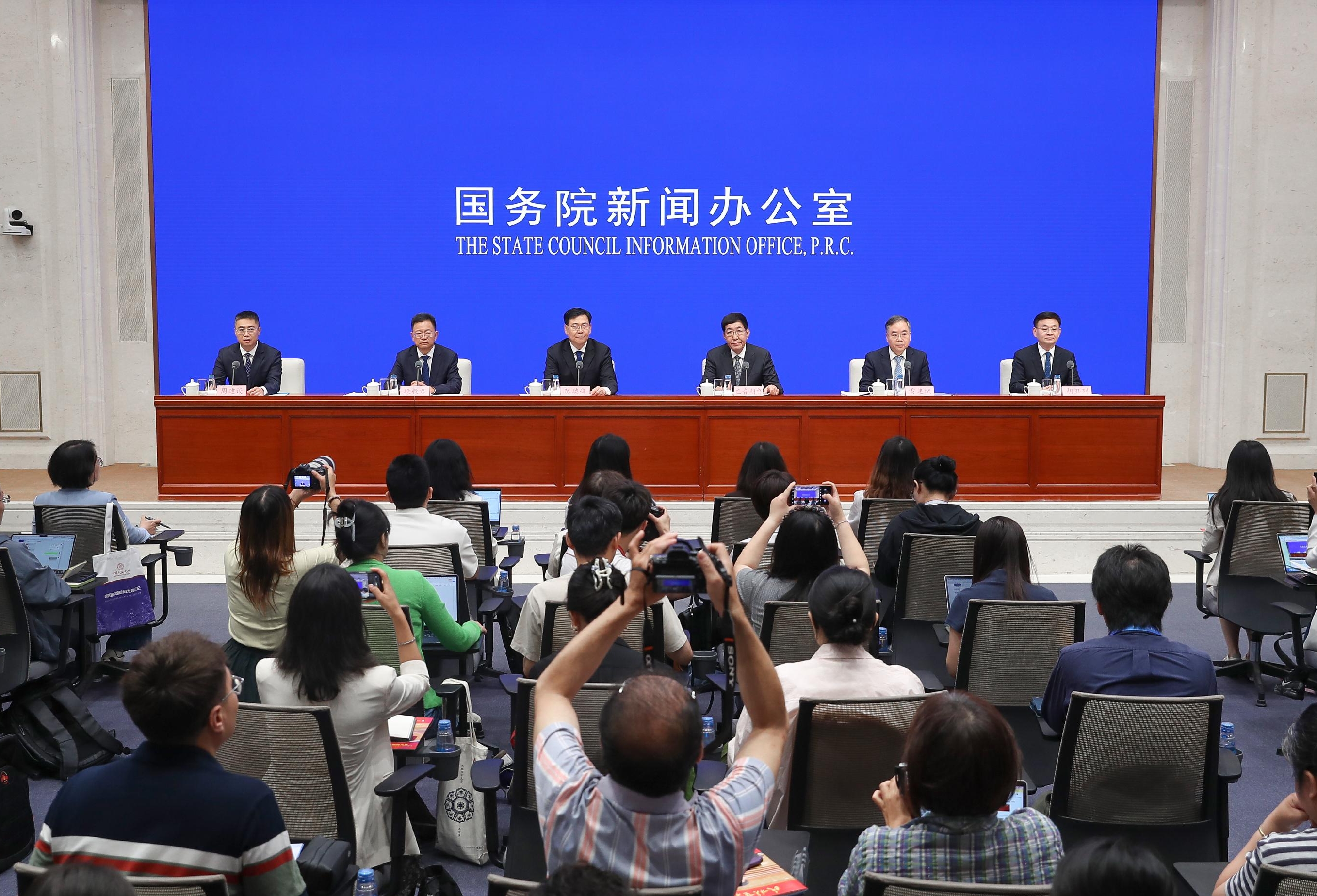
Thank you, Mr. Bayin Chaolu, for your introduction. The floor is now open for questions. Please identify your news outlet before asking your questions.
CCTV:
Since the 18th CPC National Congress, socialism with Chinese characteristics has entered a new era, and historic achievements have been made across various undertakings. My question is: What major theoretical and practical innovations have been achieved in the Party's ethnic work in the new era? In addition, how are these achievements reflected in the Ethnic Unity and Progress Promotion Law? Thank you.
Duan Yijun:
Thank you for your questions. I will answer them. The most important theoretical innovation achieved in the Party's ethnic work in the new era is the formation of General Secretary Xi Jinping's key theory on strengthening and improving work on ethnic affairs, which is embodied in "Twelve Musts." The "Twelve Musts" systematically set forth the guiding principles, historical orientation, central theme, institutional guarantees, major tasks and approaches for the Party's ethnic work in the new era, and provide profound answers to the fundamental questions of what banner to uphold and what path to follow in carrying out ethnic work. What I would particularly like to highlight to our journalist friends today is that this key theory represents the latest achievement of applying the "Two Integrations" (integrating the basic tenets of Marxism with China's specific realities and the best of traditional Chinese culture) in the field of ethnic work. It embodies the essence of Marxist ethnic theories while being deeply rooted in China's tradition of national unity. It places forging a strong sense of community for the Chinese nation at the center of ethnic work. Furthermore, it upholds the Party's leadership over ethnic work, adheres to the Party's basic theories and policies on ethnic work — namely ethnic equality, ethnic solidarity, regional ethnic autonomy and common prosperity for all ethnic groups — and resolutely safeguards the fundamental and overall interests of the Chinese nation. This key theory represents a major development of the correct path with Chinese characteristics for addressing ethnic issues. It carries forward the Party's ethnic theories and policies while reflecting the new historical stage of China's pursuit of national rejuvenation. It adapts to and advances the historical trend toward forging the Chinese nation into an integrated community from its diversity, draws on both the experiences and lessons of addressing ethnic issues around the world, upholds a correct view of the history of the Chinese nation, and firmly safeguards national sovereignty, security and development interests. This key theory serves as the fundamental guideline for the Party's ethnic work in the new era. It is both the epistemology through which we understand ethnic issues and the methodology for carrying out ethnic work. It systematically sets out key tasks such as fostering a cultural home shared by the Chinese nation, promoting extensive exchanges, interactions and integration among ethnic groups, advancing common prosperity and development for all ethnic groups, and governing ethnic affairs in accordance with the law. In conclusion, the formation of this key theory marks a new height in the Party's understanding of the laws governing ethnic work, a new stage in adapting Marxist ethnic theories to the Chinese context and the needs of the times, and a new phase in advancing Chinese modernization through the great unity of the Chinese nation.
Guided by this key theory, China's work on ethnic affairs has undergone historic changes and made historic achievements. People of all ethnic groups have jointly written a Chinese miracle in the history of human poverty reduction, fulfilled the millennia-old aspiration of eradicating poverty and striving for prosperity, and embarked on a new journey of Chinese modernization. From 2012 to 2025, the combined GDP of the five autonomous regions grew from 3.25 trillion yuan to 8.66 trillion yuan. The level of interactions, exchanges and integration among China's ethnic groups is unprecedented. The country's migrant population of ethnic minorities has reached more than 33 million, and more than one-third of ethnic minorities live in cities and scattered areas. The distribution pattern has continued to deepen, with different ethnic groups living widely dispersed across the country, clustered in smaller communities, and deeply integrated with one another. A stronger sense of community for the Chinese nation has taken root among the people. The term "Chinese nation" is now enshrined in the Constitution, and "forging a stronger sense of community for the Chinese nation" has been written into the Party Constitution. The sense of the Chinese nation as one family, united in building the Chinese Dream, has never been stronger.
The Ethnic Unity and Progress Promotion Law takes General Secretary Xi Jinping's key theory on strengthening and improving work on ethnic affairs as its fundamental guideline. It translates the core essence of this key theory — the "Twelve Musts" — into the will of the state. That essence is embodied centrally in the law's preamble and general provisions and runs through every chapter, underscoring the core framework of ethnic unity and progress in the new era. The law's legislative intent is to forge a stronger sense of community for the Chinese nation and advance its development. It translates major reform achievements, valuable experience and institutional measures of ethnic work in the new era into national legal provisions, building a comprehensive and multi-level institutional mechanism. Taking the rule of law as its basic path for advancing ethnic unity and progress, the law formally sets out the Party and the state's policies, principles and stance on ethnic work. It marks a milestone in advancing the rule of law and modernization of ethnic affairs governance in China, and lays a solid legal foundation for taking the correct and distinctively Chinese approach to handling ethnic affairs.
Thank you.