China.org.cn | July 27, 2026


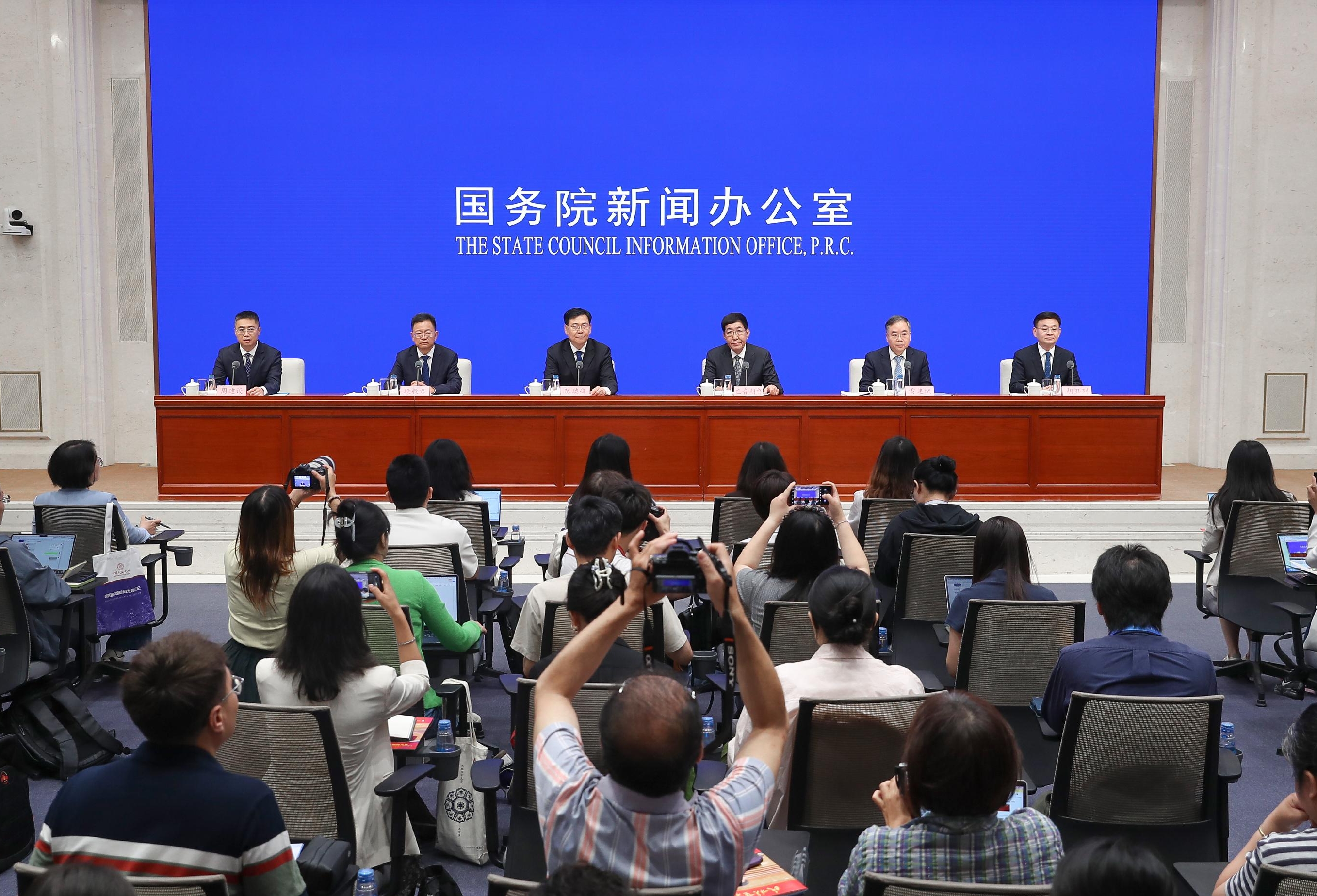
Zhou Jianshe:
Due to time constraints, we will take one last question.
Tibet.cn:
Some foreign media outlets have reported on boarding schools in Xizang, labeling them as "forced assimilation," "forced boarding" and "human rights violations." What is your response to these remarks that link educational assistance measures with "forced assimilation?" What are China's reasons for establishing boarding schools in Xizang and what results have been achieved? How does the Ethnic Unity and Progress Promotion Law guarantee the rights to education for people of all ethnic groups? Thank you.
Duan Yijun:
Thank you for your questions. The foreign media reports you mentioned are completely contrary to objective facts.
First of all, the boarding system precisely reflects China's commitment to ethnic equality and educational fairness. China's Compulsory Education Law stipulates that "county-level people's governments shall set up boarding schools as needed." This article explicitly stresses that the purpose of setting up boarding schools is to "ensure that school-age children and adolescents living in scattered locations can enroll in compulsory education." This policy was introduced by the Chinese government based on its national conditions to ensure that all ethnic groups in China, rather than any specific ethnic group, enjoy equal rights to education.
Secondly, China's boarding school system means that schools provide students with accommodation and dining services. These are neither closed-campus schools nor run under military-style management. Whether a student chooses to live on campus is entirely up to the students and their parents based on their personal family and educational needs. In fact, the number of boarding students is dynamic, depending on individual needs. Students can switch from boarding to day school, and some switch from day school to boarding. It is entirely a matter of choice for students and their parents. Boarding students can return home on weekends, holidays, and for winter or summer vacations. Parents can also visit their children at schools at any time or pick them up whenever necessary.
Third, from the perspective of policy implementation, there is a very strong desire among Xizang's farmers and herders to send their children to boarding schools. As we all know, the Xizang Autonomous Region covers a vast area with a highly scattered population. Sending children to school incurs high cost for farmers and herders, and places a heavy burden on parents to pick up and drop off their children. In order to ensure that children of all ethnic groups in the plateau have equal access to high-quality education and to respond to the wishes of the people, the government has implemented a boarding school system in some farming and pastoral areas to better provide students with safe and convenient conditions and meet the needs of parents and students.
Here I would like to add two facts. First, in old Xizang, there was not a single modern school in the true sense. The enrollment rate of school-age children was less than 2%, and more than 95% of the population was illiterate. The children of the vast majority of serfs were deprived of their right to education. In particular, children in pastoral areas could only move around following the cattle and sheep, and the right to equal education was out of reach for ordinary people. Only now, under the leadership of the CPC, has the sunshine of educational equity illuminated every tent and household across the plateau. According to data released by the autonomous region in 2024, the enrollment rate of school-age children in the region reached 99.98%, and the completion rate of compulsory education reached 96.94%. The second fact I want to add is that in world history, it was precisely some countries that engaged in political manipulation on human rights issues which forcibly sent indigenous children to colonial-era residential schools to suppress their culture and identity. Our boarding system is fundamentally different from theirs. It is worth mentioning that, in order to better guarantee equal rights to education for all ethnic groups, the Ethnic Unity and Progress Promotion Law has made comprehensive legal provisions on spoken and written language education, textbook compilation and use, joint learning, living and growing among students of all ethnic groups, cross-regional exchanges among young people, and the allocation of public service resources. This fully demonstrates China's experience in unity, progress and common prosperity and development, providing a valuable reference for the governance of ethnic affairs worldwide.
Thank you.
Zhou Jianshe:
Today's press conference is hereby concluded. Thank you to our speakers and friends from the media. Goodbye.
Translated and edited by Wang Xingguang, Liu Caiyi, Xu Kailin, Yang Xi, Li Congrong, Li Xiao, Yang Chuanli, Wang Yanfang, Wang Wei, Wang Yiming, Huang Shan, Zhu Bochen, Ma Yujia, Zhou Jing, Gong Yingchun, Li Huiru, Yuan Fang, Jay Birbeck, and David Ball. In case of any discrepancy between the English and Chinese texts, the Chinese version is deemed to prevail.