China.org.cn | July 27, 2026


Phoenix TV:
Some foreign media outlets have recently reported that the provisions of the Ethnic Unity and Progress Promotion Law regarding extraterritorial application constitute "extraterritoriality" or "long-arm jurisdiction." What is your response to this? Thank you.
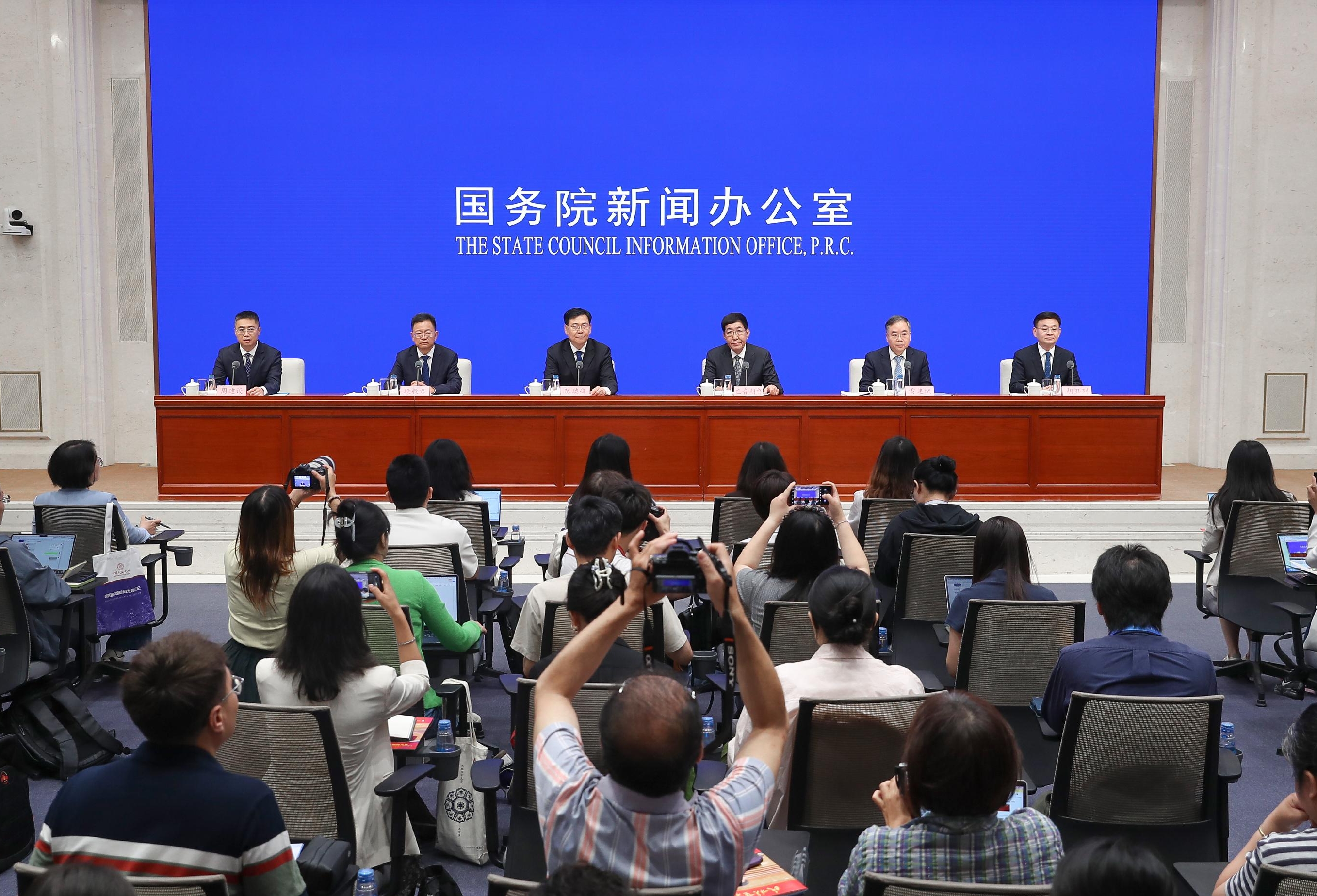
Hu Weilie:
Thank you for your question. I'll take this one. Recently, we have noticed that some Western media outlets have focused on Article 63 of the Ethnic Unity and Progress Promotion Law, which states that organizations and individuals outside the territory of the People's Republic of China who engage in acts that undermine ethnic unity and progress or create ethnic separatism against the People's Republic of China shall be held legally responsible. They have made a distorted interpretation of it and even smeared it as "extraterritoriality" or "long-arm jurisdiction." Such views are not objective and are contrary to the spirit of legal principles. This article is based on China's national conditions, conforms to legal principles and is in line with international practice. It is a just, legitimate, necessary and feasible legal provision.
First, this is normal legislative practice carried out by a sovereign state in accordance with the law, and conforms to the basic principles of international law. Maintaining national unity, territorial integrity and social stability is a matter of sovereignty for all countries and a fundamental principle established by international law. All countries have the right to prevent separatist and subversive activities and maintain social unity and normal order through domestic legislation. This is common practice in the international community. Article 63 is an exercise of the inherent legislative power of a sovereign state in accordance with the law, and is consistent with international legal norms in the fields of national security, anti-separatism and social governance. It targets illegal acts that undermine ethnic unity and progress and create ethnic separatism. Its fundamental purpose is to safeguard ethnic harmony, social stability and national security, and it is in line with the spirit of international law and the governance practices of various countries.
Second, this is an important system for consolidating the legal guarantees for the work on ethnic affairs and safeguarding the fundamental interests of all ethnic groups. Ethnic unity is a crucial cornerstone for national prosperity and development, and it is also the shared aspiration and fundamental well-being of all ethnic groups. Currently, various risk factors at home and abroad are intertwined. Illegal activities that deliberately sow discord in relations among ethnic groups, undermine ethnic unity and endanger national security will erode the foundation of ethnic unity and harm public interest and the people's legitimate rights and interests. Article 10 of the Ethnic Unity and Progress Promotion Law clearly states that the cause of ethnic unity and progress shall not be interfered with by external forces. We also firmly oppose all acts of slandering, smearing, containing, suppressing, infiltrating and undermining the People's Republic of China under the pretext of ethnic, religious or human rights issues. Article 63 elevates long-standing and effective governance experience into a legal system, providing a legal basis for combating illegal activities and building a solid security line for exchanges, interactions, integration and common prosperity among all ethnic groups.
Third, this is a legislative provision that aligns with the principle of jurisdiction stipulated in relevant Chinese laws. It uses the rule of law to resist various illegal acts related to ethnicity from abroad. It targets illegal acts, and accountability will be strengthened in accordance with laws and regulations, and in a prudent and standardized manner. It effectively safeguards China's sovereignty, security and development interests, as well as the legitimate rights and interests of all ethnic groups, and will not affect normal cultural exchanges, academic discussions, economic and trade cooperation and other activities between China and foreign countries.
That is all from me on this question. Thank you.