China.org.cn | March 27, 2026


CCTV:
We have noted that the CPI increased 1.3% year on year in February. Could you explain what drove this increase? How would you assess this phenomenon? Thank you.
Fu Linghui:
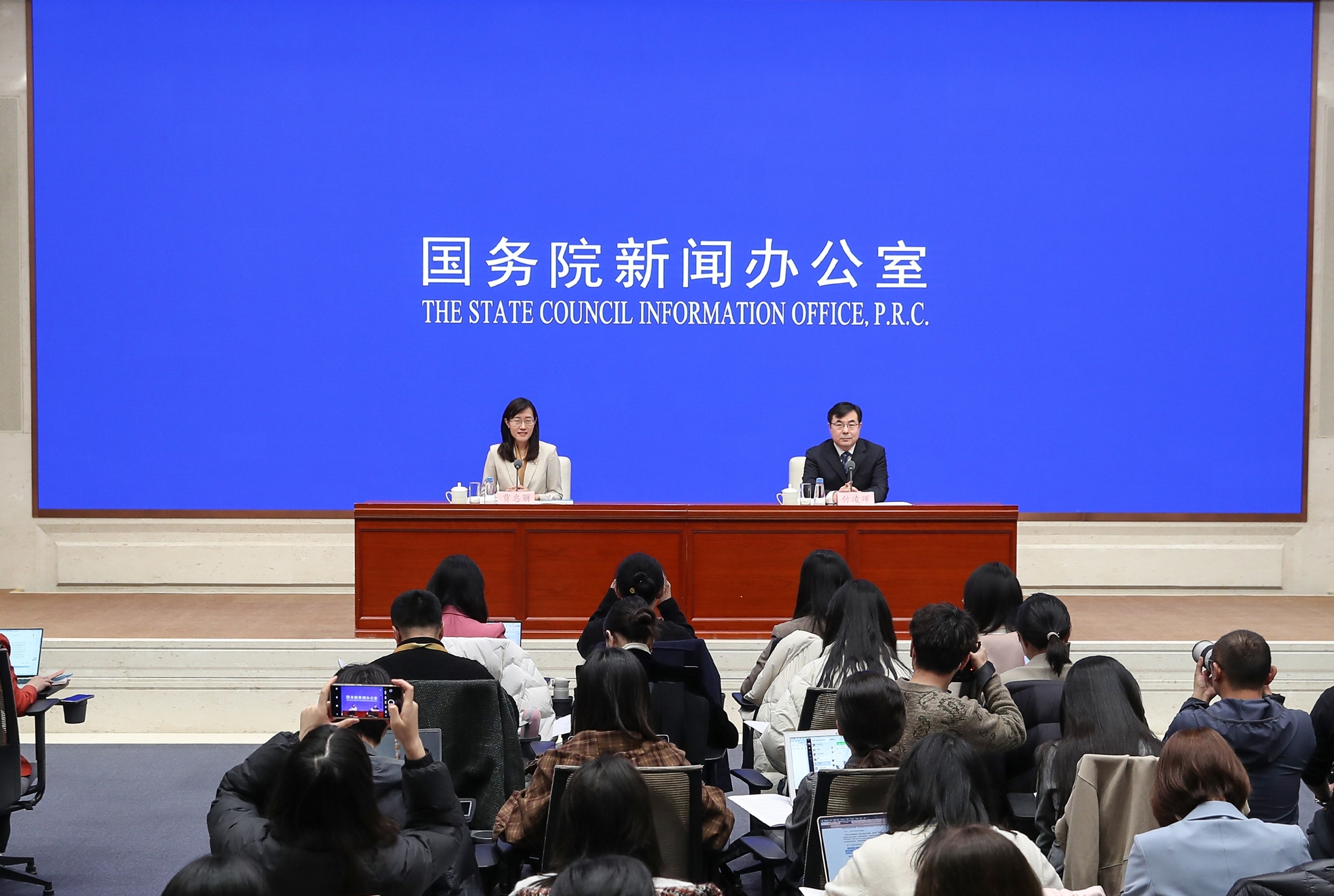
Thank you for your questions. The price outlook is a topic of broad public concern. In the first two months of this year, the CPI showed an overall upward trend. On a month-on-month basis, consumer prices rose 0.2% in January and 1% in February. The sharper increase in February was mainly driven by the Spring Festival holiday. With the Spring Festival falling in January last year but in February this year, the month-on-month increase in consumer prices was notably larger in February. Year on year, the CPI rose 0.2% in January and 1.3% in February, driven by both the Spring Festival and improved domestic demand. The sharper February reading partly reflects the Spring Festival falling in different months this year and last.
In February, the year-on-year CPI increase hit a three-year high. The main contributing factors were as follows. First, service prices growth accelerated significantly. With the extended Spring Festival holiday this year, residents significantly increased travel, visits to relatives and other outings. A notable feature of this year's Spring Festival was that many residents returned to their hometowns first and then traveled, pushing up prices for transportation, accommodation, dining and other services. In February, air ticket prices rose 29.1% year on year, vehicle rental prices climbed 19.8%, and vehicle repair and maintenance prices increased 12%. Travel-related prices also rose year on year, with travel agency fees up 12.5%, hotel accommodation up 5.4%, and takeout and dining prices up 5.6%. Driven by these factors, service prices in February increased 1.6% year on year, significantly above the January reading. This drove up the CPI by about 0.75 percentage point for the month, making it the single largest contributor to the overall gain. Second, food prices rose after a fall. During the Spring Festival holiday, more residents visited relatives and gathered with friends, boosting demand for food and pushing up prices of related goods. In February, prices of fresh vegetables, beef, mutton and fresh fruit rose between 5.9% and 10.9% year on year, with all gains accelerating from the previous month. Accordingly, in February, food prices turned from a year-on-year decrease of 0.7% in January to an increase of 1.7% in February, contributing about 0.3 percentage point to the CPI rise. Together, service and food prices contributed about 1 percentage point to the month's CPI increase. Third, industrial consumer goods prices rose at a faster pace. In February, industrial consumer goods prices rose 1.1% year on year, up 0.2 percentage point from January. Among them, household appliances climbed 5.3%, daily household goods rose 2.6% and clothing prices increased 2%.
Given that February CPI figures were heavily affected by the Spring Festival holiday, it is more useful to look at the combined January-February data for a clearer comparison. In the first two months, the CPI rose 0.8% year on year, matching the pace in December last year but outpacing both the fourth quarter and the full year of last year, indicating a mild recovery trend. Core CPI excluding food and energy rose 1.3% year on year, expanding 0.1 percentage point from December last year and slightly outpacing the fourth quarter of last year, also pointing to a mild recovery.
A moderate rebound in consumer prices helps improve business operations, supports employment and income growth among residents, and facilitates broader economic circulation. Looking ahead, although recent volatility in international energy prices has exerted some imported inflationary pressure on domestic prices, China's goods and service markets retain ample supply capacity, and the foundation for price stability remains intact. We will implement more proactive and effective macroeconomic policies to expand domestic demand and optimize supply. We will also roll out income-growth plans for urban and rural residents, cultivate new consumption scenarios, and further improve the consumption environment, all of which will support a continued improvement in price conditions. Thank you.