China.org.cn | March 27, 2026


CNBC:
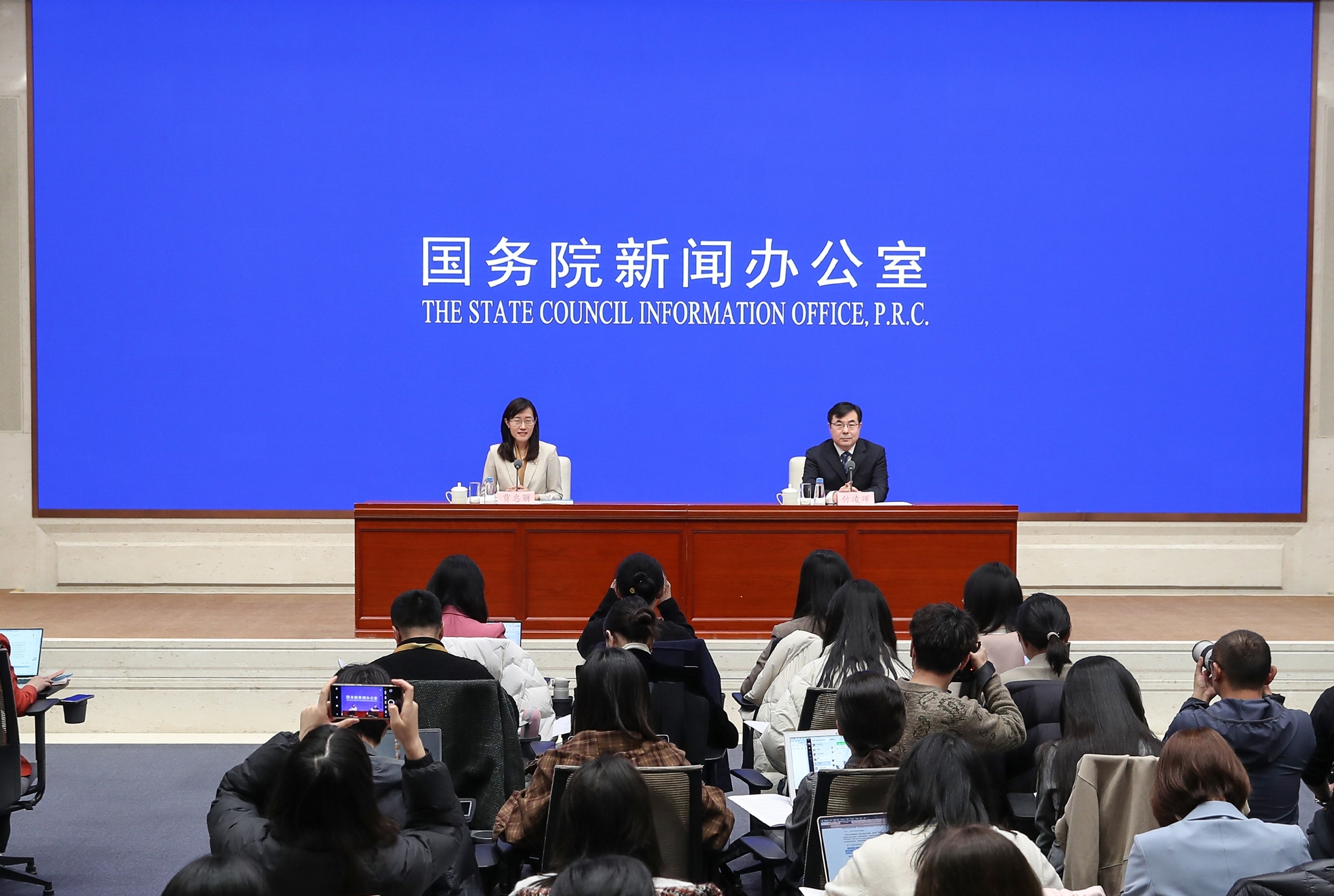
The Report on the Work of the Government has set an economic growth target of 4.5% to 5% for this year. Based on the economic performance in the first two months, which end of this target range is more likely to reach? What are the main challenges in achieving the annual growth target? Thank you.
Fu Linghui:
Thank you for your questions. This is indeed an issue of broad interest. This year marks the beginning of the 15th Five-Year Plan period. Economic performance at the start of the year serves as an important indicator for assessing the overall economic trend for the year, and has therefore attracted wide attention. Ahead of the release of key macroeconomic data, a number of market institutions made forecasts for major indicators in the January and February period, with considerable divergences among them, indicating the difficulty of assessing economic conditions during this period. The data released today came in significantly better than market expectations overall, reflecting the strong vitality and resilience of the Chinese economy. We have every reason to be confident in China's economic prospects.
Looking ahead, domestic and international challenges remain complex and intertwined, with numerous uncertainties and instabilities. However, the fundamental conditions supporting China's long-term economic trajectory remain unchanged. With the cultivation and expansion of new quality productive forces, the accelerated building of a new development pattern, and the enhanced effectiveness of macroeconomic policies, the national economy is expected to maintain steady momentum, continuously advancing toward greater innovation and higher quality. What is the basis for this assessment? I would point to the following reasons:
First, the economy has gotten off to a strong start this year. From January to February, China's production and demand showed steady improvement, with key economic indicators picking up significantly. Positive factors accumulated and strengthened, laying a solid foundation for full-year growth. During this period, the growth rates of industrial value added for enterprises above designated size and total retail sales of consumer goods rose by 1.3 percentage points and 1.1 percentage points, respectively, compared with the fourth quarter of last year. Goods exports grew notably faster, and fixed-asset investment shifted from decline to growth. Alongside improvements in key supply and demand indicators, prices posted a modest recovery, driven in part by better market supply-demand dynamics. Consumer prices rose at a slightly faster pace in January and February, while the PPI decline continued to narrow, contributing to increased incomes for businesses and households.
Second, expanding demand provides strong momentum. By adhering to the principle of mutual benefit, expanding economic and trade exchanges with countries worldwide, advancing high-quality Belt and Road cooperation, and actively promoting digital and green trade, China will open up new space for foreign trade development. In January-February, China's imports and exports with ASEAN, the EU and Belt and Road partner countries all grew at around 20%. As the opening year of the 15th Five-Year Plan gets underway, efforts across sectors to boost new types of infrastructure and public welfare infrastructure, and to strengthen project support, resource and funding guarantees, will help drive investment growth. In January-February, infrastructure investment rose 11.4% year on year. This year's government work report proposes formulating and implementing an income growth plan for urban and rural residents, promoting the expansion and upgrading of goods consumption, and launching initiatives to upgrade services to the benefit of consumers. These measures will help boost residents' ability and willingness to spend. The consumer confidence index rose 1 point in February, continuing its upward trend for the second consecutive month.
Third, industrial upgrading offers robust support. Innovation-driven development is playing a stronger leading role, with emerging industries expanding rapidly and providing greater support for production. In January-February, value added in high-tech manufacturing industries above designated size grew 13.1% year on year, while that of digital product manufacturing rose 8.8%, both significantly outpacing overall industrial growth. The rapid application of new technologies like AI is increasingly driving the transformation and upgrading of traditional industries and the development of emerging sectors. During this period, value added in railway, shipbuilding, aerospace and other transportation equipment manufacturing grew 13.7% year on year, while that in electrical machinery and equipment manufacturing rose 8.7%. The vigorous growth of green industries has injected new momentum into industrial upgrading. In January-February, output of wind turbine generators surged 28.7% year on year, while output of lithium-ion batteries for energy storage soared 84%. Over recent years, steady progress in green energy transformation has yielded significant results, with the development of new energy sources such as wind and solar driving increased demand for energy storage and spurring substantial growth in related products.
Fourth, macroeconomic policies provide strong safeguards. The Central Conference on Economic Work and the "two sessions" have comprehensively mapped out this year's economic work. Fiscal policy will be more proactive, with spending set to exceed 30 trillion yuan for the first time. Monetary policy will remain moderately loose, ensuring reasonable and ample liquidity, keeping overall social financing costs low, and strengthening the synergy between reform measures and macroeconomic policies. This will help boost economic momentum and vitality. In terms of policy implementation, efforts to implement major national strategies, enhance security capacity in key areas, and carry out large-scale equipment upgrades and consumer goods trade-in programs have gradually shown results in expanding domestic demand and boosting confidence since the start of the year. In January-February, investment in equipment and tool purchases, which is closely linked to equipment renewal, maintained rapid growth. Sales of goods covered by consumer goods trade-in programs also rebounded significantly year on year.
Taking all these factors into account, China's economy is expected to maintain stable growth with steady progress in the period ahead, laying a solid foundation for meeting this year's annual targets and objectives. Thank you.