China.org.cn | September 3, 2026


Red Star News:
My question is about foreign trade in China's western regions. Could you brief us on the regions' import and export performance since the beginning of this year? What are the main factors supporting its growth? Thank you.
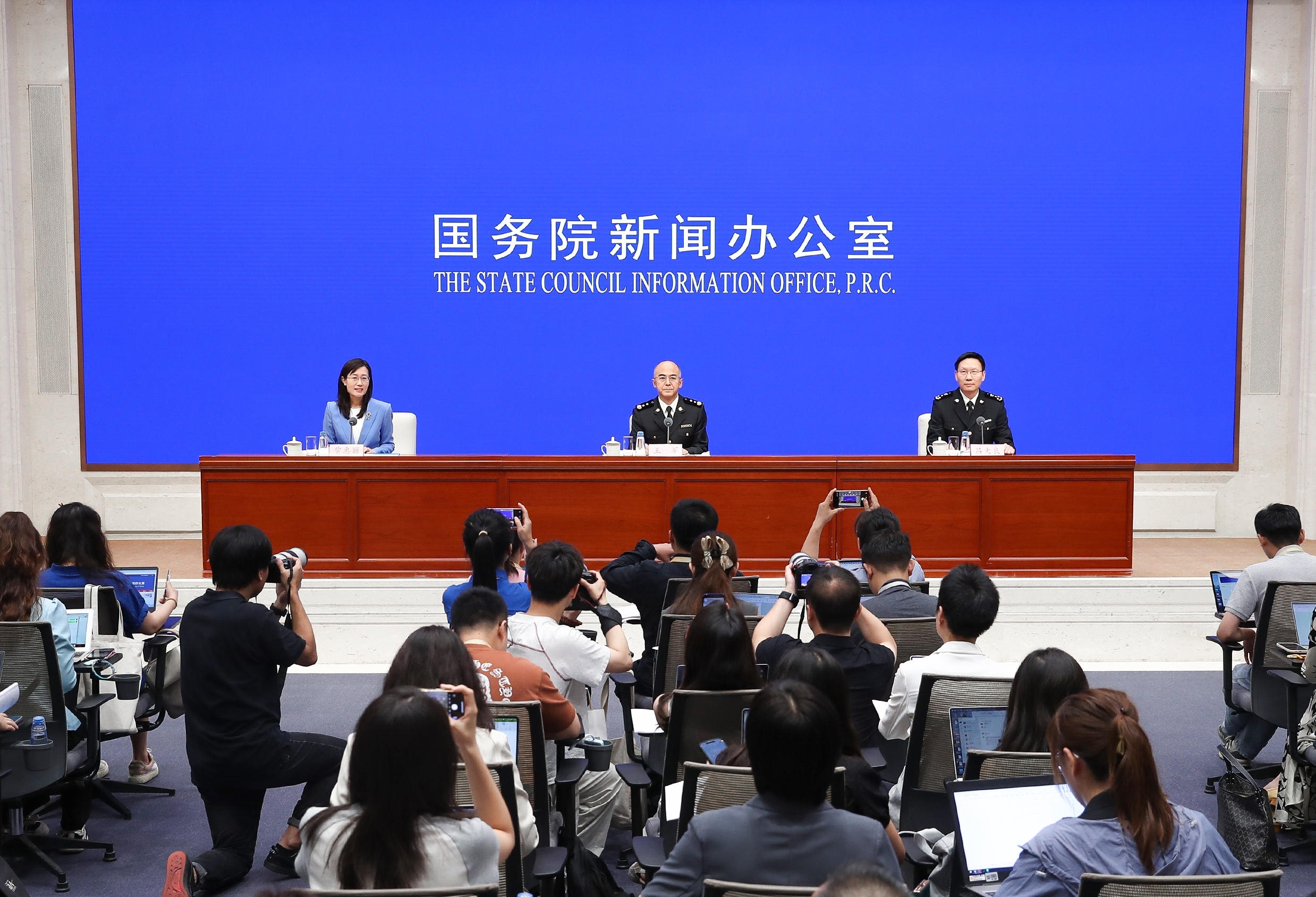
Wang Jun:
Thank you for your question. In the first half of this year, the western regions' total imports and exports reached 2.55 trillion yuan, up 20.3% year on year, 3.4 percentage points higher than the national growth rate. Exports and imports increased by 18.5% and 23.5%, respectively. The rapid growth of foreign trade in the western regions was mainly driven by the following factors:
First, China further deepened integrated development with neighboring countries. The western regions enjoy distinct geographical advantages in economic and trade cooperation with neighboring countries. In the first half of this year, its imports and exports with neighboring countries totaled 1.26 trillion yuan, up 22.1% year on year, accounting for 49.3% of the region's total foreign trade. Since the beginning of this year, the Yulin Airport Port in Shaanxi province and the Longfu Highway Port in Yunnan province have been approved for opening to the outside world. The western regions' multidimensional opening up framework has become more complete, with cross-border logistics expanding from individual transport routes into an integrated network with broader and deeper coverage. In the first half of this year, imports and exports transported by road, rail and air all posted double-digit growth.
Second, the business environment continued to improve. The western regions have worked to foster a better ecosystem for foreign trade development. A range of policy measures has continued to generate benefits, the business environment has steadily improved, and market vitality has continued to increase. In the first half of this year, the number of enterprises in the western regions engaged in import and export activities increased by 19%. The import and export volumes of state-owned, private and foreign-invested enterprises all expanded, increasing by 9.1%, 13% and 39.3%, respectively, with foreign-invested enterprises registering the fastest growth.
Third, industrial development gathered strong momentum. Emerging industrial clusters, including artificial intelligence and green and low-carbon industries, have accelerated their shift toward the western regions, injecting new momentum into high-quality foreign trade development. In the first half of this year, imports and exports of flat-panel display modules and storage components in the western regions both maintained rapid growth, with their shares of the national total for these products rising by 2.2 percentage points and 3.7 percentage points, respectively. Exports of the "new trio" products — namely electric vehicles, lithium-ion batteries and photovoltaic products — increased by 13.3%, 39.9% and 36.5%, respectively.
Fourth, collaboration between the eastern and western regions has further boosted foreign trade development. The distribution channels, markets access and technological strengths of the eastern regions have complemented the resources, products and cost advantages of the western regions, creating greater synergies for foreign trade growth. The gradual westward relocation of industries has continued to inject vitality into foreign trade development. Of the second group of national industrial parks for processing trade, seven are located in the western regions, accounting for more than half of the total. In the first half of this year, imports and exports under processing trade in the western regions reached 793.14 billion yuan, up 36.8% year on year, 11.9 percentage points higher than the overall national growth rate for processing trade. Thank you.