China.org.cn | September 3, 2026


Bloomberg:
We see that China's trade surplus is creating concerns among trading partners, most vocally in the EU. How do you see China's trade surplus evolving for the remainder of the year? We're also interested in looking at "upward balancing," which China has promoted as a way to ease trade tensions with the EU. Does this mean importing more from the EU countries? And how would you define this term? Thank you.
Wang Jun:
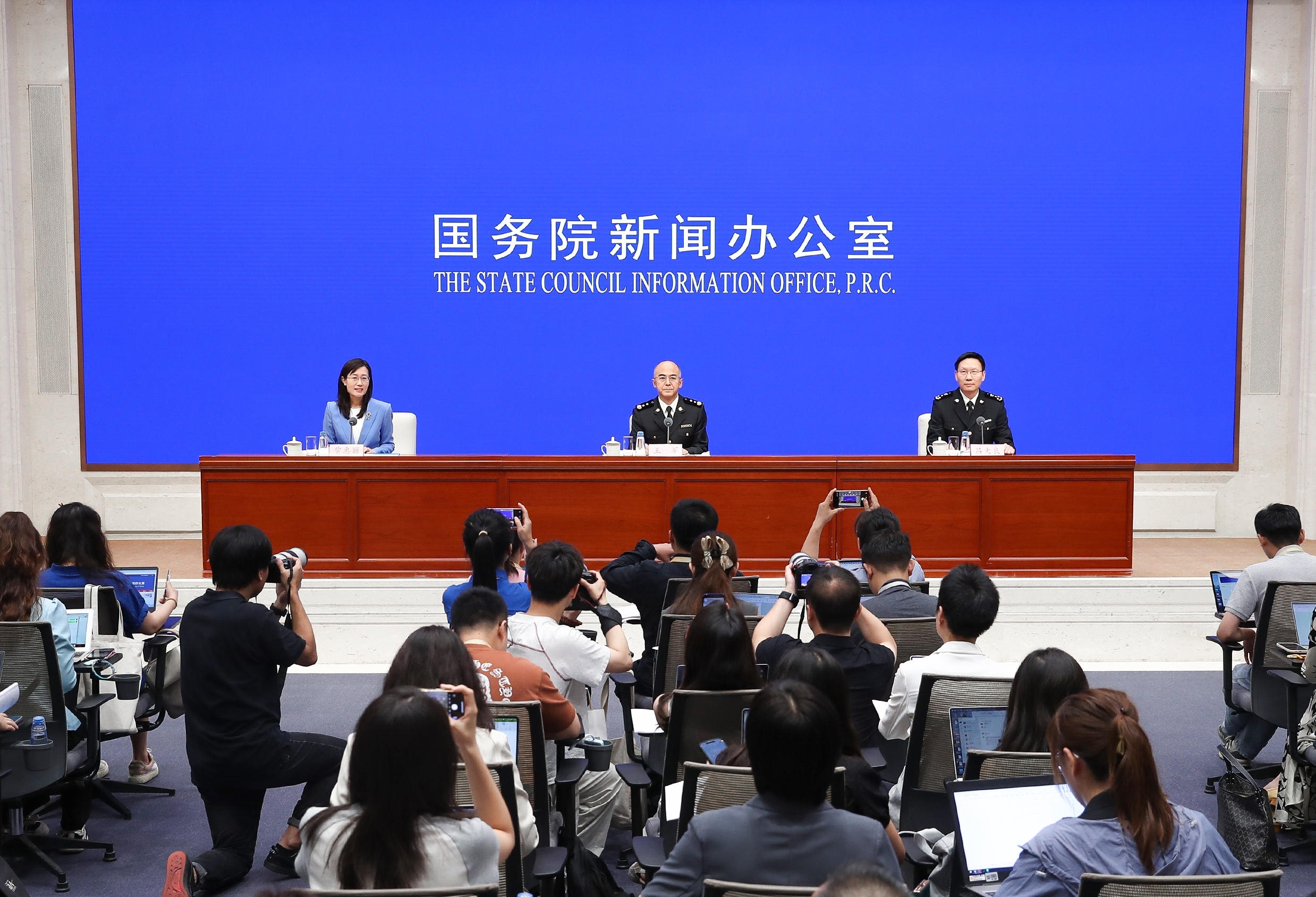
Thank you. I'd like to invite Mr. Lyu to answer your questions.
Lyu Daliang:
Thank you for your questions. Regarding China's trade balance, I would like to emphasize that China's foreign trade is characterized by large-scale imports and exports. We are not only the world's largest exporter, but also the second-largest importer. Data from the first half of this year shows that China's import growth rate outpaced export growth, resulting in a 4.7% narrowing of the trade surplus. During the 15th Five-Year Plan period, we will continue to actively expand imports and promote balanced development of imports and exports.
Regarding the "upward balancing" you mentioned, China and the EU have established a regular communication mechanism in the economic and trade field, which is the China-EU Trade and Investment Consultation Mechanism. Recently, this mechanism held its first meeting, during which the "upward balancing" you mentioned was also discussed. For further specifics, I would suggest you consult relevant authorities. Thank you.
Nanfang Daily, Nanfang Plus:
The World Cup is currently underway, and we have seen many Chinese elements both on and off the field. Based on customs statistics, what is the current performance of China's sports goods exports? Thank you.
Wang Jun:
I'd like to invite Mr. Lyu to answer this question.
Lyu Daliang:
Thank you for your question, and it brings us back to the World Cup again. The tournament is now in full swing. It has not only provided football fans around the world with exciting matches, but also fueled global demand for a wide range of sporting goods. In recent years, China has consistently been the world's largest exporter of sporting goods, accounting for more than 40% of global exports. In the first half of the year, China's exports of sporting goods and equipment reached 67.53 billion yuan, including 3.08 billion yuan worth of sports balls.
China's sporting goods exports are characterized by both a vast scale and a wide variety. In competitive sports, Chinese-made sporting goods have become a familiar presence at the world's premier sporting events, ranging from professional table tennis tables used at the Summer Olympics, to lightweight ski poles used at the Winter Olympics, and to the official match balls with built-in smart chips used at the 2026 FIFA World Cup. In mass sports, China offers a wide range of products to meet the needs of various sports and fitness activities. Examples include treadmills for indoor fitness and stand-up paddleboards for outdoor water sports. In the first half of 2026, exports of fitness and rehabilitation equipment, including treadmills, reached 2.67 billion yuan, while exports of water sports equipment, including stand-up paddleboards, totaled 4.77 billion yuan. In addition, exports of skateboards, which are particularly popular among young consumers, increased by 20.4% year on year.
China's sporting goods have maintained a stable presence in traditional markets such as Europe and the United States, while also performing well in emerging markets, including Latin America and Africa. In the first half of this year, China's exports of sporting goods to Latin America and Africa increased by 18.9% and 8.1% year on year, respectively. Going forward, China's sporting goods will continue to meet the diverse global demands for sports and health with its rich variety and superior quality. Thank you.