China.org.cn | September 3, 2026


ThePaper.cn:
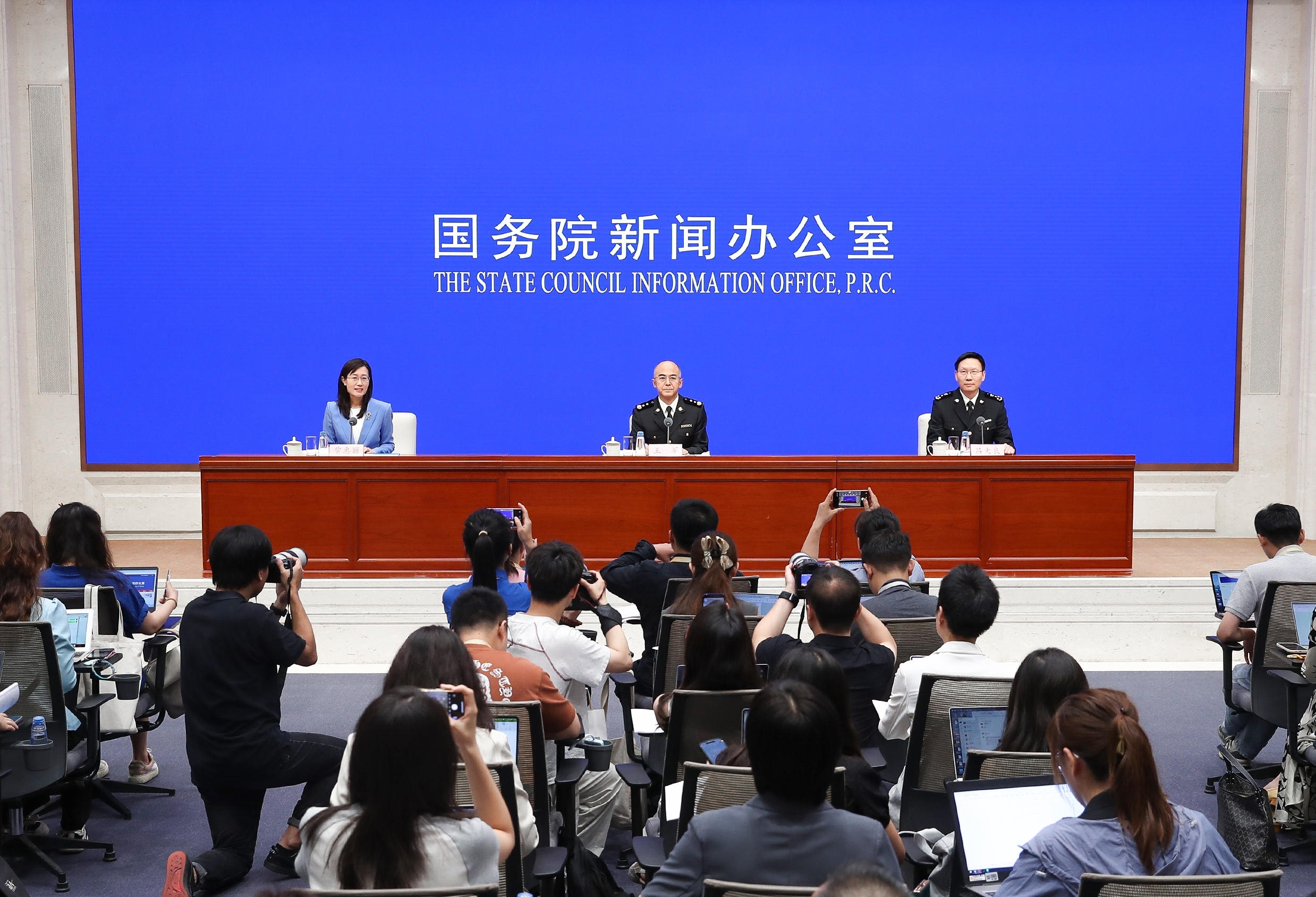
Based on the imports and exports data for the first half of the year that has just been released, what are the major highlights and positive developments in China's foreign trade? What is your outlook for China's foreign trade situation in the second half of the year?
Wang Jun:
Thank you. As I mentioned earlier, China's foreign trade recorded double-digit growth in the first half of the year, maintaining a positive trend. Recently, at the Summer Davos Forum, Premier Li Qiang used the four words "stability, innovation, vitality, and integration" to outline the current landscape of China's economy. This multifaceted landscape is also reflected in China's foreign trade.
First, the scale of China's foreign trade has remained stable. In the first half of the year, China's imports and exports exceeded 25 trillion yuan for the first time on record, an increase of 3.68 trillion yuan year on year. On a monthly basis, it has exceeded 4 trillion yuan for four consecutive months. According to the latest international data, China remains the world's largest trader in goods.
Second, new growth drivers are emerging. With the rapid development of artificial intelligence, the imports and exports of related Chinese products are showing strong momentum. In the first half of the year, China's imports and exports of computing hardware such as electronic components and computer parts reached 5.13 trillion yuan, an increase of 56.6%. AI glasses, AI translators, mechanical exoskeletons and other smart products are rapidly evolving, and various innovative products are constantly emerging.
Third, market entities show strong vitality. Chinese enterprises are proactively identifying changes, adapting to new circumstances, and pursuing transformation. They continue to expand opportunities for cooperation around the world and seek new partners, further broadening their global "network of friends." Compared with the same period last year, 267,000 foreign trade enterprises expanded their business to new countries and regions in the first half of the year. The total import and export value of these enterprises increased by 22.6%, accounting for nearly 70% of the total foreign trade volume.
Fourth, domestic and international market are becoming more integrated. China has been committed to proactively expanding its opening-up to the world and has implemented zero-tariff policies for 63 countries, continuously promoting common development with its economic and trade partners. In the first half of the year, China's imports and exports with its 31 free trade agreement partners increased by 28.1%, with their share in the country's total foreign trade rising to 46.5%. The comprehensive bonded zones fully leveraged their unique strength of connecting domestic and international markets and resources, as well as their advantages arising from integrated policy measures, achieving imports and exports of 4.34 trillion yuan in the first half of the year, an increase of 28.2%.
Overall, China's foreign trade achieved remarkable results in the first half of the year. However, it should also be noted that the current external environment remains complex and volatile. The World Bank believes that the global economy is facing multiple pressures, including rising energy prices, increased inflationary pressures, and expectations of tighter monetary policy, which are weakening the growth outlook. Data from the International Monetary Fund predicts that global economic growth will slow from 3.5% last year to 3% this year, and the growth rate of trade in goods and services will also slow from 5% last year to 3.5% this year. China's foreign trade will face certain pressures in the second half of the year, but the country has strong innovation momentum, vibrant business entities, and a high level of openness, so the fundamentals of foreign trade remain solid. We are confident and capable of maintaining the good momentum of foreign trade development. Thank you.