China.org.cn | September 3, 2026


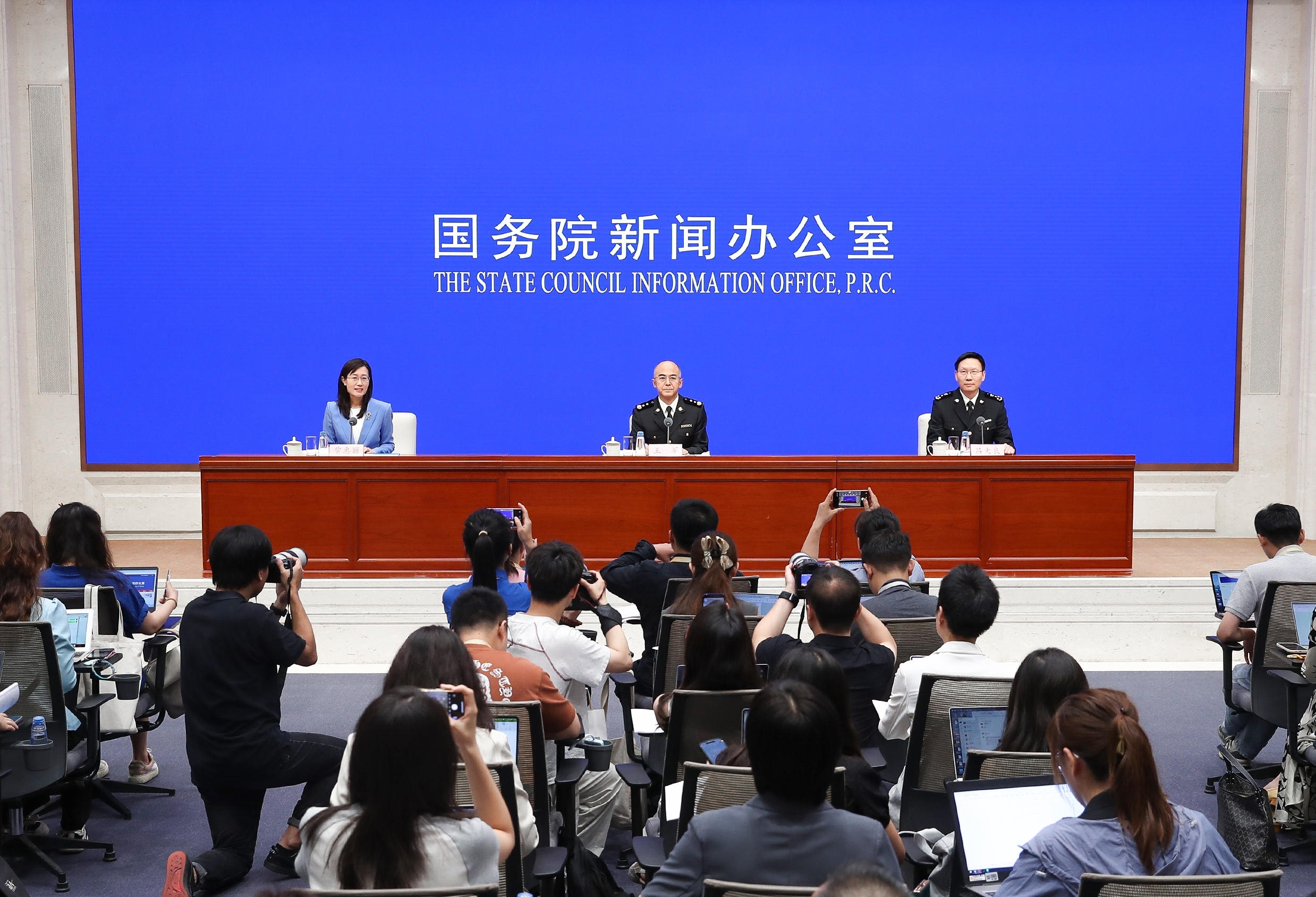
Speakers:
Mr. Wang Jun, vice minister of the General Administration of Customs of China (GACC)
Mr. Lyu Daliang, spokesperson of the GACC and director general of the Department of Statistics and Analysis of the GACC
Chairperson:
Ms. Jia Huili, deputy director general of the Press Bureau of the State Council Information Office (SCIO) and spokesperson of the SCIO
Date:
July 14, 2026
Jia Huili:
Ladies and gentlemen, good morning. Welcome to this press conference held by the State Council Information Office (SCIO). This is a regular briefing on China's economic data. Today, we have invited Mr. Wang Jun, vice minister of the General Administration of Customs of China (GACC), to brief you on China's imports and exports in the first half of 2026 and to take your questions. Also attending today's press conference is Mr. Lyu Daliang, spokesperson of the GACC and director general of the Department of Statistics and Analysis of the GACC. Now, I'll give the floor to Mr. Wang for his introduction.
Wang Jun:
Thank you, Ms. Jia. Good morning, friends from the media. I'm delighted to meet you all. I will start by briefing you on China's imports and exports of goods in the first half of this year, and then my colleague and I will answer your questions.
Since the beginning of this year, under the strong leadership of the Central Committee of the Communist Party of China (CPC) with Comrade Xi Jinping at its core, China has adhered to the general principle of pursuing progress while ensuring stability, and moved faster to foster a new pattern of development. The national economy has shown both resilience and vigor, while foreign trade has maintained strong growth momentum and stable performance. According to statistics from the GACC, China's foreign trade of goods in the first half of 2026 jumped 16.9% year on year to 25.47 trillion yuan. Of this total, exports amounted to 14.73 trillion yuan, up 13.4%, while imports reached 10.74 trillion yuan, up 22.1%. To sum up, there were six main features:
First, the growth of imports and exports accelerated. In the second quarter, China's imports and exports reached 13.61 trillion yuan, a year-on-year increase of 18.4%, the highest quarterly year-on-year growth rate since the third quarter of 2021. In June, imports and exports totaled 4.78 trillion yuan, a year-on-year increase of 24.2%, marking the 17th consecutive month of growth.
Second, the market became increasingly diversified. In the first half of the year, China's trade with Belt and Road partner countries reached 12.97 trillion yuan, an increase of 14.8%, accounting for 50.9% of the total foreign trade value. Trade with neighboring countries reached 9.44 trillion yuan, an increase of 20.6%. Trade with Latin America, Africa and the European Union grew by 16.2%, 19.6% and 10.2%, respectively.
Third, all market entities showed good growth momentum. In the first half of the year, the imports and exports of China's private enterprises reached 14.53 trillion yuan, an increase of 17%, accounting for 57% of the country's total foreign trade value; the imports and exports of foreign-invested enterprises increased 17.1% to 7.39 trillion yuan; and those of state-owned enterprises increased 16.8% to 3.5 trillion yuan.
Fourth, China registered growth in imports and exports in all regions of the country. In the first half of the year, the imports and exports of China's eastern regions exceeded 20 trillion yuan, an increase of 16.5%, accounting for 78.8% of the country's total foreign trade. The western, central and northeastern regions registered growth of 20.3%, 20% and 8.6%, respectively.
Fifth, the export product mix was further upgraded. In the first half of the year, China's exports of mechanical and electrical products reached 9.36 trillion yuan, up 20.1%, accounting for 63.5% of total exports, 3.5 percentage points higher than the same period last year. Exports of high-tech products amounted to 3.26 trillion yuan, up by 39%. Exports of self-owned brands increased 25.4%, with their share in total exports rising 2.4 percentage points.
Sixth, import growth outpaced export growth. In the first half of the year, China's import growth rate was 8.7 percentage points higher than its export growth rate, promoting more balanced development of imports and exports. Among them, imports of bulk commodities such as energy and metal ores reached 1.429 billion metric tons, up 3.4%; imports of mechanical and electrical products reached 4.41 trillion yuan, up 28%; and imports of agricultural products reached 768.48 billion yuan, up 8.6%.
Overall, China's foreign trade maintained positive momentum in the first half of this year, making solid progress in stabilizing its scale and optimizing its structure. However, due to persistent global inflationary pressure, increasing trade barriers and frequent geopolitical conflicts, global industrial and supply chains remain under pressure. Efforts to stabilize foreign trade in the second half of the year will face considerable risks and challenges.
Customs authorities nationwide will thoroughly implement the decisions and arrangements of the CPC Central Committee and the State Council, fulfill, to a higher standard, their duties and missions of safeguarding China's borders and promoting development, continue to strengthen supervision and improving services and further advance the implementation of cross-border trade facilitation measures. Through greater efforts and more concrete measures, customs authorities will work to facilitate unimpeded domestic and international economic flows, and contribute their strength to ensuring a good start for the "15th Five-Year Plan". Thank you.
Jia Huili:
Thank you for the introduction, Mr. Wang. The floor is now open for questions. Please identify the media outlet you represent before asking questions.