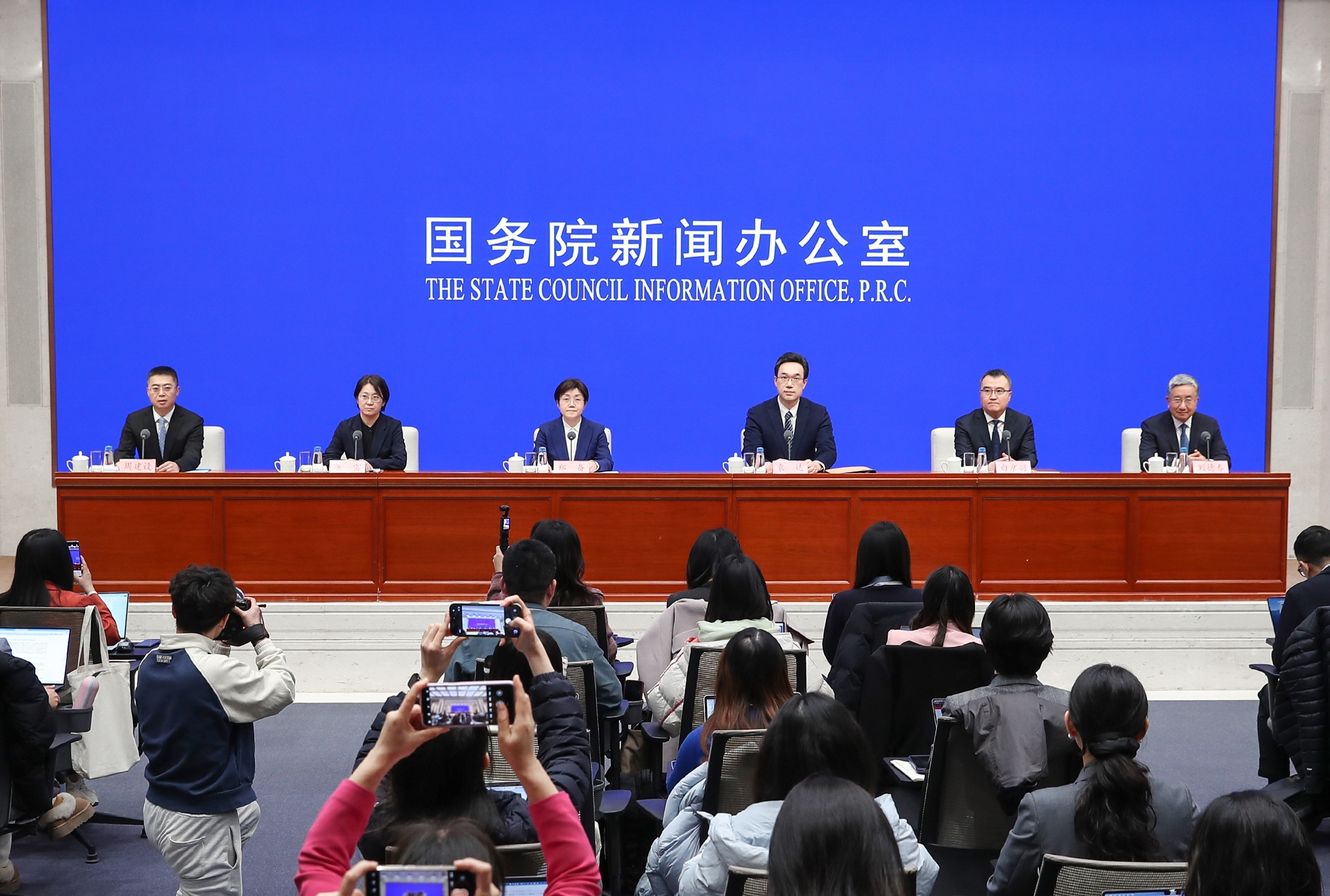
China.org.cn | March 27, 2026


Yicai:
We know that the draft outline of the15th Five-Year Plan (2026-30) has proposed 20 main indicators, which are of great concern to everyone. May I ask what are the main considerations in setting these indicators? Could you introduce how the economic growth indicators are set, and what new features there are in setting indicators in areas including public wellbeing that people care about? Thank you.
Zheng Bei:
Thanks for your questions. I will answer them. Main indicators are the key drivers for the implementation of the Five-Year Plan. Coordinating needs and possibilities, quantity and quality, the draft outline of the 15th Five-Year Plan sets 20 main indicators in five areas. The indicator setting adheres to considering both long- and near-term needs, upholding fundamental principles and breaking new ground, ensuring overall balance, and achieving precision and effectiveness. They are aligned with the goals of basically realizing socialist modernization by 2035 and building China into a great modern socialist country in all respects by the middle of this century, and strongly supporting the continued implementation of the modernization strategy.
Regarding the economic growth target, which has drawn widespread attention, the draft outline proposes keeping economic expansion within an "appropriate range," calibrating subsequent annual rates to shifting realities, and laying a solid foundation for doubling the 2020 per capita GDP by 2035 to reach the level of a moderately developed country. This target integrates quantitative goals into a qualitative framework, which is consistent with the goal proposed in the Party Central Committee's "Recommendations," detailing that "the economy keeps growing within an appropriate range" and is in line with the wording of the Outline of the 14th Five-Year Plan. It fully reflects the clear orientation of promoting high-quality development, guiding all parties to pursue tangible growth, allowing room for shifting development patterns, adjusting structures, and promoting reforms, and providing support for employment and income growth among residents. At the same time, "doubling" embodies an expectation for the average annual GDP growth over the next decades, and aligns with the long-term positive trend of China's economic development. "Laying a solid foundation" means striving for better outcomes in the actual work during the 15th Five-Year Plan period, laying a more solid foundation for development in the 16th Five-Year Plan period (2031-2035). This year's Government Work Report proposes that this year's annual GDP growth target will be 4.5%—5%, and local two sessions have set their own local economic growth targets based on their actual situations. This demonstrates the organic connection between annual plans and medium- and long-term plans, as well as between local plans and national plans.
You also mentioned indicators concerning public wellbeing, which the CPC Central Committee and the State Council attach great importance to. The draft outline focuses on resolving the pressing difficulties and problems that concern the people most, setting seven targets concerning people's wellbeing, accounting for more than one-third of the major development targets. For example, it sets targets to increase the average years of education for the working-age population, the average life expectancy, and the number of medical staff per 1,000 people, to tangibly improve the education and health standards of the people. Regarding the elderly and childcare services that concern everyone, the draft outline has added an indicator for the proportion of nursing beds in elderly care institutions, mainly to guide elderly care institutions to provide more high-quality nursing services and better meet the care needs of elderly people with functional disabilities or dementia. At the same time, the draft outline sets a target to increase the rate of kindergarten enrollment of infants under the age of 3, comprehensively reflecting the extent to which childcare needs are met, guiding all regions to continuously improve the quality of childcare services, and enhancing the sense of gain among the public.
In addition, focusing on key tasks such as raising the country's capacity for innovation, achieving peak carbon emissions, and ensuring food and energy security, the draft outline sets targeted indicators such as growth in nationwide R&D spending, reduction of carbon dioxide emissions per unit of GDP, total grain production capacity and overall energy production capacity. These major targets drive the strategic tasks in the 15th Five-Year Plan and will be implemented through tailored measures based on their specific categories. Thank you.