China.org.cn | March 27, 2026


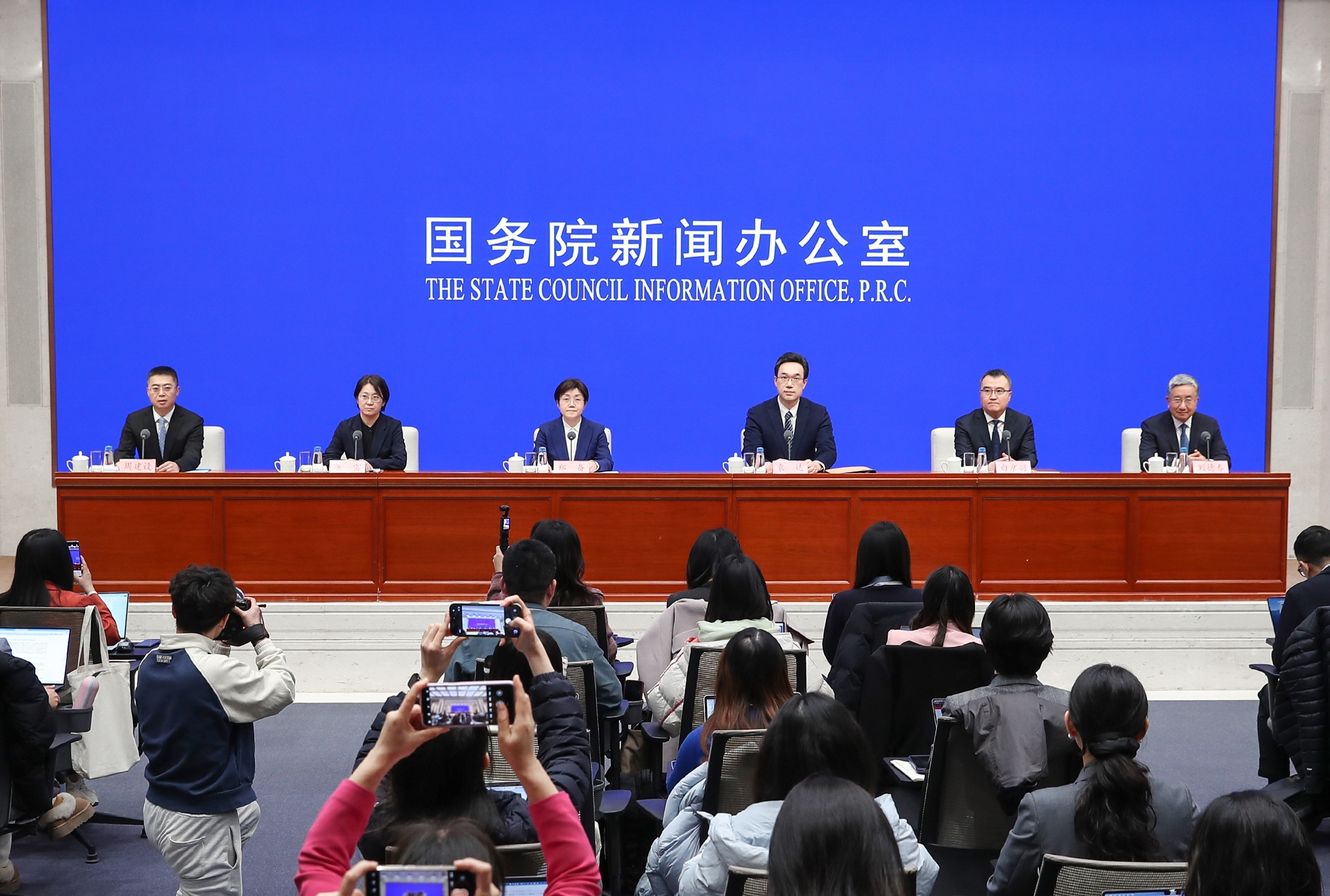
Zhou Jianshe:
Thank you, Ms. Zheng, for your introduction. The floor is now open for questions. Please identify the media outlet you represent before asking your questions.
CCTV:
The 15th Five-Year Plan is the first five-year plan formulated after the 20th CPC National Congress, and is the construction blueprint for economic and social development in the next five years based on the recommendations adopted at the fourth plenary session of the 20th CPC Central Committee. Could you please introduce the main features and highlights of the draft? Thank you.
Zheng Bei:
Thank you for your question. I will take this one. As you just said, the draft fully implements the requirements of the recommendations adopted at the fourth plenary session of the 20th CPC Central Committee, focuses on planning major initiatives with a reform and innovation mindset, and further refines and clarifies necessary quantitative requirements and specific work arrangements. Yesterday, Mr. Zheng Shanjie explained the main contents of the draft at a press conference. I will offer you some further details here. In general, the draft is characterized by four prominent features:
First, in terms of its strategic positioning, the draft builds on past successes to break new ground, and focuses on strengthening the foundation and making comprehensive efforts. According to the strategic plan of the CPC Central Committee, the transition from the completion of a moderately prosperous society in all respects to the basic realization of socialist modernization will require three five-year plans. The 14th Five-Year Plan was the first and has already achieved a good start, the 16th Five-Year Plan will be the concluding period, while the 15th Five-Year Plan occupies a pivotal position in linking past and future. The draft has been formulated based on this positioning. It systematically reviews development achievements, comprehensively assesses the development environment, and focuses on consolidating and expanding advantages, removing bottlenecks and constraints, and strengthening weaknesses. It proposes the main goals and indicators for socioeconomic development during the 15th Five-Year Plan period, clarifies major strategic tasks and measures, and implements a consistent blueprint to ensure decisive progress in basically realizing socialist modernization.
Second, in terms of development orientation, it closely aligns with high-quality development, focusing on structural optimization and qualitative improvements. The recommendations clearly set promoting high-quality development as the theme, and the draft closely revolves around this theme, setting indicators, laying out tasks and planing projects, to guide the effective improvements of quality and the reasonable growth of quantity. In terms of the main target indicators, implementing the seven aspects of goals specified in the recommendations, and in accordance with the requirements for high-quality development, the indicator settings cover five areas: economic development, innovation-driven, public wellbeing, green and low-carbon, and security. The target values have all been scientifically calculated and comprehensively balanced, which will help create a synergy for promoting high-quality development.
Third, in terms of setting tasks, it emphasizes pragmatic and practical measures, prioritizing precision, effectiveness and robust support. The draft outline adheres to a combination of goal-oriented and problem-oriented approaches, and coordinates overall planning with highlighting key points. It deploys 16 major strategic tasks covering key areas and critical links of economic and social development, especially proposing targeted innovative measures such as promoting integrated development of education, sci-tech and talent, insisting on closely combining investment in things and investment in people, and promoting coordinated regional development. At the same time, it proposes 109 major projects in six areas, including a series of landmark infrastructure projects such as the Yaxia Hydropower Project, the new Three Gorges Waterway Channel, and satellite internet. These pragmatic measures and major projects will strongly support the realization of the goals and tasks of the outline.
Fourth, in terms of value orientation, it upholds putting the people first, focusing on concrete and effective results. The general secretary emphasized that in planning economic and social development during the 15th Five-Year Plan period, we must stay true to our original aspiration and place the well-being of the people at the heart of our fundamental values. The draft outline of 15th Five-Year Plan adheres to the principle of doing the best within our means, making solid efforts to promote the common prosperity of all people. In terms of major indicators, key tasks and significant projects, it highlights the development's focus on the well-being of the people. The main indicators cover employment, income, education, health, elderly care and child care — which are the most pressing, immediate issues of utmost concern to the people. The key tasks clearly specify a package of pragmatic measures such as implementing actions to stabilize jobs, expand capacity and improve quality, as well as urban and rural residents' income growth plans, high-quality insurance enrollment, and social care services improvement projects. The major projects propose a series of heart-warming initiatives that can help improve living standards, such as expanding high-quality higher education resources, strengthening medical and health foundations, and enhancing the capacity for integration of medical care and elderly care. Each measure closely focuses on solving urgent, difficult and troublesome matters of public concern, striving to do practical things for the people that truly resonate with them.
I hope that this introduction to these four areas of focus can help you better understand the draft outline. Thank you.