China.org.cn | March 27, 2026


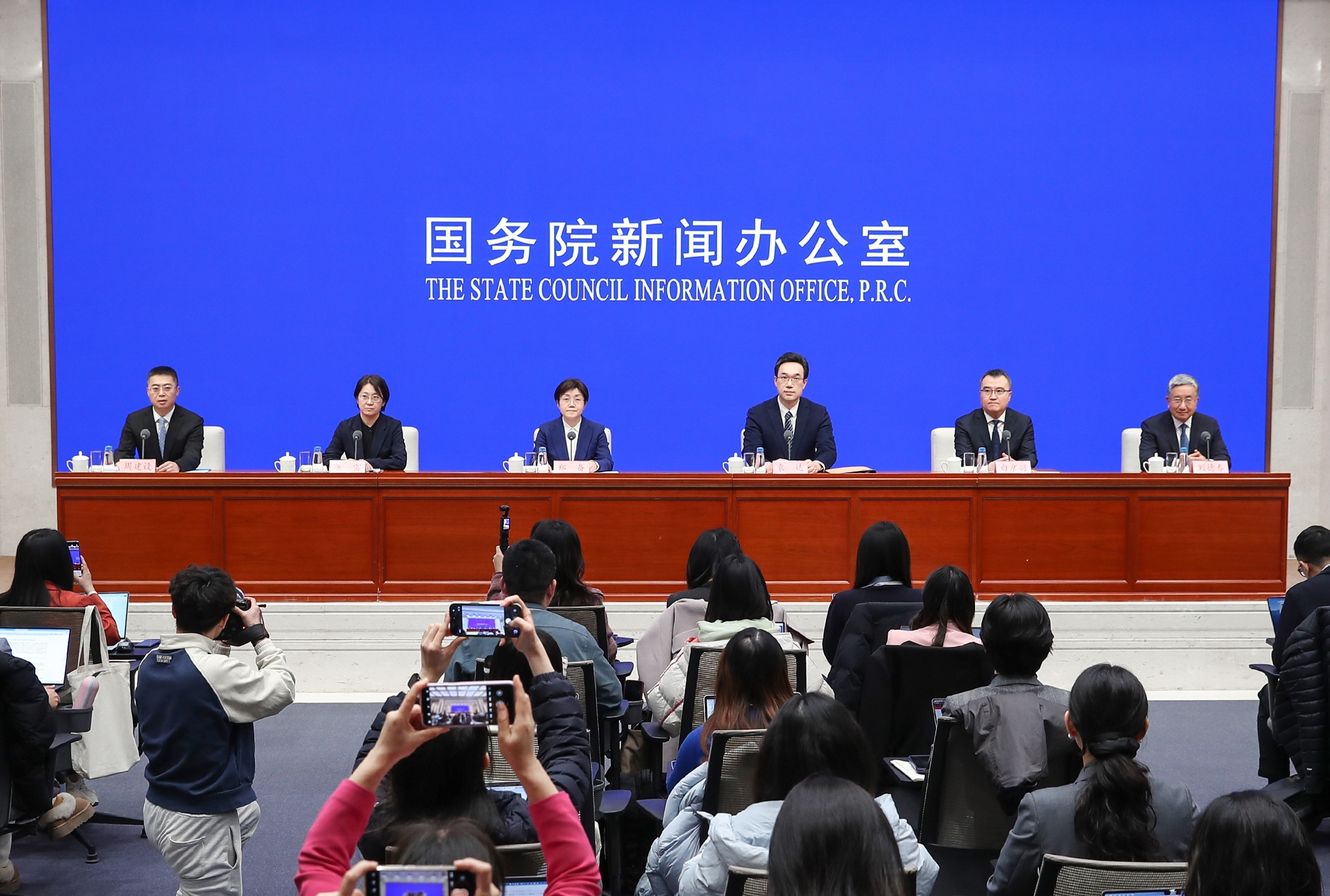
Speakers:
Ms. Zheng Bei, vice chairperson of the National Development and Reform Commission (NDRC)
Mr. Yuan Da, secretary-general of the NDRC
Ms. Chen Lei, director general of the Department of Development Planning of the NDRC
Mr. Bai Jingyu, director general of the Department of Innovation and High-Tech Development of the NDRC
Mr. Liu Dechun, director general of the Department of Social Development of the NDRC
Chairperson:
Mr. Zhou Jianshe, deputy director general of the Press Bureau of the State Council Information Office (SCIO) and spokesperson of the SCIO
Date:
March 7, 2026
Shou Xiaoli:
Ladies and gentlemen, good afternoon. Welcome to this briefing held by the State Council Information Office (SCIO). Today we have invited Ms. Zheng Bei, vice chairperson of the National Development and Reform Commission (NDRC), to interpret the draft Outline of the 15th Five-Year Plan (2026-2030) and answer your questions. Also attending today's briefing are: Mr. Yuan Da, secretary-general of the NDRC; Ms. Chen Lei, director general of the Department of Development Planning of the NDRC; Mr. Bai Jingyu, director general of the Department of Innovation and High-Tech Development of the NDRC; and Mr. Liu Dechun, director general of the Department of Social Development of the NDRC.
Now, I'll give the floor to Ms. Zheng for her introduction.
Zheng Bei:
Friends from the media, ladies and gentlemen, good afternoon. Since the opening of the "two sessions," all sectors have paid close attention to Outline of the 15th Five-Year Plan. Premier Li Qiang has delivered a report explaining the draft Outline of the 15th Five-Year Plan. To help you better understand it, my colleagues and I will now provide further briefing.
The scientific formulation and consistent implementation of five-year plans has been an important experience in the governance and administration of state affairs by the Communist Party of China (CPC) and a key political strength of the socialism system with Chinese characteristics. The CPC Central Committee and the State Council have attached great importance to the drafting of the 15th Five-Year Plan. General Secretary Xi Jinping has provided overall guidance for the planning process, personally led the drafting work throughout, delivered many important speeches, and issued a series of important instructions and directives. Recommendations for the 15th Five-Year Plan reviewed and approved by the fourth plenary session of the 20th CPC Central Committee provided important guidance for the drafting of the Outline. According to the requirements of the CPC Central Committee, the State Council formed a leading group and drafting group for the preparation of the draft Outline, while Premier Li Qiang chaired multiple meetings to conduct special research and deployments focusing on implementing the spirit of the fourth plenary session of the 20th CPC Central Committee and ensuring high-quality preparation of the Outline.
Following General Secretary Xi Jinping's important instructions that planning should promote democracy, pool collective wisdom and build broad consensus, the Outline of the 15th Five-Year Plan adopts an open and participatory approach, with a focus on conducting in-depth research and rigorous assessment.
First, in-depth research and rigorous assessment have been carried out on major issues. The drafting work focused on the key areas and difficult issues during the 15th Five-Year Plan period (2026-2030), with high-level research institutions organized to produce nearly 200 support reports, carefully studying and thoroughly calculating the main goals, indicators and important tasks and measures for the 15th Five-Year period. Local governments and departments were organized to systematically plan major projects, and multiple rounds of assessment were conducted on their necessity and feasibility.
Second, we have solicited opinions and suggestions through multiple channels and methods. Last year, over 40 research visits were made to various types of regions, and more than 50 special symposiums were held. The National Development Planning Expert Committee was organized for consultation and assessment, public opinions were solicited online, and nearly 70,000 high-quality suggestions were compiled after sorting and analysis. Extensive consultations were also carried out with key groups, including people in flexible employment, young people, migrant workers, and people with disabilities. In addition, deputies to the National People's Congress (NPC) and members of the Chinese People's Political Consultative Conference (CPPCC) put forward many valuable suggestions. The drafting group analyzed all the opinions and suggestions and considered them for adoption.
Third, we have steadily and orderly advanced the drafting of the Outline of the 15th Five-Year Plan. On the basis of the above work, studies have been carried out on the overall approach and framework of the Outline. After the convening of the fourth plenary session of the 20th CPC Central Committee, we fully aligned our work with the guiding principles of the Central Committee's Recommendations and formulated the draft Outline of the 15th Five-Year Plan. The document has undergone multiple rounds of revision and improvement following repeated review and refinement. From January to February this year, the State Council organized multiple symposiums to further solicit opinions from experts, entrepreneurs, non-CPC individuals and local governments at all levels. After a series of revisions and improvements, with the consent of the CPC Central Committee and the State Council, the document was submitted to this year's NPC and CPPCC sessions for review and deliberation.
The draft outline adheres to the guidance of Xi Jinping Thought on Socialism with Chinese Characteristics for a New Era, thoroughly applies the guiding principles from the Party's 20th National Congress and the plenary sessions of the 20th CPC Central Committee, earnestly carries out the deployments of the fourth plenary session of the 20th CPC Central Committee, and transforms the grand blueprint drawn by the CPC Central Committee into a pragmatic and feasible construction plan. It consists of 18 parts, 62 chapters and 171 subsections, and is divided into three major sections. The first section is the general overview, which corresponds to part 1. It covers the development environment, guiding principles and main objectives. Its main purpose is to implement the guiding ideology, principles and goal requirements specified in the recommendations adopted at the fourth plenary session of the 20th CPC Central Committee, and proposes 20 main indicators for socioeconomic development during the 15th Five-Year Plan period. The second section covers the major strategic tasks, and corresponds to parts 2 to 17. It sets out the main tasks and major measures from 16 aspects: industrial development, scientific and technological innovation, digital-intelligent development, the domestic market, deepening reform, opening up, rural revitalization, coordinated regional development, cultural development, population development, public wellbeing, green development, security and development, national defense, democracy and rule of law, and the policy of One Country, Two Systems. Specifically, in line with the development trend of digital technology and AI, the improvement of digital-intelligent development is presented separately; and based on the features of population development at the current stage, high-quality population development is also presented separately. The third section covers the guarantees for planning implementation, and corresponds to part 18. It elaborates on adhering to and strengthening the Party Central Committee's centralized, unified leadership, improving the planning implementation mechanism, mobilizing the enthusiasm, initiative and creativity of the whole society, and ensuring that the decisions and deployments of the CPC Central Committee are fully implemented.
The draft will be further revised and improved based on the opinions of the deputies to the NPC deputies and the CPPCC National Committee members following their review and discussion during the "two sessions." Our objective is to produce a high-quality plan that is grounded in reality, meets expectations of the public and provides guidance for the future.
Next, my colleagues and I are happy to answer questions you have related to the draft. Thank you.