China.org.cn | March 20, 2026


21st Century Business Herald:
The Government Work Report states that we will continue to implement more proactive and effective macro policies. The wording regarding the fiscal and monetary policies is the same as last year's. What are the specific manifestations of "more proactive and effective?" Thank you.
Shen Danyang:
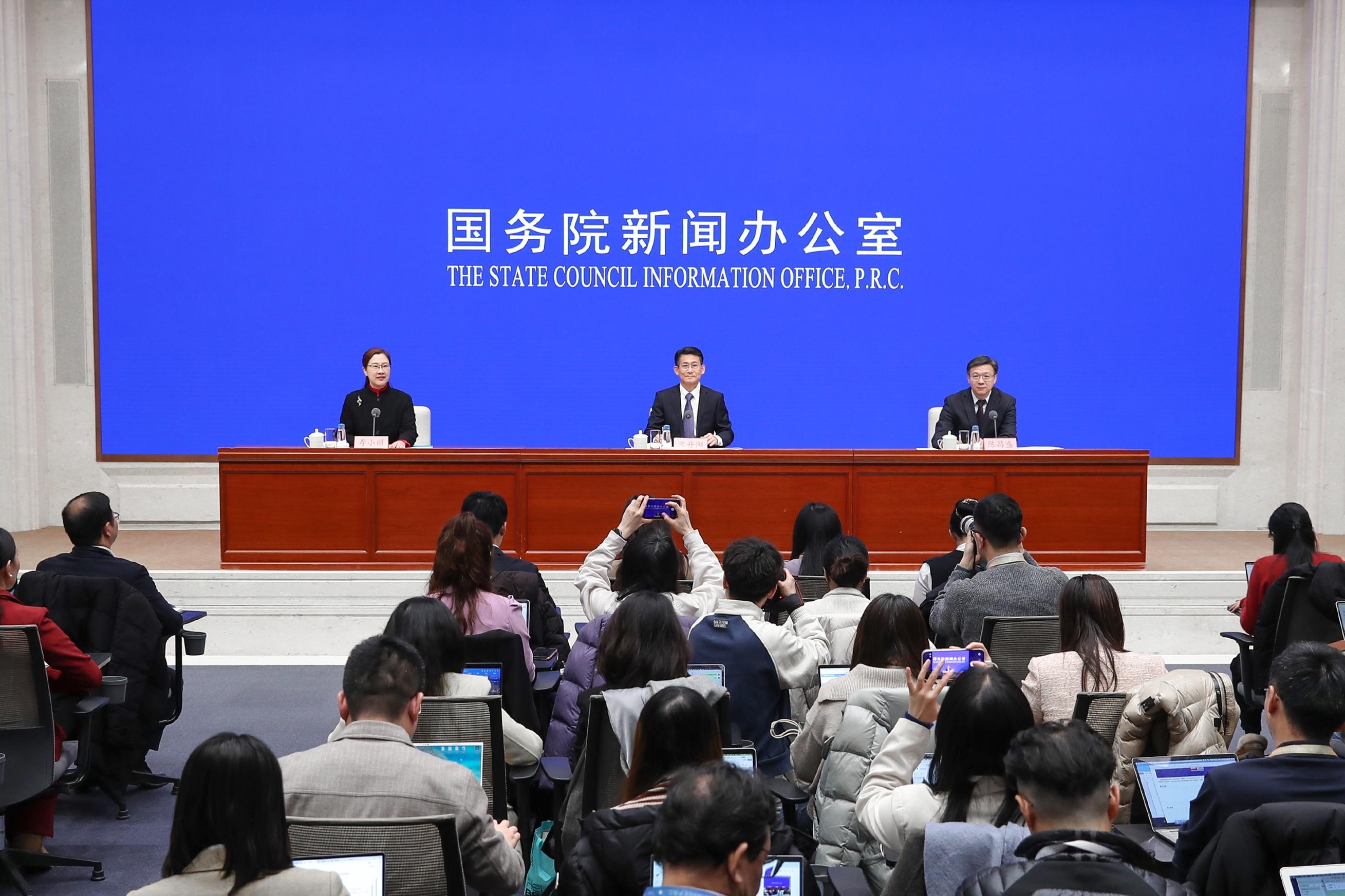
I would like to invite Mr. Chen Changsheng to answer this question.
Chen Changsheng:
Thank you for your question. Last year's Central Economic Work Conference already made it clear that this year we will continue to implement more proactive and effective macro policies. This morning, Premier Li Qiang's government work report made specific arrangements for this policy orientation.
Why are we continuing with more proactive and effective policies? Mainly for the following reasons: first, the situation requires it. As we can see, this year, the uncertainties in the external environment remain high, and the domestic pattern of strong supply and weak demand continues, with a certain gap in total demand. Therefore, it is necessary to strengthen policy adjustments and use the certainty of macro policies to cope with the uncertainty of the external environment. Second, there is policy space. From an international comparative perspective, China's current government debt ratio, especially that of the central government, is still relatively low. Conditions are still in place for cuts to reserve requirement ratios and interest rates. In addition, there is still room for innovation within the policy mix. At the same time, this policy orientation is also meant to convey the continuity of macro policy regulation to the whole society. On Sep. 26, 2024, the Political Bureau of the CPC Central Committee meeting arranged a package of incremental policies. This year's policy orientation is a continuation of that regulatory approach, with greater emphasis on expectation management, sending strong and clear macro policy signals to society by stepping up counter-cyclical adjustments.
Second, in what ways is a more proactive and effective approach being taken? This is reflected in three main aspects: First, the scale and intensity are notably large. As we can see, this year's deficit ratio is set at around 4%, which is historically high, and the deficit has grown by 230 billion yuan. The total scale of newly added government debt has reached 11.89 trillion yuan, which is also a record high. This year, general public budget expenditure is projected to reach 30 trillion yuan for the first time, an increase of about 1.27 trillion yuan from the 2025 level. Taken together, these three aspects reflect a more proactive fiscal policy. We will continue to apply an appropriately accommodative monetary policy in 2026, flexibly and effectively deploying a range of policy instruments, including cuts to required reserve ratios and interest rates to maintain adequate liquidity. We will also expand the use of new policy-based financial instruments, reduce corporate financing costs and support the real economy.
Second, we will place greater emphasis on precision and effectiveness. In terms of fiscal policy, there is a particular emphasis on deepening zero-based budgeting reform, redirecting funds that have been spent inefficiently or ineffectively to more productive areas. This approach already yielded results last year, and the push will be stepped up further this year. In addition, the spending structure will be further optimized, improving the allocation of existing assets and resources, and directing more fiscal funds to boosting consumption, investing in people, and safeguarding their livelihoods. In terms of monetary policy, we will also optimize structural policy tools and strengthen support for expanding domestic demand, technological innovation, and micro-, small- and medium-sized enterprises.
Third, policy innovation will be prioritized. This includes not only innovation in policy tools, but also innovation in policy combinations. For example, we will establish a special fiscal-financial coordination fund of 100 billion yuan to boost domestic demand. This is an innovative measure designed to fully leverage the role of fiscal-financial coordination, supporting private investment and consumption expansion through mechanisms such as loan interest subsidies, financing guarantees, and risk compensation. Another example is the emphasis on leveraging intangible assets such as data and intellectual property to broaden channels for credit extension.
Overall, this year's policies are bold, well-targeted and innovative. We look forward to seeing these macroeconomic policies implemented with force and effect, sustaining the positive momentum in economic and social development and getting the 15th Five-Year Plan off to a strong start. Thank you.