China.org.cn | March 20, 2026


South China Morning Post:
In 2025, China's consumer price index (CPI) was in line with that of the previous year, and the country has set its 2026 CPI growth target at around 2%. What are the main considerations? What policies and measures will be taken to promote a moderate rebound in prices?
Shen Danyang:
Regarding prices, let's have Mr. Chen answer your questions.
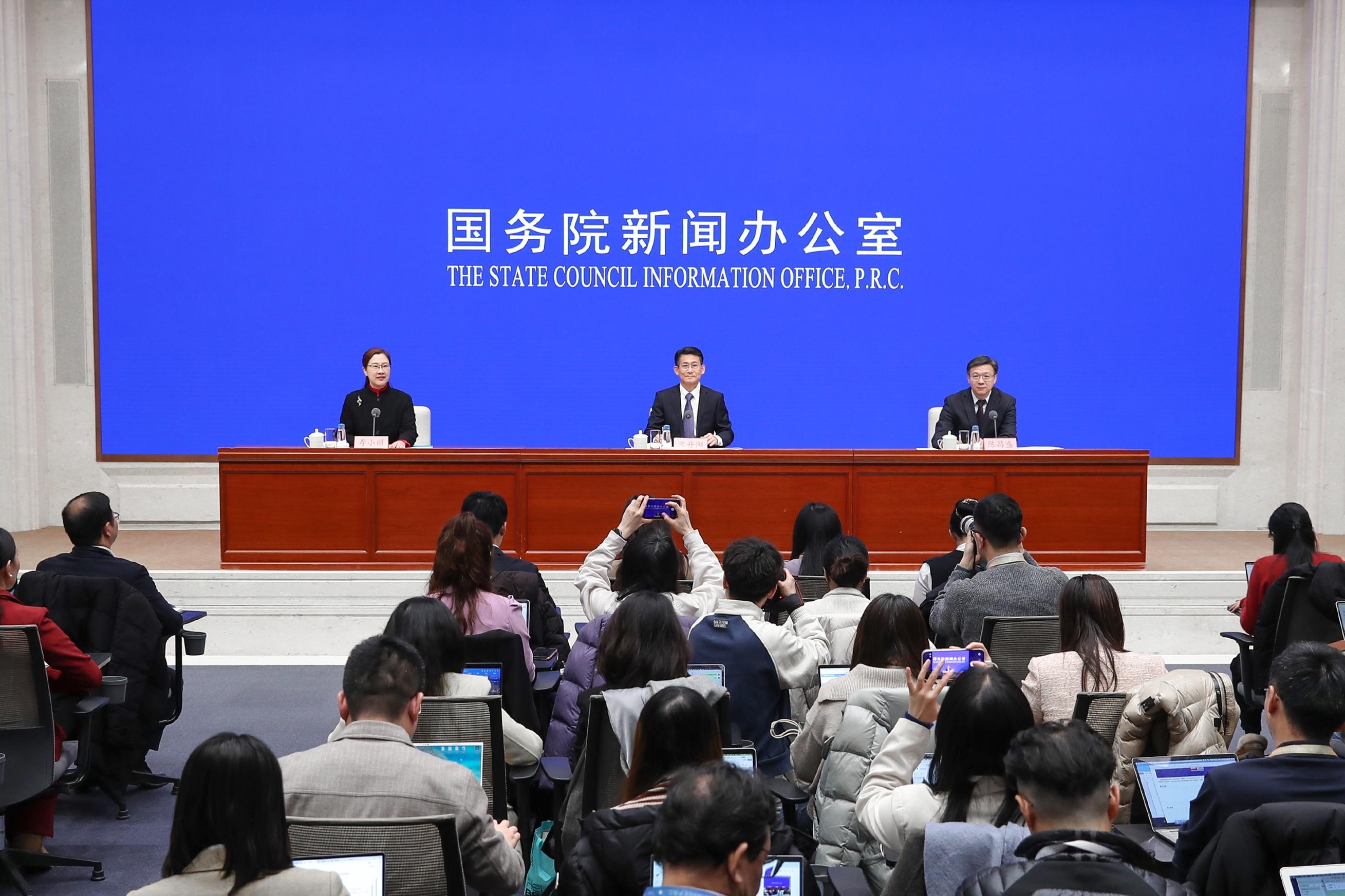
Chen Changsheng:
Thank you for your questions. In fact, we have already been implementing relevant policies to address the declining prices for some time. Last year, we adopted some measures in expanding domestic demand, improving supply, and curbing involution-style competition comprehensively. These efforts have achieved some results so far. If you look at the overall price data for 2025, you will find that CPI has gradually stabilized, the decline in the producer price index (PPI) has obviously narrowed, and the more comprehensive GDP deflator has also improved, suggesting that price momentum is improving.
This year, we continue to set the CPI growth target at around 2%. I think this approach considers both the need to guide public expectations and the realistic possibilities, demonstrating emphasis given on the price issue. Apart from the CPI growth target, there are also two important statements in this year's government work report. The first sentence is "By better balancing total supply and demand, we will steer general price levels back into positive territory and produce a reasonable, modest rebound in consumer prices to facilitate a virtuous cycle in the economy." And the second is stated in the monetary policy section, saying "Promoting steady economic growth and an appropriate rebound in prices are key considerations underpinning our monetary policy." How should we interpret this target and these two important statements? I think they carry at least three layers of meaning.
First, the term "price" appears twice in the relevant statement. The first mention refers to the overall price level, a comprehensive measure usually captured by the GDP deflator, which covers consumption, investment and production. The second refers to the consumer price, commonly known as the consumer price index (CPI).
Second, the report highlights the approach to achieving this goal. On the one hand, it emphasizes improving the balance between aggregate supply and demand. On the other hand, it stresses the need to fully leverage monetary policy and strengthen aggregate management. In pursuing this goal, greater importance is placed on managing aggregate demand at the macro level rather than relying on micro-level interventions.
Third, how should this goal be understood? From a microeconomic perspective, or from the standpoint of individual consumers, lower prices are naturally welcome, as they allow people to buy more goods with the same limited income. However, if prices continue to decline for a prolonged period, problems may arise. Many businesses may find it difficult to sell their products, leading companies to cut investment and reduce hiring. In such circumstances, consumers, who are also workers, will face growing pressure on employment and income growth.
Therefore, the goal highlights the need for policy efforts at the macro level. It aims to promote an increase in the general price level, ensure that nominal GDP grows faster than real GDP and facilitate a steady rebound in the producer price index (PPI), thereby improving corporate profitability and promoting a moderate and reasonable rise in consumer prices. It seeks to support stronger employment and income growth while keeping the prices of essential consumer goods relatively stable. These measures are ultimately intended to foster a virtuous cycle in the economy. This reflects the underlying policy logic behind the goal.
Of course, the issue is complex and requires a package of policy measures. First, more proactive macroeconomic policies should be adopted to expand domestic demand, boost consumption and increase effective investment, so that aggregate demand can grow at a reasonable pace. Second, supply-side reform should continue, particularly efforts to address rat race competition. This includes measures such as controlling production capacity, strengthening standards-based guidance, and improving price governance, with a particular emphasis on standards. In many industries, technologies have advanced through several generations, yet some producers still rely on outdated technologies. Upgrading standards will help expand the supply of quality products while phasing out outdated ones. As a result, enterprises will devote more efforts to improving product quality rather than engaging in excessive price competition.
Another priority is to promote the stabilization of asset prices. This involves maintaining the healthy development of the capital market and working to stabilize the real estate market. These efforts will help further repair the balance sheets of households and enterprises, thereby creating better conditions for consumption and investment.
In addition, reforms should be advanced in several key areas, particularly price reform. In many sectors, supply is actually available. However, if the pricing mechanism does not function properly, business models cannot operate effectively. As a result, the supply of quality products may remain insufficient, which in turn suppresses consumption.
In short, through a series of policy measures, the aim is to achieve the price targets and improve what are often referred to as the "three pockets" — better employment and income for households, improved profitability for enterprises, and a stronger fiscal position for the country. Thank you.