China.org.cn | September 17, 2025


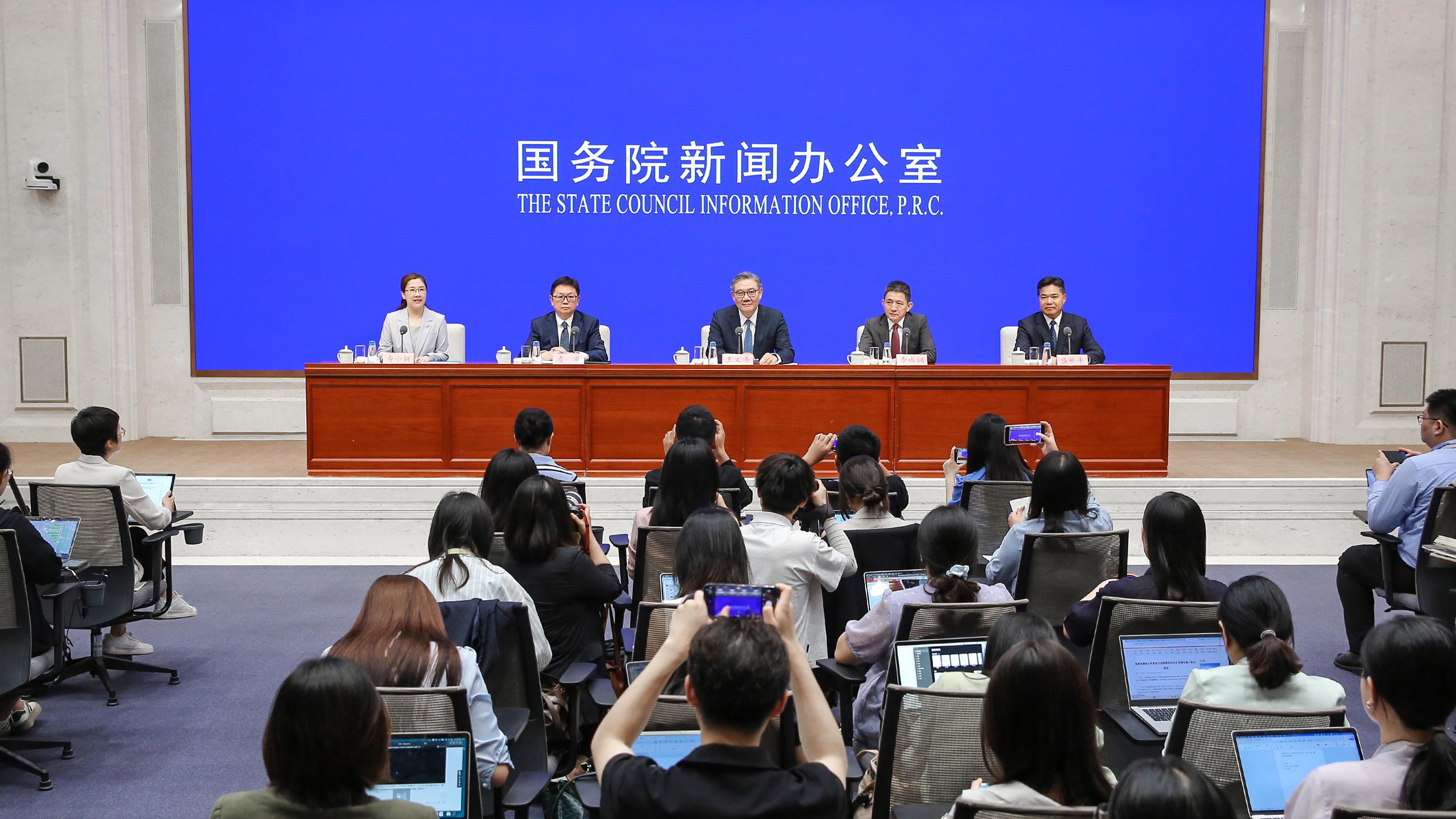

Hong Kong Bauhinia Magazine:
During the 14th Five-Year Plan period, China has accelerated its high-level opening up. Can you tell us about the results achieved in utilizing free trade pilot zones as testing grounds and gradually expanding institutional opening up? What are your plans going forward? Thank you.
Wang Wentao:
Thank you for your questions. During the 14th Five-Year Plan period, we have used free trade zones as testing grounds for institutional opening up, introducing landmark and pioneering measures that have achieved significant breakthroughs and exemplary results. Let me explain this from several aspects:
First, led by free trade zones, the institutional framework for opening up has been continuously strengthened. During the 14th Five-Year Plan period, the total number of China's free trade zones reached 22, covering the eastern, western, southern, northern and central regions of the country and forming a comprehensive national network. There have also been significant institutional innovations. For instance, the negative list management model has been extended to areas such as cross-border trade in services and cross-border data flows. We have also conducted differentiated explorations tailored to each free trade zone's unique characteristics. In 2024, free trade zones accounted for 19.6% of national foreign trade and 24.3% of foreign investment, demonstrating stronger vitality and momentum in open economy development.
Second, we have proactively aligned with high-standard international economic and trade rules, achieving new breakthroughs in key areas of reform and opening up. In qualified free trade zones such as the Shanghai Free Trade Zone and the Hainan Free Trade Port, we have proactively aligned with high-standard international trade agreements like the CPTPP and DEPA. We have launched over 110 pilot measures in two batches, covering key areas including trade, investment, IP rights, government procurement and environmental protection. These efforts have generated advanced experiences and best practices that have been replicated and scaled up nationwide, accelerating the spillover effects and driving force of institutional opening up.
Third, we have pursued pioneering and integrated approaches, generating substantial institutional reform outcomes. During the 14th Five-Year Plan period, the CPC Central Committee and the State Council issued guidelines for improving the country's pilot free trade zones. The guidelines serve as the overall policy framework for upgrading pilot free trade zones, providing systematic arrangements for trade, investment, capital flows, transportation, personnel exchanges, data flows and other aspects within the zones. As I mentioned earlier, various regions have conducted integrated innovation across entire industrial chains based on local conditions. For instance, Zhejiang has focused its integrated innovation on bulk commodities, Jiangsu on biomedicine and Shandong on the marine economy. Over the past five years, the free trade zones have produced nearly 200 institutional innovation achievements. The resulting policy benefits have become more tangible, understandable and accessible to enterprises and the public.
Going forward, MOFCOM will be guided by the strategy of upgrading free trade zones and work with relevant departments and localities to encourage each free trade zones to embrace bold experimentation and take decisive action. We will support them in conducting more beneficial explorations, generating more substantial reform and opening up results, and realizing improvements in three key areas: institutional openness standards, systematic reform effectiveness, and open economy quality. Thank you.
Shou Xiaoli:
Thank you, Mr. Wang. Thank you to all our speakers, and thank you to all the journalists for participating. That concludes today's press conference. Goodbye everyone.
Translated and edited by Xu Xiaoxuan, Zhang Jiaqi, Cui Can, Xu Kailin, Li Xiao, You Jiaxin, Yang Xi, Wang Qian, Li Huiru, Ma Yujia, Fan Junmei, David Ball, and Jay Birbeck. In case of any discrepancy between the English and Chinese texts, the Chinese version is deemed to prevail.

