China.org.cn | September 17, 2025


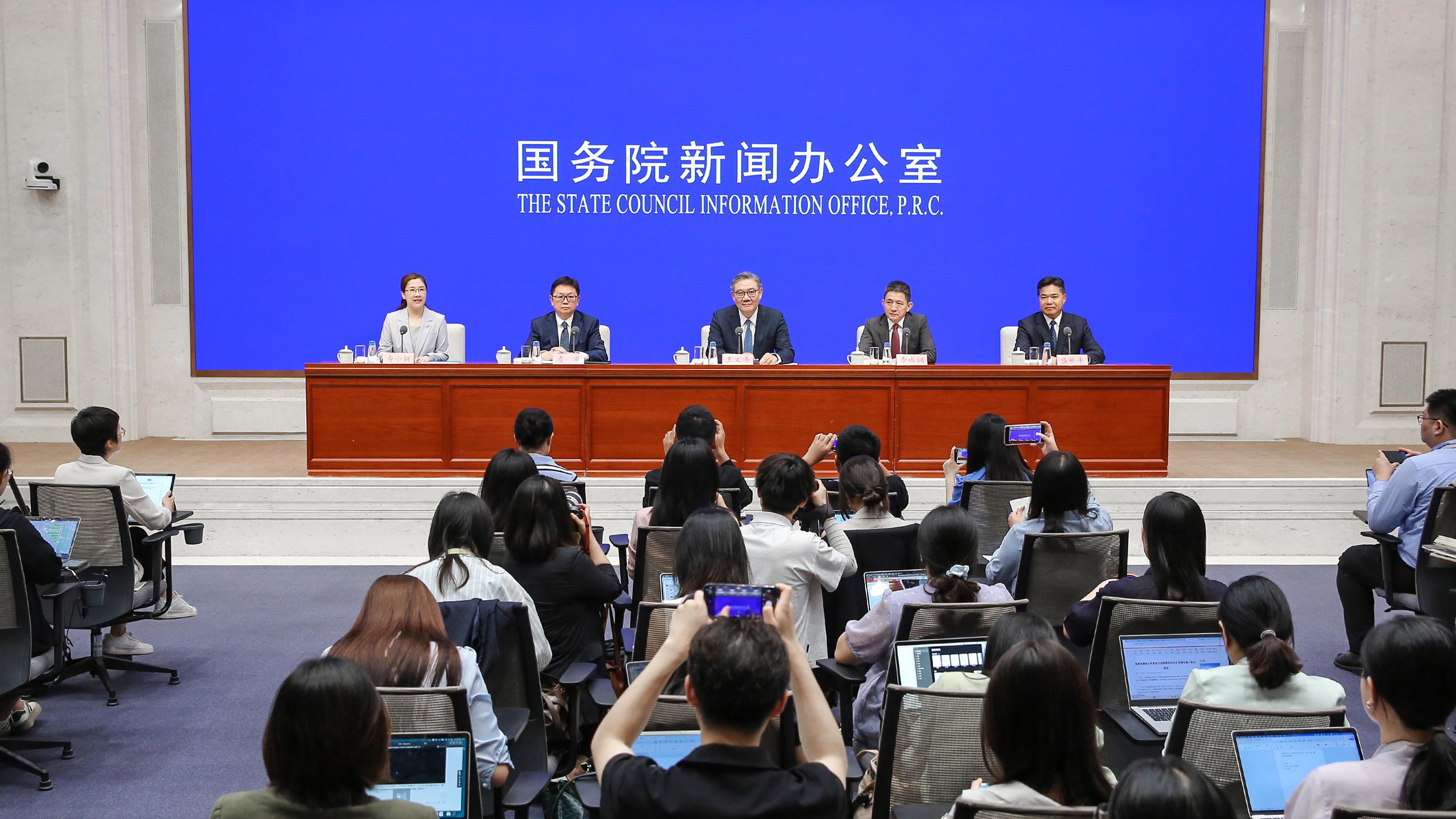

Market News International:
How do you assess the development trajectory of China-U.S. economic and trade relations during the 14th Five-Year Plan period? With the 15th Five-Year Plan period approaching, what is your outlook on the prospects for future China-U.S. economic and trade cooperation?
Wang Wentao:
I'll take this. Thank you for the question. Let me address the first part of it. When discussing the outlook of China-U.S. economic and trade relations during the 14th Five-Year Plan period, I think we need to look back to 2018 for a clearer perspective. Since 2018, U.S.-initiated economic and trade frictions have led to significant fluctuations in bilateral economic and trade relations, with several landmark developments. I can summarize the China-U.S. economic and trade situation in four points.
The first point is that, despite many ups and downs, China and the U.S. remain important economic and trade partners for each other. Since 2018, U.S. unilateralism and protectionism have continuously sparked economic and trade tensions. The U.S. has imposed various tariffs on China and coined various terms and concepts. The tariffs alone are numerous. They include Section 301 tariffs, Section 232 tariffs, reciprocal tariffs, and now many sector-specific tariffs as well. The list is extensive, and so is the terminology, including phrases like "outcompeting China," the "small yard, high fence," and "decoupling and severing supply chains." This series of actions has severely impacted and disrupted normal economic and trade cooperation between China and the U.S. However, while the share of bilateral trade in each country's total trade has declined, bilateral trade volumes have generally remained stable. In 2024, bilateral goods trade between China and the U.S. totaled $688.3 billion, up 18% from 2017, and services trade reached $155.8 billion, a 34.7% increase from 2017. The two countries are also important investment partners, with close ties between their business communities. Every March, numerous American companies come to China, and numerous delegations visit MOFCOM. It has been proven that forced decoupling and severing supply chains is not feasible. China-U.S. economic and trade cooperation is driven by economic realities and serves the interests of people in both nations.
The second point is that China-U.S. economic and trade relations are fundamentally about mutual benefit and win-win outcomes. Cooperation is the only correct path. Trade between China and the U.S. serves both countries' needs. Some of it is irreplaceable, or at least difficult to replace in the short term, demonstrating the fundamentally mutually beneficial nature of the relationship. Moreover, trade in services between our two countries continues to grow rapidly. In 2024, 1.6 million Chinese tourists visited the U.S., generating $20 billion to $30 billion in direct revenue for the U.S. China-U.S. trade and bilateral investment have created many jobs in both countries and generated substantial returns and profits for businesses on both sides.
The third point is that differences and frictions are inevitable in China-U.S. economic and trade cooperation. This is normal. We must confront these issues head-on, with dialogue and consultation offering the best path to resolution. President Xi Jinping has repeatedly emphasized to the U.S. side that China and the U.S., as two major countries with different development stages and economic systems, are fundamentally different. These differences existed in the past, persist today and will continue in the future. We must accept this basic reality. Differences and frictions in China-U.S. economic and trade cooperation are inevitable. This is normal. The key is to respect each other's core interests and major concerns while properly resolving differences through equal dialogue. Since the beginning of this year, President Xi Jinping has held two phone conversations with President Trump, providing direction for the China-U.S. relationship at critical historical moments. Since May, China-U.S. economic and trade teams have held dialogues and consultations in Geneva and London. Guided by principles of mutual respect, equal consultation and mutual benefit, these talks produced the Geneva Consensus and the London Framework, helping to stabilize bilateral relations and reduce tensions. Practice has shown that guided by the consensus reached during the heads of state phone conversations, China and the U.S. can properly manage disputes through equal dialogue and consultation. This approach enables both countries to work toward resolving differences and achieving mutually beneficial outcomes.
The fourth point is that China maintains a consistent position of firmly defending its national interests while upholding international fairness and justice. China and the U.S. benefit from cooperation and suffer from confrontation. There are no winners in a trade war. China does not want to fight, but is not afraid to do so. China has taken strong measures to firmly safeguard its legitimate rights and development interests. Moreover, China's commitment to international fairness, justice, and the established economic and trade order has garnered widespread respect and support internationally. In the first half of this year, the Chinese economy withstood pressure and continued to improve. Foreign trade maintained growth despite disruptions from high tariffs. Exports grew 7.2% in the first half of the year. The long-term positive fundamentals of the Chinese economy will not change. The historical process of Chinese modernization is unstoppable, and we possess both the firm resolve and confidence to protect our interests.
As the world's two largest economies, China and the U.S. should act like major powers, with all the responsibility and commitment that entails. China-U.S. economic and trade relations affect not only the two nations but also global economic prosperity and development. The relationship should provide stability and predictability for the world. We are willing to work with the U.S. side, based on the principles of mutual respect, peaceful coexistence and win-win cooperation, to take concrete actions that maintain and implement the important consensus reached during the phone conversations between the two heads of state and carry out the Geneva Consensus and the London Framework. We will make full use of the China-U.S. economic and trade consultation mechanism established in Geneva to continue strengthening dialogue and communication, constantly building consensus, reducing misunderstandings, and deepening cooperation. Together, we will work to return China-U.S. economic and trade relations to the right track and achieve healthy, stable and sustainable development. Thank you.

