Xinhua | June 17, 2026


Preface
Global governance is a common endeavor that bears on the wellbeing of all humanity, and building a just and equitable global governance system is a shared vision long pursued by people from across the world.
Over 80 years ago, the United Nations (UN) was founded as a multilateral platform for countries to address international affairs through dialogue and consultation. It established international rules underpinning the rule of law, ushering in a new phase in global governance. After the Cold War, multipolarization and economic globalization began to gain momentum, and the concept of global governance grounded in coordination and cooperation was widely endorsed. In recent times, however, unilateralism, protectionism, and hegemonism have been spreading unchecked, while deficits in peace, development, security, and trust continue to expand. Reforming and improving global governance to resolve these challenges and letting the UN play a core role have thus become a critical topic for the future of humanity.
China has always been an active participant in, contributor to, and builder of global governance. In the new era, President Xi Jinping put forward the vision of building a community with a shared future for humanity. In promoting a global governance system characterized by extensive consultation and joint contribution for shared benefit, he has called for true multilateralism to foster an equal and orderly multipolar world and a universally beneficial and inclusive economic globalization. In 2025, at a pivotal historical juncture marking the 80th anniversary of the victory in the Global War Against Fascism and the founding of the UN, President Xi proposed a new initiative, the Global Governance Initiative (GGI).
The GGI is designed to offer a Chinese solution to the two pressing questions of the era: what kind of global governance system should be established, and how global governance can be reformed and improved. Upon its introduction, it swiftly gained support from nearly 160 countries and international organizations, with over 60 countries joining the Group of Friends of Global Governance. The international community believes that the GGI sends a clear signal: uphold multilateralism, unite forces, and pursue a fair future. The GGI aligns with the growing trend towards greater democracy in international relations and bolsters international confidence in practicing multilateralism. It offers a clear and feasible roadmap for improving global governance, bringing valuable stability and positive energy to a turbulent world.
China has proposed the GGI to expedite the building of a more just and equitable global governance system. Resolutely upholding the UN's authority and status is fundamental to the effective implementation of this initiative. Success will also hinge on major countries bearing a sense of responsibility, and on all nations uniting and cooperating to address deficits in peace and development. All countries should firmly uphold the international system with the UN at its core, safeguard the international order based on international law, and uphold the basic norms governing international relations underpinned by the purposes and principles of the UN Charter, instead of reinventing the wheel.
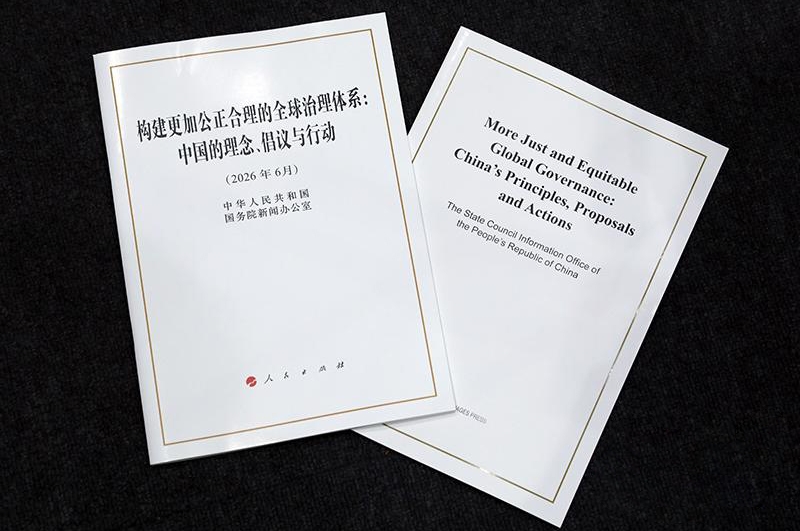
The Chinese government is publishing this white paper to introduce China's principles, proposals and actions in global governance, foster broader consensus within the international community, ensure more effective responses to global challenges, and build a more just and equitable global governance system.