
SCIO briefing on development of industry and information technology in the first quarter of 2026
Beijing | 10 a.m. April 21, 2026
Speakers

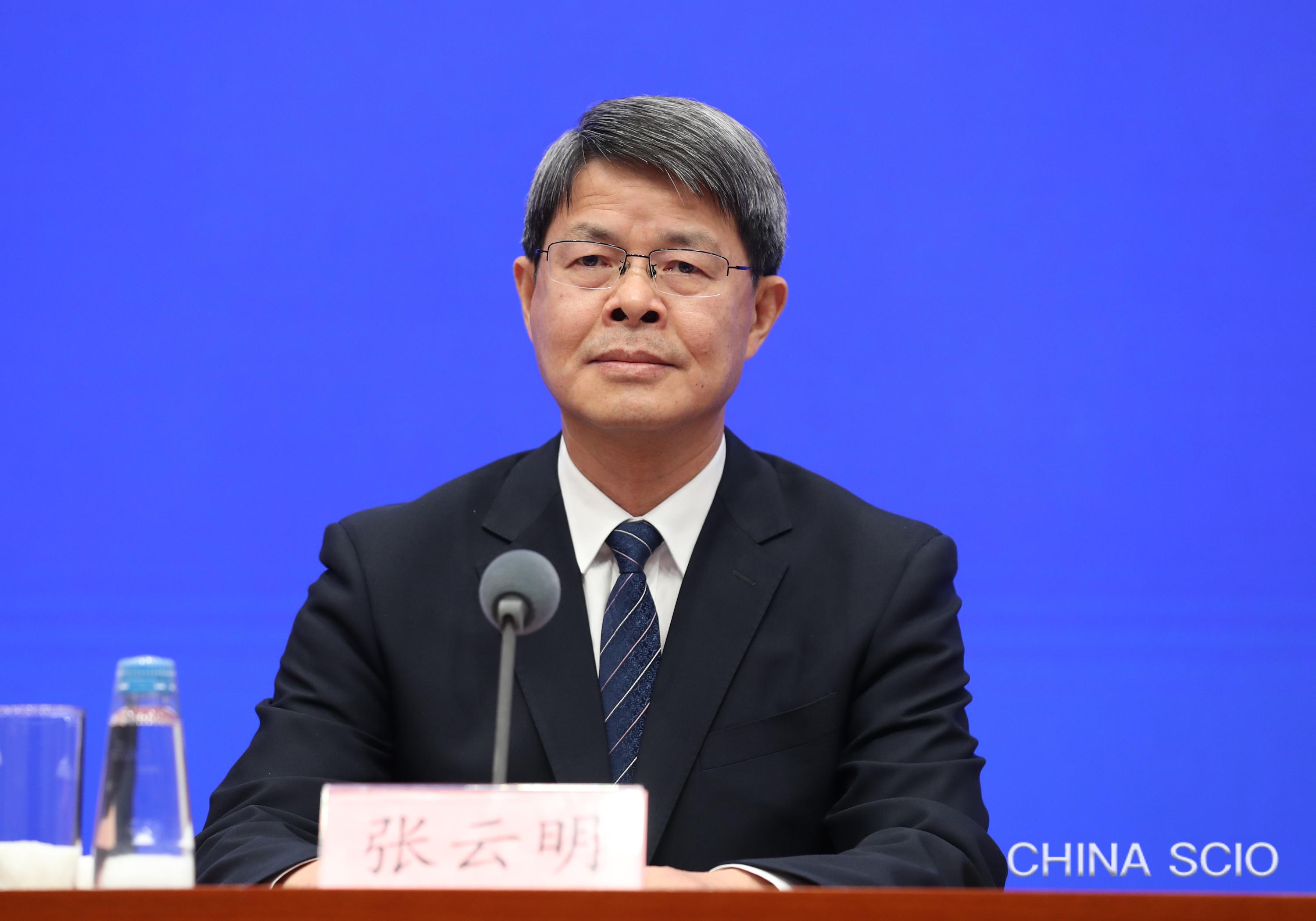
Zhang Yunming, vice minister of industry and information technology
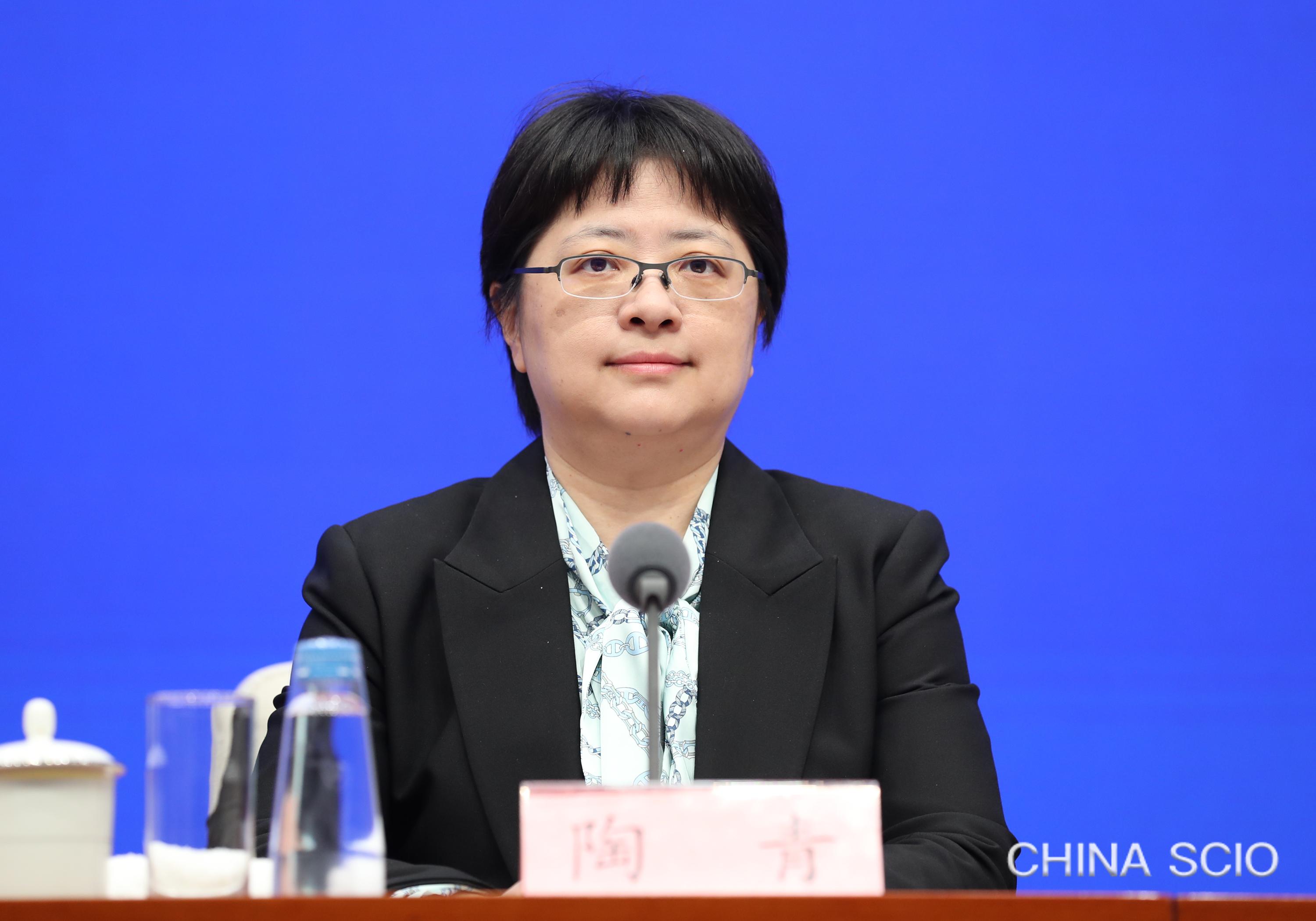
Tao Qing, spokesperson of the Ministry of Industry and Information Technology (MIIT) and director general of the Bureau of Operation Monitoring and Coordination of the MIIT
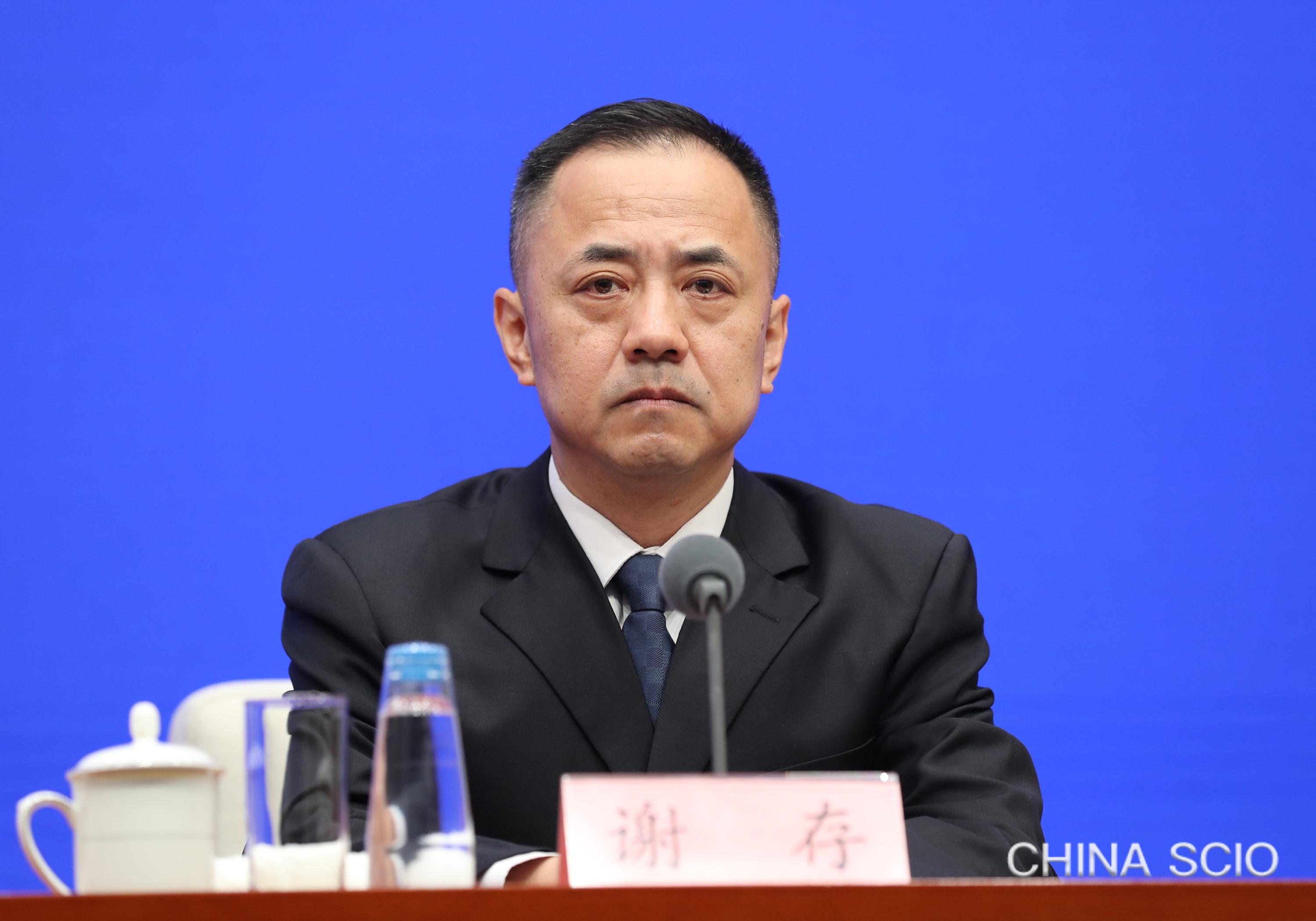
Xie Cun, spokesperson of the MIIT and director general of the Department of Information and Communications Development of the MIIT
Chairperson
Speakers:
Mr. Zhang Yunming, vice minister of the Ministry of Industry and Information Technology (MIIT)
Ms. Tao Qing, spokesperson of the MIIT and director general of the Bureau of Operation Monitoring and Coordination of the MIIT
Mr. Xie Cun, spokesperson of the MIIT and director general of the Information and Communications Development Department of the MIIT
Chairperson:
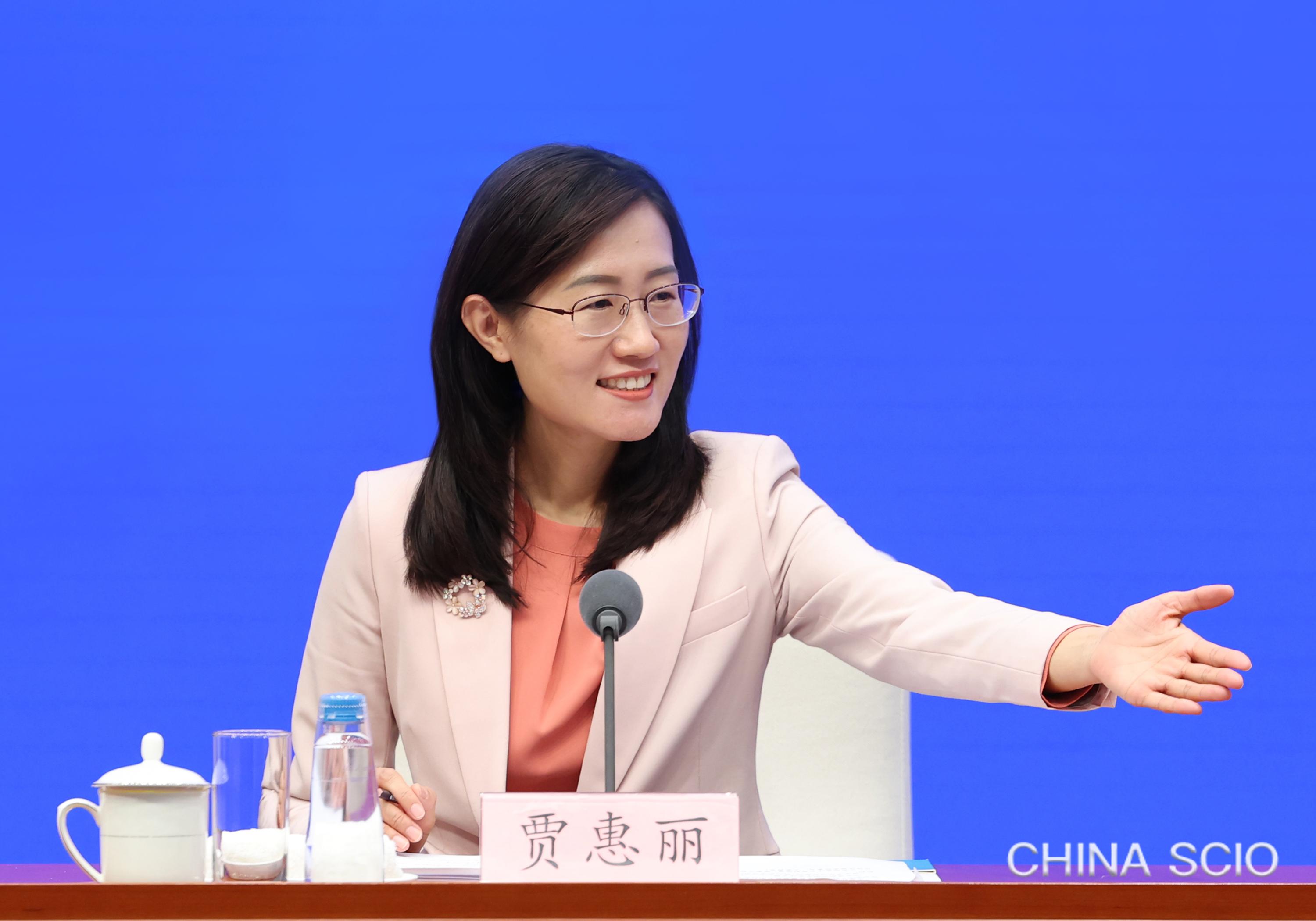
Ms. Jia Huili, deputy director general of the Press Bureau of the State Council Information Office (SCIO) and spokesperson of the SCIO
Date:
April 21, 2026
Jia Huili:
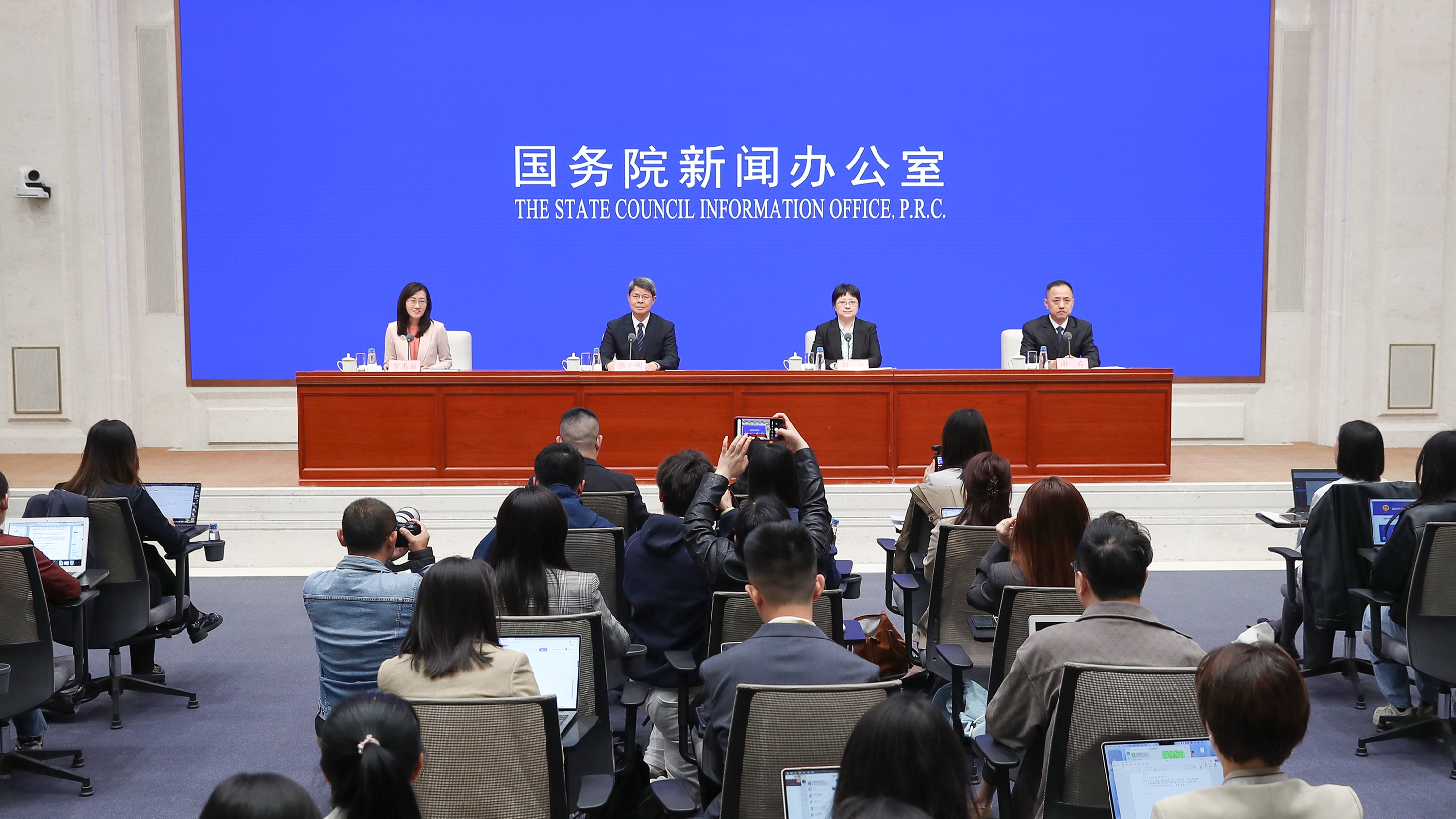
Ladies and gentlemen, good morning. Welcome to this press conference held by the State Council Information Office (SCIO). This is a regular briefing on China's economic data. Today, we have invited Mr. Zhang Yunming, vice minister of Ministry of the Industry and Information Technology, to brief you on China's industry and information technology development in the first quarter of 2026, and to take your questions. Also joining us today are Ms. Tao Qing, spokesperson of the MIIT and director general of the Bureau of Operation Monitoring and Coordination of the MIIT; and Mr. Xie Cun, spokesperson of the MIIT and director general of the Information and Communications Development Department of the MIIT.
Now, I'll give the floor to Mr. Zhang for his introduction.
Zhang Yunming:
Ladies and gentlemen, friends from the media, good morning. First, I would like to thank you for your continued interest in and support for the development of the industry and information technology sector.
Since the beginning of this year, under the strong leadership of the Central Committee of the Communist Party of China (CPC) with Comrade Xi Jinping at its core, the MIIT has thoroughly applied the guiding principles from the 20th CPC National Congress and the plenary sessions of the 20th CPC Central Committee, earnestly implemented the arrangements made at the fourth plenary session of the 20th CPC Central Committee and the Central Conference on Economic Work, and fully acted on the plans made at the annual sessions of the National People's Congress (NPC) and Chinese People's Political Consultative Conference (CPPCC). We have actively worked with all local authorities and departments to take the lead and act proactively. The overall development of industry and information technology got off to a good start in the first quarter of this year.
First, the industrial economy made steady progress, with stronger growth momentum. We have fully leveraged the combined effects of policies on major national strategies and security capacity building in key areas, as well as large-scale equipment upgrades and consumer goods trade-in programs. Efforts have been made to guide local authorities to step up the implementation of policies. In the first quarter, the value added of industrial enterprises above designated size increased by 6.1% year on year. All 31 provincial-level regions recorded growth, with more than 80% of industrial sectors expanding, and industry contributing nearly 40% to overall economic growth. Efforts to expand digital industries accelerated, alongside faster development of new information infrastructure. In the first quarter, the total volume of telecommunication services rose by 8.3% year on year, up 0.6 percentage point from a year earlier, while revenue in the software and information technology services sector increased by 11.7% in the first two months, up 1.8 percentage points year on year.
Second, industrial technological innovation was further deepened and substantive advances were made, unlocking greater growth potential. Efforts have been made to promote deeper integration between technological and industrial innovation, accelerating the transformation of innovative achievements into productive forces. To date, 21 national-level manufacturing pilot-scale platforms and 14 outstanding technology enterprise incubators have been selected, helping build a seamless channel from "laboratory" to "production line." In the first quarter, 304 industry standards were released to support the upgrading of traditional industries, the growth of emerging industries and the development of future industries. The value added of high-tech manufacturing enterprises above designated size rose by 12.5% year on year. The application of new technologies such as artificial intelligence (AI) accelerated in the sectors of electronics and consumer goods, with a growing range of end products including drones and AI glasses. Output of products such as industrial robots and integrated circuits increased by 33.2% and 24.3% year on year, respectively.
Third, advanced manufacturing gathered pace, further unleashing industrial vitality. Continued efforts were made to optimize the industrial structure. The share of value added by equipment manufacturing enterprises above designated size increased by 1.4 percentage points year on year. The first batch of 16 cities to build national demonstration zones for new industrialization was released. The total number of national high-tech industrial development zones reached 179. We have intensified efforts to promote the intelligent upgrading of manufacturing. A total of 37 smart manufacturing system solution projects under the "open-call" mechanism were completed and accepted, while seven new national standards and two new industry standards for smart manufacturing were issued. Work on energy conservation and carbon reduction in the industrial sector was further strengthened, with pilot programs launched for the comprehensive application of hydrogen energy. A total of 2,038 new green factories and 128 new green industrial parks were newly designated, while energy consumption per unit of value added of industrial enterprises above designated size continued to decline.
Fourth, the quality and efficiency of services for businesses improved, further strengthening their capabilities. A tiered cultivation system for high-quality enterprises was refined, and management measures for the cultivation of "quality" small and medium-sized enterprises (SMEs) were issued. Special initiatives, including the "High-Quality Enterprises Enter Campuses" talent recruitment program and talent services for SMEs, were carried out, while efforts to clear overdue payments owed to enterprises were intensified. Competition order in key industries was further regulated, with stronger measures taken to address online disorder in the auto sector and to ensure companies honor the 60-day payment commitment. Continued efforts were made to strengthen capacity monitoring and regulation, curb disorderly price competition, and enhance product quality supervision. As a result, competition order in industries such as new energy vehicles (NEVs) and photovoltaics continued to improve, with prices of products including photovoltaic modules, lithium carbonate, and power-grade lithium iron phosphate generally rebounding.
Currently, external uncertainties are increasing. However, the fundamentals supporting China's industrial economy — including a complete industrial system, strong resilience and vast market — remain unchanged, and the overall trend of steady improvement will continue. Going forward, we will adhere to the general principle of pursuing progress while maintaining stability, keep in mind both domestic and international imperatives, better coordinate development and security, and make coordinated efforts to stabilize growth, strengthen innovation, promote integration, improve governance and prevent risks. These efforts will further enhance the quality and efficiency of industrial development and ensure a solid start to the 15th Five-Year Plan period.
That is all for my introduction. Next, my colleagues and I will be happy to take your questions. Thank you.
Jia Huili:
Thank you for your introduction, Mr. Zhang. The floor is now open for questions. Please identify the media outlet you represent before asking questions.
_ueditor_page_break_tag_People's Posts and Telecommunications News:
Recently, the MIIT issued a notice on launching a special action to empower the development of small and medium-sized enterprises with inclusive computing power. What is the current state of the computing power industry in China? What are the priority tasks moving forward?
Zhang Yunming:
Thank you for your questions. I'll take them. In recent years, computing infrastructure has provided key and fundamental support to AI development. The MIIT has thoroughly implemented the decisions and plans of the CPC Central Committee and the State Council, advancing the high-quality development of the computing power industry through a coordinated "node-chain-network-ecosystem" approach. Recently, the ministry has focused on key tasks such as providing SMEs with affordable computing power and promoting coordination between computing and power systems. The computing power industry has maintained strong growth momentum.
First, the supply of computing power has grown. We have promoted the orderly development of computing infrastructure and built a multi-level "hub-region-edge" computing architecture. By the end of March, China's intelligent computing power had reached 1,882 EFLOPS (FP16). Second, industrial innovation has accelerated. We have thoroughly implemented the computing power network innovation challenge to accelerate technological and product innovation. We have conducted policy research and developed standards for computing-electricity coordination, accelerating the integration of power source-grid-load-storage and adopting direct green power connection. Third, network transmission has improved. We have accelerated the construction of high-speed broadband networks. Over the past two years, more than 70 major computing power channels have been built around computing hubs, serving as dedicated expressways for computing power. We have launched an initiative to deliver millisecond-level computing access in metropolitan areas, improving the efficiency of computing power delivery. Fourth, industrial applications have delivered notable results. We have issued a policy document on supporting SME development through affordable computing power, outlining five actions and 16 measures to build an inclusive computing power service system and ensure SMEs can access, afford and effectively use it.
Going forward, we will continue to promote the systematic and high-quality development of the computing power industry. This will be achieved by improving quality at key nodes, strengthening the industrial chain through innovation, building an integrated computing network and enabling broad applications.
First, we will improve the quality of computing resources at key nodes. We will guide the demand-driven and orderly development of computing infrastructure, promote the coordinated deployment of green power and computing power, and advance full automated monitoring coverage. We will improve China's computing power platform, promote precise matching of supply and demand and improve the efficiency of computing power resource utilization.
Second, we will strengthen industrial chains through technological and product innovation. We will deepen the computing power network innovation challenge and promote the practical application of innovation outcomes. We will strengthen the computing power standards framework. Additionally, we will support forward-looking research on space computing technology and promote the orderly development of the space computing industry.
Third, we will build an integrated computing network for computing power transmission. We will advance the phased deployment of millisecond-level computing access networks nationwide, create efficient computing power transmission channels based on the "hub-region-edge" framework, and improve the user experience of computing power applications.
Fourth, we will comprehensively empower the industrial ecosystem. We will deepen the special initiative to support SME development through affordable computing power, explore innovative service models such as "computing power banks" and "computing power supermarkets," and lower the barriers and costs for SMEs to access computing power. Thank you.
_ueditor_page_break_tag_Jinan Times APP:
What was the state of information and communications infrastructure development in the first quarter? What progress was made? And what are the next steps? Thank you.
Zhang Yunming:
Thank you for your questions. I would like to invite Mr. Xie to answer these questions.
Xie Cun:
Thank you for your questions. This year marks the start of the 15th Five-Year Plan period. Industrial and information technology authorities have carried out the decisions and plans of the CPC Central Committee and the State Council, made positive progress in developing information and communications infrastructure, and worked to consolidate the foundation for the digital and intelligent transformation across all economic and social sectors. Let me outline the progress through three "further" improvements. First, network capabilities have been further strengthened. As of the end of March, the total number of 5G base stations nationwide had reached 4.958 million, and 10G PON ports with gigabit network service capabilities had reached 32.01 million. In 86 cities across the country, 168 communities, factories and industrial parks had carried out pilot deployments of 10-gigabit optical networks. In addition, 5G-Advanced (5G-A) now covers 330 cities. The mobile Internet of Things is thriving, with 2.948 billion connected devices. Second, network coverage has been further expanded. To date, China has achieved gigabit optical network access in every county and 5G access in every township. All administrative villages now have broadband access and more than 95% have 5G access, and all border management and trade institutions have 4G/5G network access. Deep network coverage has been achieved in 269,000 key locations nationwide, with continuous network coverage extended to 654,000 kilometers of highways and railways and 316 subway lines. These improvements are changes the public can feel. Third, network applications have improved further. To date, 5G and gigabit optical networks have been integrated into 91 of the 97 major categories of the national economy. In health care, 5G applications now cover the full care pathway from pre-hospital emergency care and in-hospital emergency treatment through inpatient care and rehabilitation to discharge, and have been rolled out in more than 500 Grade-A tertiary hospitals. In the education sector, 5G applications cover all scenarios, including teaching, examination, evaluation, school management and administration, and have been deployed in nearly 3,000 primary and secondary schools, vocational colleges and universities.
Going forward, the MIIT will fully implement the 15th Five-Year Plan outline and further develop information and communications infrastructure. The ministry will also consolidate and strengthen the competitive advantages and leading position of the information and communications industry, continuously solidifying the digital foundation for high-quality economic and social development. We will focus on three key areas. First, we will leverage our strengths. We will deepen the coverage of 5G and gigabit optical networks, continue to advance the "Signal Enhancement" initiative, expand broadband in border areas and in forests and grasslands, and continuously improve network coverage and supply capacity. Second, we will drive upgrading. We will accelerate the large-scale commercial rollout of 5G-A, conduct pilot projects of 10-gigabit optical networks in an orderly manner, promote the evolution of "dual-gigabit" to "dual-10-gigabit" networks, and accelerate the development of the mobile Internet of Things toward universal intelligent connectivity. Third, we will strengthen coordination. We will systematically advance research and development of frontier technologies such as 6G and the next-generation internet. We will also promote collaborative innovation between the information and communications industry and vertical sectors. Thank you.
_ueditor_page_break_tag_Shangyou News:
How was the overall performance of the equipment manufacturing industry in the first quarter? What new breakthroughs have been achieved in advancing high-end and intelligent industrial development? What are the key priorities going forward? Thank you.
Zhang Yunming:
Thank you for your questions. I would like to invite Ms. Tao to answer them.
Tao Qing:
Thank you for your questions. Overall, the equipment manufacturing industry got off to a good start in the first quarter, marked by three characteristics: stable production, rising investment and robust exports. First, production growth has been stable. In the first quarter, the value added of the equipment manufacturing industry grew 6.2% year on year, contributing 19.4% to industrial growth. Second, investment in major industries has rebounded. In the first quarter, fixed asset investment in all five major sectors of the equipment manufacturing industry achieved positive growth. Railway, ship, aerospace and other transport equipment manufacturing grew 27.7% year on year, while general equipment manufacturing grew 12.5%. Third, exports have been a standout contributor. In the first quarter, exports of equipment manufacturing products in RMB terms grew 19.2% year on year, accounting for more than 60% of total export value.
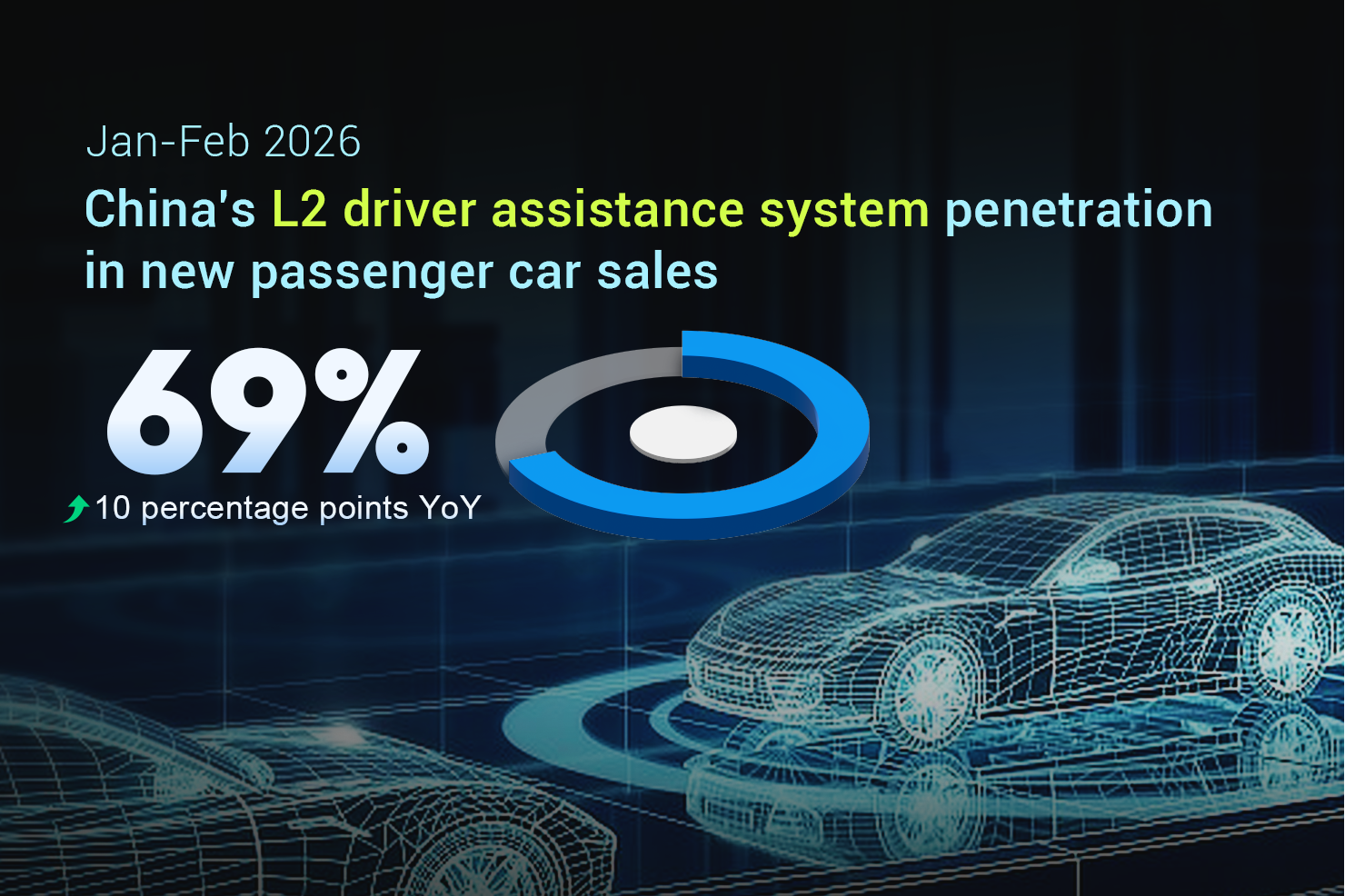
Progress in the high-end and intelligent development of the equipment manufacturing industry can be summarized in three ways. First, innovative capabilities have continued to strengthen. The world's first invasive brain-computer interface medical device has been approved for market launch, filling a gap in global clinical practice. Domestically produced spot welding industrial robots have for the first time achieved mass deployment on automotive welding lines. The world's first medium-speed wire-cut EDM machine capable of five-axis simultaneous control has been successfully developed, significantly improving processing efficiency. Second, the number of high-end products has continued to increase. Among passenger vehicles priced above 500,000 yuan, sales of domestic brands rose 97% year on year, with a market share of 69.5%. The second domestically built large cruise ship, the Aida Huacheng, was successfully launched. The world's largest piling vessel, the Tie Jian Da Qiao Zhuang 1, was delivered, and the AS700 Xiangyun manned airship received 42 confirmed orders. Third, the level of intelligence has continued to improve. In the equipment manufacturing industry, 197 leading smart factories have been established, driving an average 48.4% reduction in product defect rates and a 22.3% improvement in production efficiency. From January to February, the penetration rate of new passenger cars with Level 2 combined driving assistance systems reached 69%, up 10 percentage points year on year. In other words, more than 69 out of every 100 newly sold passenger vehicles are equipped with L2 combined driving assistance systems.
Going forward, we will carry out the decisions and plans of the CPC Central Committee and the State Council, focusing on three key tasks. First, we will focus on top-level design. We will accelerate the formulation of sector-specific plans for intelligent connected NEVs and related fields under the 15th Five-Year Plan framework, and study and introduce guidelines to accelerate the innovative development of intelligent equipment. Second, we will focus on stable performance. We will implement a new round of work plans to stabilize growth in industries such as machinery, automobiles and power equipment, continue to promote equipment upgrades and automobile trade-ins, and work persistently to regulate industrial competition. Third, we will focus on tackling key challenges. We will continue to implement the action plan for high-quality development of key industrial chains in the equipment manufacturing industry, strengthen flagship product R&D and accelerate the application of research results. Thank you.
_ueditor_page_break_tag_CCTV:
In the first quarter of 2026, the value added of industrial enterprises above designated size nationwide grew 6.1%, up 1.1 percentage points from the fourth quarter of last year. How do you assess the overall performance of industrial operations in the first quarter? Thank you.
Zhang Yunming:
Thanks for your question. I'll take this one. Since the beginning of this year, the industrial economy has broadly trended in a positive direction while maintaining steady progress, effectively serving as a ballast for the overall macroeconomic situation. Overall, three characteristics stand out.
First, the industrial economy grew rapidly. By industry, key sectors have played a significant driving role, with 34 of 41 major industrial categories achieving year-on-year growth in value added. Industries such as electronics, electrical machinery and equipment, chemicals, petrochemicals, general equipment, and special equipment contributed 51.4% to industrial growth. By region, major industrial provinces have played a prominent role, with the value added of industrial enterprises above designated size in the 10 leading industrial provinces growing about 7.2%. Zhejiang, Henan, Jiangsu and Hubei maintained relatively rapid growth, even against a high base from the same period last year.
Second, the industrial structure has continued to improve. The value added of equipment manufacturing enterprises above designated size grew 8.9% year on year, contributing nearly 50% to overall value-added growth among enterprises above designated size. The value added of high-tech manufacturing enterprises above designated size increased 12.5% year on year, 3.1 percentage points faster than last year, with emerging sectors such as integrated circuit manufacturing and biopharmaceutical manufacturing posting rapid growth. Technological changes such as AI have accelerated the adoption of new technologies and products in industries such as consumer electronics. The output of high-tech, high-value-added products such as robot reducers and memory chips has grown more than 40%.
Third, positive momentum has continued to build. In the first two months, profits of industrial enterprises above designated size grew 15.2% year on year, accelerating 14.6 percentage points compared with last year. Production and efficiency among small- and medium-sized enterprises above designated size both exceeded the average level of industrial enterprises above designated size. Manufacturing investment has stabilized and rebounded, growing 4.1% year on year in the first quarter, with the growth rate accelerating 3.5 percentage points from last year. Investment in emerging sectors is trending strongly. Industries such as computer and office equipment manufacturing and aerospace and equipment manufacturing have achieved double-digit investment growth. In March, the Producer Price Index (PPI) rose 0.5% year on year, ending 41 consecutive months of decline. The Purchasing Managers' Index (PMI) for the manufacturing sector rose 1.4 percentage points from the previous month, entering expansionary territory.
Currently, domestic effective demand is insufficient, cash flow is tightening for SMEs and some industries, and the operation of industries such as petrochemicals is disrupted. Consolidating the positive momentum of the industrial economy still requires a lot of effort. Going forward, we will adhere to the general principle of seeking progress while maintaining stability, focus on expanding demand, improving quality and cultivating new growth drivers, further enhance the efficiency and effectiveness of industrial economic operations, and continuously consolidate the positive trend of recovery. Thank you.
_ueditor_page_break_tag_The Poster News APP:
How did the electronics and information manufacturing industry perform overall in the first quarter? What new progress has been made in promoting technological innovation and integrated applications? And what are the plans in this area going forward? Thank you.
Zhang Yunming:
Thank you for your questions. I would like to invite Mr. Xie to answer.
Xie Cun:
Thank you for your questions. The electronic information manufacturing industry has got off to a good start in the first quarter and is expected to continue its growth momentum this year. In the first quarter, the value added of the computer, communication and other electronic equipment manufacturing industry above designated size increased 13.6% year on year, ranking first among major industrial sectors. In January and February, operating revenue reached 2.6 trillion yuan, a year-on-year increase of 14.3%, which was 9 percentage points higher than the industrial growth rate. In the first quarter, the output of some products achieved double-digit growth, with integrated circuit output increasing 24.3% year on year. The export value of upstream products increased significantly, with the export value of integrated circuits and LCD flat panel display modules increasing by 72.9% and 12.5% year on year, respectively.
Since the beginning of 2026, the MIIT has been continuously promoting technological innovation and integrated application in the electronic information manufacturing industry. Innovative results are constantly emerging. Technological breakthroughs have been achieved in fields such as integrated circuits, new displays, high-end electronic equipment and electronic materials, while new progress has been made in 3D storage technology. The application of terminal products has been diversified and expanded. New products, new models and new scenarios are constantly emerging. For example, color TV products are launching large-scale models based on televisions, which can automatically adjust brightness while improving the audio-visual experience and protecting users' eyesight. BeiDou positioning has been further integrated into scenarios such as dynamic monitoring of scenic spots and indoor and outdoor navigation in business districts. Audio technology has been optimized and upgraded, and smart devices can filter noise and clearly hear people's voices in noisy environments at long distances.
Next, we will focus on the following tasks: First, we will thoroughly implement the action plan for stabilizing growth, leverage the driving role of major projects, and maintain industrial operations within a reasonable range. Second, we will accelerate the digital transformation and intelligent upgrading of industries, expedite the integration and application of BeiDou, advanced computing and AI terminals, and vigorously explore and cultivate new application scenarios in the sectors of energy, automobiles, healthcare, education, culture and tourism, and sports. Third, we will improve the effectiveness of industry governance, thoroughly rectify "rat race" competition, and resolutely curb low-price and low-quality competition. Fourth, we will strengthen the industrial development ecosystem, continue to promote the adaptation of domestic operating systems to the RISC-V architecture, accelerate collaborative innovation between upstream and downstream of the AI industry chain, and continuously improve the system of standards for electronic information technology products.
The recent surge in memory chip prices has triggered price adjustments for mobile terminal products, drawing widespread attention. In response to this issue, we will take multiple measures to support the development of the memory chip industry and ensure the stability of the industrial and supply chains. On the one hand, we will enhance supply capacity, promote supply and demand matching, and encourage domestic and foreign-funded enterprises to increase investment and improve output capacity. We will support terminal manufacturers and memory manufacturers to strengthen interaction and coordination, and broaden diversified supply channels. On the other hand, we will maintain market order through various measures to guide memory chip companies to strengthen channel management, and cooperate with relevant departments to crack down on market-disrupting behaviors such as hoarding in accordance with the law. Thank you.
_ueditor_page_break_tag_Top News:
How did the raw materials industry perform overall in the first quarter? What are the overall plans for promoting supply-side structural reform of raw materials industry and facilitating high-quality development going forward? Thank you.
Zhang Yunming:
Thank you for your questions. I will answer them. In the first quarter, we implemented the new round of work plans for stabilizing growth in 10 key industries, focusing on promoting the optimization and upgrading of production capacity structure. We achieved a good start in the raw materials industry, made more powerful progress in transformation, and strengthened the industrial structure. This can be viewed from the following three aspects.
First, in terms of scale, overall industry production remains stable. In the first quarter, the value added of the raw materials industry increased 4.6% year on year. Specifically, the value added of the petrochemical and chemical industry increased 7.4% year on year, and that of the non-ferrous metals industry grew 2.6%. In terms of output of key products, the output of 10 commonly used non-ferrous metals increased 3.6%, while the output of the ethylene, fertilizer and refined copper all increased more than 5%. Profits of raw materials enterprises above designated size increased 45.6% year on year in January and February, with a profit margin of 4.2%, up 1.2 percentage points from the same period last year.
Second, in terms of framework and structure, the industrial structure continues to be optimized. The steel industry is going through "quantity reduction and quality improvement." In the first quarter, despite a year-on-year decline in the output of major products such as crude steel and steel products, the value added of the steel industry still achieved a positive growth of 2.5%. In other words, the value created by each metric ton of steel is increasing, and the steel backbone of the manufacturing industry is becoming more resilient. The building materials industry is going through a decrease in one respect and an increase in another. In the first quarter, the cement industry proactively "slimmed down," reducing or eliminating nearly 30 million metric tons of production capacity through capacity reduction and replacement. At the same time, the revenue of the green building materials industry has grown steadily, and the number of building materials products certified as green has increased 5% compared with the end of 2025. This "one decrease and one increase" is a vivid example of industrial transformation and upgrading.
Third, in terms of driving force, innovative achievements are emerging at an accelerated pace. We independently developed and launched the world's first industrial-gradeT1200 ultra-high-strength carbon fiber product, which is expected to be widely used in strategic emerging industries such as aerospace, low-altitude economy and humanoid robots. A number of enterprises that have mastered key core technologies and have strong innovation capabilities are developing key products in the fine chemical industry. The sector for high-end chemical materials such as polyetheretherketone (PEEK) and medical-grade polyoxymethylene (POM) is developing rapidly, and the industry's own momentum and vitality are increasing.
Next, the MIIT will thoroughly implement the arrangements of the outline of the 15th Five-Year Plan, continue to consolidate the foundation while fostering new drivers, and strengthen overall planning and policy supply. On the one hand, we will focus on consolidating the foundation for upgrading traditional industries, promoting the optimization of existing production capacity and the transition toward green and safe operations. On the other hand, we will fully activate the innovation engine and accelerate the layout of cutting-edge materials and R&D breakthroughs in key materials, thereby providing more solid and reliable material support for developing new quality productive forces and advancing new industrialization. Thank you.
_ueditor_page_break_tag_Xinhua Finance:
We have noted that the newly revised "Measures for the Administration of the Gradient Cultivation of High-Quality Small- and Medium-sized Enterprises" officially came into effect on April 1. What changes are there from the interim measures issued in 2022? How will the development of SMEs that use specialized and sophisticated technologies to produce novel and unique products be further promoted? Thank you.
Zhang Yunming:
Thank you for your questions. I would like to invite Ms. Tao to answer them.
Tao Qing:
Thank you for your questions. SMEs are an important force in promoting innovation, boosting employment and improving people's well-being. Since the beginning of this year, steady progress has been made in the economic operation of SMEs, with accelerated production and improved efficiency. In the first quarter, high-quality SMEs, represented by "little giant" enterprises that use specialized and sophisticated technologies to produce novel and unique products, performed excellently, with the value added of those above designated size increasing 10.2% year on year.
Developing into specialized and sophisticated enterprises that produce new and unique products is the only path for SMEs to ensure high-quality development. The MIIT has accelerated the construction of a gradient cultivation system for high-quality SMEs, featuring unified standards, orderly articulation and precise services. On April 1 this year, we launched the "Measures for the Administration of the Gradient Cultivation of High-Quality SMEs," which mainly includes three aspects. First, is improving the cultivation system. A gradient cultivation system for high-quality SMEs, consisting of basic tier, backbone tier and core tier, has been established, and technology-based SMEs have been included in the system. A sound mechanism for proactively discovering high-quality enterprises has been established, and potential enterprises have been proactively identified based on data on industrial and supply chains, equity investment, and intellectual property rights. Second, is optimizing the identification standards. The measures adopt a unified national standard on the identification of specialized and innovative SMEs across regions, introduce an evaluation system for their development, strengthen dynamic management, and guide them toward high-quality development. Third, is enhancing cultivation services. Guidance is being provided for local governments to make good use of various support policies. Precise services will be provided to enterprises of different types and at different stages. The ability to enjoy preferential policies directly, rapidly and without the need for application will be promoted for enterprises, so that the policies are visible, accessible and usable.
Next, the MIIT will accelerate the establishment of mechanisms to promote the development of SMEs that use specialized and sophisticated technologies to produce novel and unique products, focusing on three key aspects to support the high-quality development of SMEs. First, we will build the strength of enterprises through innovation. We will implement a three-year action plan for the gradient cultivation of high-quality enterprises, launch an entrepreneurship support program for AI-driven SMEs, and issue a special action plan for empowering SMEs with inclusive computing power. We will support qualified localities to explore the construction of empowerment centers for specialized and sophisticated SMEs, conduct assessments of the supply chain support capabilities of specialized and sophisticated SMEs, continuously enhance the innovation capabilities of enterprises, and give full play to their role in consolidating the foundation and strengthening the industrial chain. Second, we will optimize the business environment to vitalize enterprises. We will publicize and implement the SME promotion law, release the 15th Five-Year Plan for SME development, establish the second phase of the National SME Development Fund, conduct assessments of the development environment for SMEs, and foster a favorable development ecosystem. Third, we will provide services to help businesses. We will establish national demonstration platforms and bases for public services for SMEs, jointly launch special talent service initiatives with multiple departments, and hold a publicity month of laws and policies, promoting more services to directly reach SMEs. Thank you.
_ueditor_page_break_tag_People's Daily Online:
According to this year's Government Work Report, we will foster new growth drivers at a faster pace and introduce an upgraded 5G Plus Industrial Internet Initiative. What is the current progress of the large-scale promotion of typical application scenarios of 5G Plus Industrial Internet? On which aspects will the MIIT focus to promote breakthroughs in the upgraded 5G Plus Industrial Internet Initiative? Thank you.
Zhang Yunming:
Thank you for your questions. I would like to invite Mr. Xie to answer them.
Xie Cun:
Thank you for your questions. This year's Government Work Report proposed the introduction of an upgraded 5G Plus Industrial Internet Initiative. We have earnestly implemented the decisions and plans of the CPC Central Committee and the State Council, continuously promoted the large-scale development of 5G Plus Industrial Internet, and fully achieved the goals of the "Hundred-Thousand-Ten Thousand Action Plan" for 5G factories: building 100 benchmark-level 5G factories that are technologically advanced and serve as leading examples in key industries; promoting the construction of over 1,000 projects included in the 5G Factory Directory, characterized by broad coverage and distinctive features, thereby forming a tiered industry structure; guiding and encouraging industrial enterprises to upgrade their internal networks with 5G technology, with the ultimate goal of covering tens of thousands of 5G application projects, achieving large-scale adoption and popularization. We have encouraged basic telecommunications enterprises to utilize technologies such as cloud slicing and software-defined networking (SDN) to build and improve private network services for industrial enterprises. More than 25,000 5G Plus Industrial Internet projects have been built, 1,260 classified and graded 5G factories with distinct characteristics have been established, and 100 technologically advanced and benchmark-leading 5G factories have been created. On average, product quality has improved 20.5%, operating costs have decreased 18.4%, and average production capacity has increased 24.7%. Industrial-grade 5G gateways, routers and other products account for nearly 50% of the global market. The world's first international standard for 5G Plus Industrial Internet has been released and breakthroughs have been achieved in a series of software-hardware decoupled industrial control systems as well as universally integrated smart terminals.
Next, we will focus on introducing the upgraded 5G Plus Industrial Internet Initiative, promoting a comprehensive improvement in its capabilities across network infrastructure, technology products, integrated applications, industrial ecosystem and public services. We will accelerate the integration of information technology (IT), communication technology (CT), operational technology (OT) and data technology (DT), build a new type of industrial network represented by 5G, and accelerate the widespread integration of 5G Plus Industrial Internet into key sectors of the real economy, thereby providing solid support for the intelligent, green and integrated development of the manufacturing industry.
First, we will strengthen the guarantee of the factors of production. We will accelerate the introduction of the opinions on promoting the high-quality development of the industrial Internet"; coordinate the construction of five major functions: network, identification, platform, data and security; and focus on improving the development of five major systems: policy, infrastructure, technology, application and ecosystem. We will also speed up the formulation and release of a set of standards covering basic commonalities, key technologies and typical applications.
Second, we will deepen coordinated innovation. We will organize pilot programs for dedicated industrial 5G private networks in sectors such as raw materials, equipment manufacturing and consumer goods. We will regularly release catalogs of new industrial network products, encourage enterprises to adopt technologies such as Time-Sensitive Networking and information models to carry out network-based transformation, and implement initiatives to promote both the scale and quality improvement of 5G-enabled factories.
Third, we will expand large-scale application. We will formulate a number of guidelines on the integrated application of the industrial internet with key industries, and promote its large-scale adoption across sectors through a scenario-driven approach. We will implement initiatives to empower the integration of the industrial internet and AI. We will accelerate the upgrading of industrial internet infrastructure, optimize its capabilities, and foster application innovation so as to provide a critical foundation for the furtherance and implementation of AI in the industrial sector.
Fourth, we will improve the industrial ecosystem. We will organize activities that promote the integrated adoption of the industrial internet solutions in industrial parks across cities, facilitating the entry of policies, infrastructure, technologies, standards, applications, enterprises and services into industrial parks, clusters and bases. We will launch the second batch of "5G Plus Industrial Internet" integrated application pilot cities to foster leading and innovative high-level industrial clusters. Thank you.
_ueditor_page_break_tag_Hong Kong Bauhinia Magazine:
The outline of the 15th Five-Year Plan proposes to further implement the Excellence Quality Program for the Manufacturing Industry. This year's Government Work Report also sets out new requirements for quality-related work. What progress has been made since the implementation of this program? What are the next steps to deepen its implementation? Thank you.
Zhang Yunming:
Thank you for your questions. I will take them. Quality is the lifeline of manufacturing. Pursuing excellence in quality is an inherent requirement for achieving high-quality development in manufacturing and improving people's quality of life. To stimulate enterprises' internal motivation for quality improvement, in December 2023, the MIIT took the lead in issuing a guideline on implementing the Excellence Quality Program for the Manufacturing Industry. For more than two years, we have been developing a set of scientific methodologies, and managed to issue the specification for evaluating quality management capabilities of manufacturing enterprises, building a tiered evaluation system consisting of "entry level, inspection level, assurance level, prevention level, and excellence level." This sets the standards and guidance for enterprises to improve their quality. We have also explored an implementation pathway by focusing on key areas related to national strategies and people's well-being. This will guide enterprises to benchmark against standards and achieve compliance through a process of "standards implementation, self-assessment, and review. "We have promoted quality improvement among a number of enterprises and organized more than 14,000 enterprises to participate in the evaluation. A large number of enterprises have reached the assurance level or above, and participating enterprises have seen significant improvements in quality and efficiency. A social atmosphere of pursuing excellence in quality is taking shape.
During the 15th Five-Year Plan period, we will faithfully implement the arrangements set out in the Plan outline. Focusing on the Excellence Quality Program for the Manufacturing Industry, we will take into account actual conditions, emphasize key priorities, and adopt differentiated measures across sectors. Four special initiatives will be deployed to accelerate the improvement of manufacturing quality, providing strong support for building China into a powerhouse in manufacturing, quality, and cyberspace.
First, we will implement the Enterprise Quality Improvement Initiative and strictly control quality at the source. We will give full play to the principal role of enterprises and carry out evaluations of quality management capabilities. These will target key sectors and key enterprises, using evaluation to drive improvement and excellence, and promote the upgrading of quality management capabilities in a number of enterprises. We will implement the Manufacturing Quality Enhancement Along the Industrial Chain Program, giving full play to the leading role of chain-leading enterprises and advancing coordinated quality improvement across the entire industrial chain.
Second, we will implement the Quality Technology Advancement Initiative to enhance quality competitiveness. We will support the establishment of high-level quality consortia, and accelerate breakthroughs in key generic technologies as well as the transformation and application of research outcomes. We will advance the integration of AI and quality management, encourage the development and application of high-quality large models for quality and industrial quality intelligent agents, and inject intelligent momentum into quality improvement.
Third, we will implement the Product Quality Upgrade Initiative to expand the supply of high-quality products. We will focus on the equipment manufacturing and electronics sectors, and vigorously enhance the reliability of key core products. Guided by demand and led by advanced and applicable standards, enterprises will be encouraged to produce more diversified, personalized, and higher-quality products. For products related to public health and safety, we will strengthen industry governance and quality supervision, and firmly safeguard the baseline of safety.
Fourth, we will implement the China Manufacturing Brand Building Initiative to foster new competitive advantages in branding. We will strengthen the synergy between brand building and quality improvement, enhance the ability of enterprises, industries and regions to build brands, and continuously improve the brand awareness, reputation and influence of "China Manufacturing". Thank you.
Jia Huili:
Due to time constraints, we will take the last two questions.
_ueditor_page_break_tag_China Securities Journal:
The outline of the 15th Five-Year Plan proposes to let new demand drive new supply, and in turn create new demand through new supply. Recently, the MIIT has introduced a series of policy documents on consumer goods. Could you elaborate on the overall plan for promoting the upgrading of the consumer goods industry and deepening the implementation of the Three Products strategy to increase product varieties, improve product quality, and build product brands? Thank you.
Zhang Yunming:
Thank you for your question. I will invite Mr. Tao to take this question.
Tao Qing:
Thank you for your question. The consumer goods industry is one of China's traditionally strong sectors and is essential to people's livelihoods. From food to clothing, it is closely linked to people's daily lives and well-being. Recently, the MIIT has deepened the implementation of the strategy to increase product variety, improve quality and strengthen brand-building in the consumer goods industry. The ministry issued and implemented the implementation plan on enhancing supply-demand alignment for consumer goods to further stimulate consumption, along with several policy documents to promote high-quality development in traditional Chinese medicine, tea and liquor brewing. It also strengthened standardization management in key sectors, including electric bicycles, lead-acid batteries and printing and dyeing, and improved the quality and safety traceability system for infant formula. By accelerating industrial upgrading and steadily expanding the supply of quality consumer goods, it delivered a coordinated policy package that is closely tied to people's lives and serves consumption. In the first quarter, the value added of consumer goods enterprises above designated size grew by 5.1% year on year, accounting for 27.9% of the total value added of industrial enterprises above designated size. Exports of consumer goods in yuan-denominated terms accounted for 17.7% of total exports. From January to February, revenue reached 5.1 trillion yuan, representing 24.3% of total revenue among industrial enterprises above designated size, while profit reached 310.6 billion yuan, accounting for 30.3% of the total.
The 15th Five-Year Plan clearly states that we should work toward improving living standards while increasing consumer spending and coordinating investment in physical assets and investment in people, so that new demand leads new supply and new supply creates new demand. The MIIT will resolutely implement the requirements of the 15th Five-Year Plan and the government work report, focusing on three priorities. First, drawing up a new development blueprint. The MIIT will issue and implement policy documents to promote high-quality development in light textiles, bio-manufacturing and pharmaceuticals during the 15th Five-Year Plan period. It will formulate action plans to elevate standards and guide the upgrading of the textile and other light industries, and vigorously cultivate new growth drivers, including renowned traditional industries, elderly and child care, local specialty foods and innovative ethnic medicines. The aim is to solidify the foundation for industrial development from the ground up, ensuring policies move from page to factory floor and deliver on what people actually need. Second, addressing the supply-demand challenge. The MIIT will accelerate the implementation of the plan to improve the alignment of the supply and demand of consumer goods, systematically advance the development of a matrix of renowned Chinese consumer brands and expand the supply of distinctive, quality and niche products in areas such as health, China chic, elderly care, maternal and child care, and cultural and creative products, thereby building a diversified, personalized and high-quality product system. Third, focusing on enriching the consumer experience. We will deepen the implementation of the "AI plus" special initiative to enhance product variety, improve quality and build brands. Moreover, we will study and release AI application guidelines for key industries and accelerate the development of around 20 dedicated large AI models and high-quality datasets in the consumer goods sector. We will vigorously develop new models such as flexible manufacturing, intelligent supply, and personalized customization and create immersive, participatory and interactive consumption scenarios. By harnessing AI to elevate the consumer experience, we can make technology more accessible, consumption more appealing and daily life higher in quality. Thank you.
Jia Huili:
Thank you. We have time for one last question.
_ueditor_page_break_tag_Yicai:
This year marks the start of the 15th Five-Year Plan period, and China has set out clear forward-looking plans for industries of the future. What is the overall state of China's future industry development and planning? How can policy innovation help accelerate the transition of future-oriented industries from the laboratory to the market? Thank you.
Zhang Yunming:
Thanks for your questions. I'll take these. The CPC Central Committee and the State Council have attached great importance to the development of China's future industries. At the 24th group study session of the Political Bureau of the CPC Central Committee, General Secretary Xi Jinping stressed that we should approach this from the strategic perspective of building a strong nation and pursuing national rejuvenation, ground ourselves in actual conditions, leverage our comparative advantages, pursue progress while maintaining stability, and advance the tiered development of China's future industries to achieve continuous breakthroughs.
The MIIT has resolutely implemented the decisions and plans of the CPC Central Committee and the State Council regarding the development of future industries and has taken solid steps to ensure effective progress on all fronts. First, key development tracks have been steadily refined. Together with six other departments, we issued guidelines on promoting the innovative development of future industries, which systematically maps out the tracks for future industry development. Second, the supply of cutting-edge technologies has been continuously strengthened. We have stepped up support for future industries by leveraging major national science and technology projects. More than 100 innovation challenge tasks for future industry development have been deployed under the open competition mechanism, focusing on key tracks such as quantum technology and clean, low-carbon hydrogen. We have systematically planned the development of manufacturing innovation centers and pilot testing platforms for future industries in key sectors, steadily turning good ideas into good products on the production line. Third, enterprise vitality has continued to be unleashed. We have supported the development of 509,000 high-tech enterprises and 193 innovative industrial clusters, which together have drawn in 54,000 innovative enterprises of various types. Fourth, the industrial ecosystem has continued to improve. Future industries must be driven by technological advancements and supported by a sound ecosystem. For three consecutive years, we have hosted the Future Industry Innovation and Development Forum at the Zhongguancun Forum, guiding local governments to build provincial-level pioneer zones for future industry development based on local conditions.
The key to moving future industries from the laboratory to the market is to let industry needs guide sci-tech innovation, clearing the obstacles and bottlenecks between innovation and market demand. In terms of technology supply, we will plan research tasks based on the actual needs of industrial development and strengthen the coordinated advancement of basic and applied research. We will develop manufacturing innovation centers and pilot testing platforms to accelerate the transition of original technologies from lab to pilot-scale and large-scale production. In terms of policy support, we will coordinate the formulation of general policies and sector-specific policies. We will introduce general policies based on common development needs and targeted policies for specific tracks to accelerate high-quality development across new fields and sectors.
Today's future industries will be tomorrow's emerging industries, or even pillar industries. Only by planning ahead for future industries today can we seize the commanding heights of development tomorrow. We will strengthen accountability, ensure the sound implementation of our duties, and sustain long-term efforts to provide strong momentum for developing new quality productive forces and achieving new industrialization.
Jia Huili:
That concludes today's press conference. Thank you to our speakers and to all the journalists for your participation. Goodbye.
Translated and edited by Cui Can, You Jiaxin, Yang Xi, Wang Mengru, Liu Caiyi, Xu Kailin, Gong Yingchun, Fan Junmei, Li Xiao, Li Huiru, Jay Ian Birbeck, David Ball and Tudor Bentley Finneran. In case of any discrepancy between the English and Chinese texts, the Chinese version is deemed to prevail.

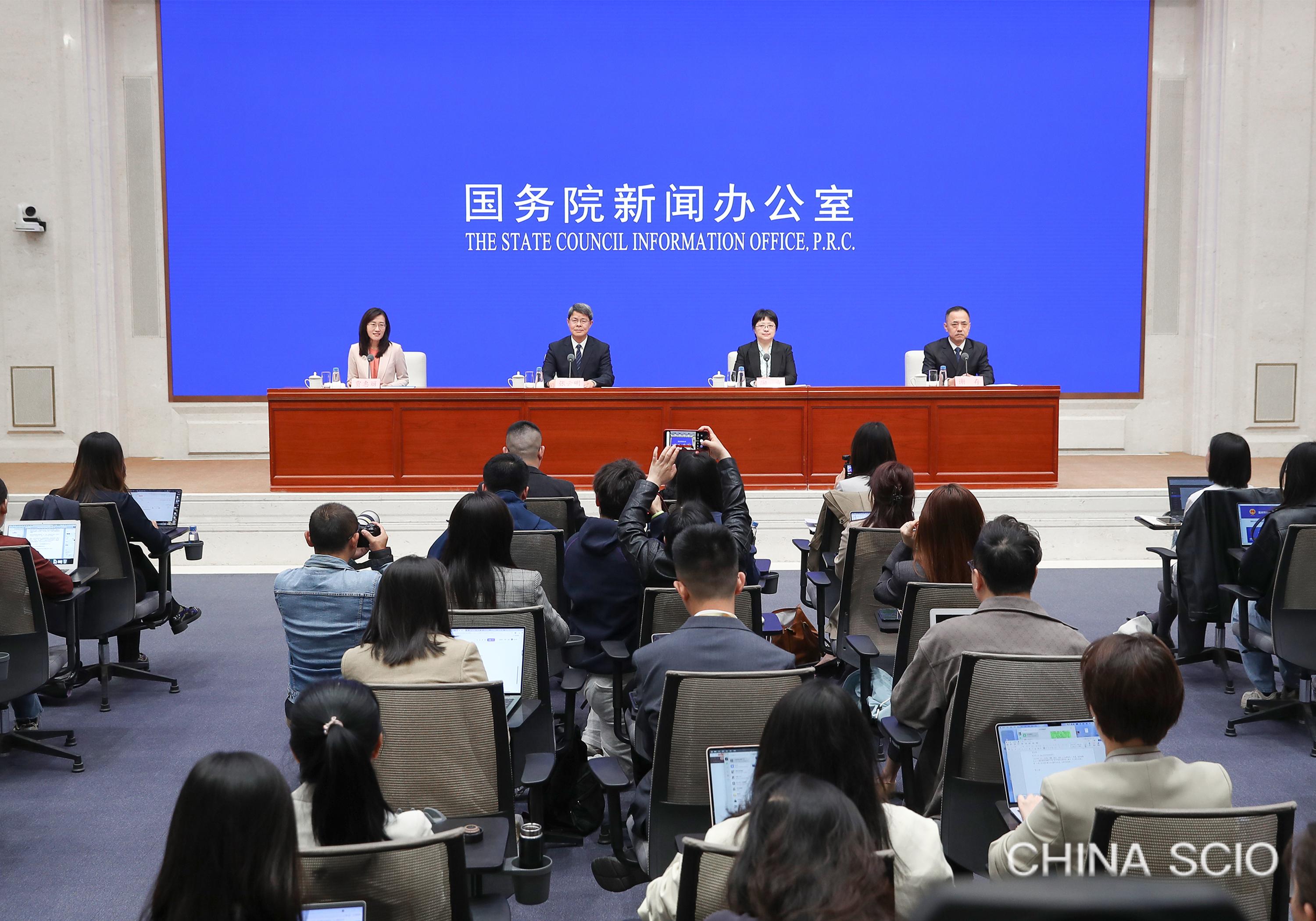
/5 Group photo
/5 Zhang Yunming
/5 Tao Qing
/5 Xie Cun
/5 Jia Huili
SCIO briefing on promoting high-quality development during 15th Five-Year Plan period
April 17, 2026SCIO briefing on China's economic performance in the first quarter of 2026
SCIO briefing on China's import and export in the first quarter of 2026
April 14, 2026SCIO briefing on 6th China International Consumer Products Expo
March 30, 2026