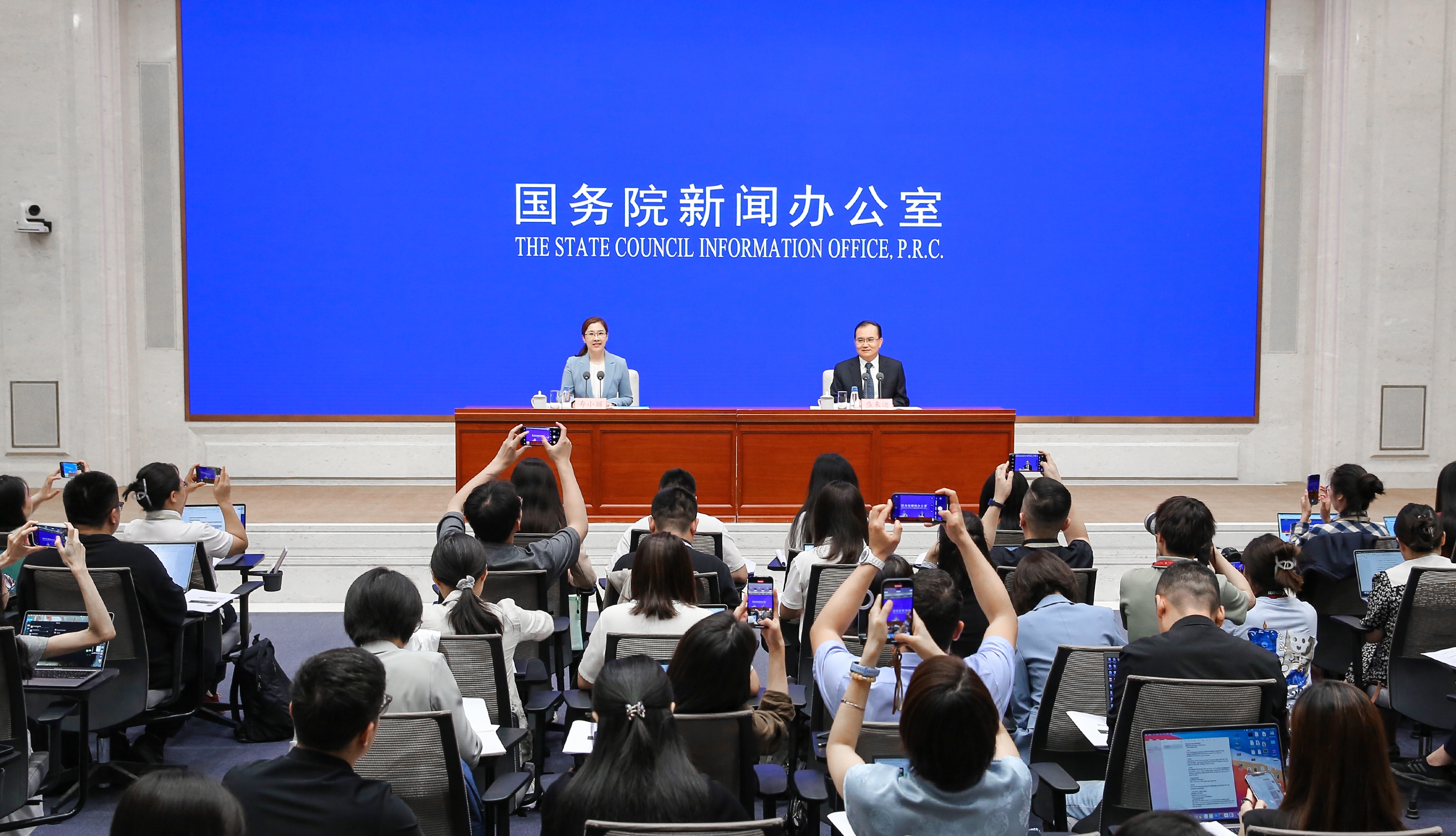

SCIO briefing on China's economic performance in H1 2025
Beijing | 10 a.m. July 15, 2025
Speaker

Sheng Laiyun, deputy commissioner of the National Bureau of Statistics
Chairperson
Speaker:
Mr. Sheng Laiyun, deputy commissioner of the National Bureau of Statistics (NBS)
Chairperson:
Ms. Shou Xiaoli, director general of the Press Bureau of the State Council Information Office (SCIO) and spokesperson of the SCIO
Date:
July 15, 2025
Shou Xiaoli:
Ladies and gentlemen, good morning. Welcome to this press conference held by the State Council Information Office (SCIO). Today, we are holding another regular briefing on economic data. We have invited Mr. Sheng Laiyun, deputy commissioner of the National Bureau of Statistics (NBS), to brief you on China's national economic performance in the first half of 2025 and to answer your questions.
Now, I'll give the floor to Mr. Sheng for his introduction.
Sheng Laiyun:
Thank you, Ms. Shou. Good morning, friends from the media. I am pleased to share with you the key data on China's national economic performance. As usual, I will first brief you on the economic performance in the first half of the year, and then take your questions.
In the first half of the year, China's national economy forged ahead despite challenges and maintained steady and positive momentum.
In the first half year, under the strong leadership of the Central Committee of the Communist Party of China (CPC) with Comrade Xi Jinping at its core, all regions and departments strictly implemented the decisions and arrangements made by the CPC Central Committee and the State Council, adhered to the general principle of pursuing progress while ensuring stability, fully and faithfully applied the new development philosophy on all fronts, accelerated efforts to create a new pattern of development, coordinated domestic economic work and endeavors in the international economic and trade field, and implemented more proactive and effective macro policies. As a result, the national economy withstood pressure and improved steadily despite challenges. Production and demand grew steadily, employment was generally stable, household incomes continued to increase, new growth drivers witnessed robust development and high-quality development made new strides, helping ensure overall social stability.
According to preliminary estimates, China's gross domestic product (GDP) in the first half of 2025 reached 66,053.6 billion yuan, up by 5.3% year on year at constant prices. By industry, the value added of the primary industry was 3,117.2 billion yuan, up by 3.7% year on year; that of the secondary industry was 23,905.0 billion yuan, up by 5.3%; and that of the tertiary industry was 39,031.4 billion yuan, up by 5.5%. By quarter, GDP increased by 5.4% year on year in the first quarter, and 5.2% in the second quarter. The GDP for the second quarter increased by 1.1% quarter on quarter.
First, summer grain witnessed stable production and a good harvest, and animal husbandry grew steadily.
In the first half of the year, the value added of agriculture (crop farming) registered a year-on-year increase of 3.7%. The overall output of summer grain was 149.74 million metric tons, 150,000 metric tons less than that of the previous year, or a decrease of 0.1%. In the first half of the year, the output of pork, beef, mutton and poultry was 48.43 million metric tons, up by 2.8% year on year. Of this total, the output of pork, beef and poultry grew by 1.3%, 4.5% and 7.4%, respectively, while that of mutton fell by 4.6%. The output of milk was up by 0.5% and that of eggs up by 1.5%. At the end of the second quarter, the number of pigs registered in stock was 424.47 million, up by 2.2% year on year; and 366.19 million pigs were slaughtered in the first half of the year, up by 0.6%.
Second, industrial production grew rapidly, and equipment manufacturing and high-tech manufacturing showed good growth.
In the first half of the year, the total value added of industrial enterprises above designated size grew by 6.4% year on year. In terms of sectors, the value added of mining increased by 6.0% year on year, that of manufacturing increased by 7.0%, and that of the production and supply of electricity, thermal power, gas and water increased by 1.9%. The value added of equipment manufacturing increased by 10.2% year on year, and that of high-tech manufacturing increased by 9.5%, which were 3.8 percentage points and 3.1 percentage points faster than that of industrial enterprises above designated size, respectively. In terms of ownership, the value added of state holding enterprises was up by 4.2% year on year; that of share-holding enterprises was up by 6.9%; that of enterprises funded by foreign investors or investors from Hong Kong, Macao and Taiwan was up by 4.3%; and that of private enterprises was up by 6.7%. In terms of products, the production of 3D printing devices, new energy vehicles and industrial robots grew by 43.1%, 36.2% and 35.6% year on year, respectively. In June, the value added of industrial enterprises above designated size went up by 6.8% year on year, or up by 0.50% month on month. In June, the Manufacturing Purchasing Managers' Index stood at 49.7%, which was 0.2 percentage point higher than that of the previous month; and the Production and Operation Expectation Index was 52.0%. In the first five months, the total profits made by industrial enterprises above designated size were 2,720.4 billion yuan, down by 1.1% year on year.
Third, the service sector grew faster, and modern services enjoyed sound development.
In the first half of the year, the value added of the service sector went up by 5.5% year on year, which was 0.2 percentage point faster than that in the first quarter. Specifically, the value added of information transmission, software and information technology services, leasing and business services, transport, storage and postal services, and wholesale and retail trade grew by 11.1%, 9.6%, 6.4% and 5.9%, respectively. In June, the Index of Services Production increased by 6.0% year on year. Specifically, the Index of Services Production of information transmission, software and information technology services, leasing and business services, finance, and wholesale and retail trade went up by 11.6%, 8.4%, 7.3% and 6.9%, respectively. In the first five months, the business revenue of service enterprises above designated size went up by 8.1% year on year. In June, the Business Activity Index for Services stood at 50.1%; and the Business Activity Expectation Index for Services was 56.0%. Specifically, the Business Activity Index for industries like postal services, telecommunication, broadcast, television and satellite transmission services, internet software and IT services, monetary and financial services, capital market services, and insurance stayed within the high expansion range of 55.0% and above.
Fourth, market sales growth picked up, with sales of higher-end consumer goods performing strongly.
In the first half of the year, total retail sales of consumer goods reached 24.5458 trillion yuan, up 5% year on year, accelerating 0.4 percentage point from the first quarter. By region, urban retail sales of consumer goods totaled 21.305 trillion yuan, up 5% year on year, while rural retail sales of consumer goods reached 3.2409 trillion yuan, up 4.9%. By consumption type, retail sales of goods totaled 21.7978 trillion yuan, up 5.1% year on year, while catering revenue reached 2.748 trillion yuan, up 4.3%. Sales of basic living goods and certain higher-end consumer products posted solid growth. Retail sales by enterprises above designated size rose 12.3% for grain, oil and food; 22.2% for sports and recreational articles; and 11.3% for gold, silver and jewelry. The consumer goods trade-in policy continued to show results, with retail sales by enterprises above designated size rising 30.7% for household appliances and audiovisual equipment, 25.4% for cultural and office supplies, 24.1% for furniture, and 22.9% for communication equipment. Online retail sales reached 7.4295 trillion yuan, rising 8.5% year on year. Specifically, online retail sales of physical goods totaled 6.1191 trillion yuan, increasing 6% and accounting for 24.9% of total retail sales of consumer goods. In June, total retail sales of consumer goods rose 4.8% year on year but fell 0.16% month on month. In the first half of the year, retail sales of services rose 5.3% year on year, 0.3 percentage point higher than the first quarter's pace.
Fifth, fixed-asset investment continued to expand, with manufacturing investment growing rapidly.
In the first half of the year, fixed-asset investment (excluding rural households) totaled 24.8654 trillion yuan, rising 2.8% year on year. Excluding real estate development, fixed-asset investment rose 6.6%. Specifically, infrastructure investment rose 4.6% year on year, manufacturing investment grew 7.5%, and real estate development investment fell 11.2%. Newly built commercial building sales totaled 458.51 million square meters of floor space, falling 3.5% year on year. Meanwhile, total sales reached 4.4241 trillion yuan, declining 5.5%. By industry, primary industry investment rose 6.5% year on year, secondary industry investment grew 10.2%, and tertiary industry investment fell 1.1%. Private investment declined 0.6% year on year but grew 5.1% excluding real estate development. Among high-tech industries, investment grew 37.4% in information services, 26.3% in aerospace vehicle and equipment manufacturing, and 21.5% in computer and office device manufacturing. In June, fixed-asset investment (excluding rural households) fell 0.12% month on month.
Sixth, imports and exports of goods continued to grow, with the trade structure improving further.
In the first half of the year, the total value of goods imports and exports was 21.7876 trillion yuan, rising 2.9% year on year. Exports totaled 13 trillion yuan, up 7.2%; imports totaled 8.7875 trillion yuan, down 2.7%. Imports and exports by private enterprises rose 7.3%, accounting for 57.3% of the total import-export value, 2.3 percentage points higher than the same period last year. Imports and exports with Belt and Road partner countries grew 4.7%. Exports of mechanical and electrical products increased 9.5%, accounting for 60% of the total export value. In June, the total value of imports and exports was 3.8527 trillion yuan, up 5.2% year on year. Specifically, the total value of exports was 2.3394 trillion yuan, up 7.2%, while imports totaled 1.5134 trillion yuan, up 2.3%.
Seventh, consumer prices were generally stable, and the core consumer price index (CPI) registered a moderate rebound.
In the first half of the year, the CPI fell 0.1% year on year. Grouped by commodity categories, prices for food, tobacco and alcohol dipped 0.3%; clothing climbed 1.3%; housing edged up 0.1%; articles and services for daily use remained unchanged; transportation and communication declined 2.9%; education, culture and recreation gained 0.8%; health care increased 0.3%; and other articles and services jumped 6.7%. In terms of food, tobacco and alcohol prices, fresh vegetable prices dropped 5.3%, grain declined 1.3%, fresh fruit climbed 2.7% and pork gained 3.8%. In June, the CPI rose 0.1% year on year and dipped 0.1% month on month. In the first half of the year, the core CPI excluding food and energy rose 0.4% year on year, 0.1 percentage point higher than that of the first quarter. The core CPI in June rose 0.7% year on year, 0.1 percentage point higher than the previous month.
In the first half of the year, the producer prices for industrial products decreased 2.8% year on year. Specifically, in June, it decreased 3.6% year on year and 0.4% month on month. Meanwhile, purchasing prices for industrial producers decreased 2.9% year on year in the first half. In June, they fell 4.3% year on year and 0.7% month on month.
Eighth, employment remained generally stable, with the surveyed urban unemployment rate declining slightly.
In the first half of the year, the surveyed urban unemployment rate averaged 5.2%, down 0.1 percentage point from the first quarter rate. In June, the surveyed urban unemployment rate was 5%. The surveyed unemployment rate of the population with local household registration was 5.1%. Meanwhile, the surveyed unemployment rate for the population with non-local household registration was 4.8%, of which the rate for the population with non-local agricultural household registration was also 4.8%. In 31 major cities, the surveyed urban unemployment rate was 5%. The average of weekly working hours for enterprise employees nationwide was 48.5 hours. By the end of the second quarter, the number of rural migrant workers totaled 191.39 million, up 0.7% year on year.
Ninth, personal income grew steadily, with rural residents' income growth outpacing that of urban residents.
In the first half of the year, per capita disposable income reached 21,840 yuan, representing a nominal increase of 5.3% year on year and a real increase of 5.4% after adjusting for price factors. By permanent residence, the per capita disposable income of urban residents was 28,844 yuan, growing 4.7% both nominally and in real terms year on year. Per capita disposable income of rural residents was 11,936 yuan, representing nominal growth of 5.9% year on year and real growth of 6.2%. By income source, nationwide per capita salary income grew 5.7%, net business income increased 5.3%, net property income gained 2.5% and net transfer income was up 5.6%, all in nominal terms. Nationwide median per capita disposable income was 18,186 yuan, up 4.8% year on year in nominal terms.
Overall, in the first half of the year, more proactive macroeconomic policies proved effective, with the economy continuing to develop steadily and positively, demonstrating strong resilience and vitality. However, we must also recognize that many external factors remain unstable and uncertain, domestic demand remains insufficient, and the foundation for economic recovery and improvement still needs to be consolidated. Moving forward, we must adhere to the guidance of Xi Jinping Thought on Socialism with Chinese Characteristics for a New Era and maintain the general approach of seeking progress while ensuring stability. We must fully and accurately implement the new development concept, accelerate the construction of a new development pattern, and coordinate domestic economic work with international economic and trade challenges. We must remain focused on our own priorities, further strengthen the domestic economic cycle, address external uncertainties through the certainty of high-quality development, and promote sustained, steady and healthy economic development.
That concludes my breakdown on the performance of the national economy in the first half of the year. I'm now happy to answer your questions.
Shou Xiaoli:
Thank you, Mr. Sheng, for your introduction. Let's give the floor to the media. Please state your news organization before asking your question.
_ueditor_page_break_tag_CCTV:
Since the beginning of this year, China's economy has withstood pressure and operated steadily despite facing a complex environment. How do you evaluate the overall economic performance in the first half of the year? What are the main factors behind this performance? Thank you.
Sheng Laiyun:
Thank you for your questions. Since the beginning of this year, the international environment has been complex and volatile. The international economic and trade order has suffered severe damage, and instability and uncertainty have increased. Facing such a complex situation, under the strong leadership of the CPC Central Committee with Comrade Xi Jinping at its core, all regions and departments have earnestly implemented the decisions and deployments of the CPC Central Committee and the State Council. We have adhered to the overall coordination of domestic economic work and international economic and trade challenges. We have accelerated the implementation of more active and effective macroeconomic policies and focused on stabilizing employment, enterprises, markets and expectations. The national economy has withstood pressure and operated steadily. Major indicators performed better than expected, high-quality development has been solidly advanced, and the economy has steadily achieved progress and improvement. Here, I would like to use four key points to summarize the main characteristics of economic performance in the first half of the year:
First, economic stability continued. Stable performance was a defining characteristic of the first half of the year. Looking at the four major macroeconomic indicators, growth remained stable with a slight increase. In the first half of the year, GDP grew 5.3% year on year, with the first quarter at 5.4% and the second quarter at 5.2%. The first-half growth rate increased 0.3 percentage point compared to both the same period and the whole year of last year. Last year, GDP growth was 5% for both the first half and the full year, demonstrating stable growth with modest improvement. The surveyed unemployment rate remained generally stable. Since the beginning of this year, the monthly surveyed unemployment rate has fluctuated primarily within the 5%-5.4% range, remaining essentially stable. Prices remained low and generally stable. This year, the CPI declined 0.1% year on year for several months, but turned positive in June with growth of 0.1%. Core CPI rebounded to 0.7% in June. The balance of payments remained essentially balanced. Goods imports and exports reached a new high for the same period, and foreign exchange reserves remained above $3.2 trillion. Based on these four major macroeconomic indicators, we believe the fundamental trend of stable economic performance has not changed.
Second, the pace of progress remained steady. While maintaining stable economic performance, various regions across the country have steadfastly promoted economic transformation and high-quality development. From the data, we can see that new achievements have been made in innovative, coordinated, green, open and shared development.
Third, new momentum accumulated. Local authorities have been developing new quality productive forces tailored to local conditions while stepping up efforts to promote integrated advancements in technological and industrial innovation. As a result, new industries, technologies and business models continue to grow rapidly. In the first half of the year, high-tech industries' value added increased 9.5% year on year, while the added value of the country's new industries, new business formats and new business models accounted for about 18% of GDP in 2024, with new momentum building.
Fourth, the flow of economic activity got smoother. Since this year, in response to external challenges, China has placed greater emphasis on expanding and strengthening its domestic economic circulation, introducing a series of policies to boost domestic demand, support production, and improve the overall flow of economic activity. The statistics show improving flows of people, goods and capital, with domestic demand driving 68.8% of GDP growth in the first half of the year. Consumer spending alone contributed 52%, making it the key growth engine. China's economy is improving, with freight turnover increasing 5.1% year on year in the first half of the year and passenger turnover rising 4.9%. The central bank just released data showing that M2 grew 8.3% year on year at the end of June.
Based on these four aspects, we can conclude that the economy performed steadily overall in the first half of the year, demonstrating progress and improvement. This is a very strong and valuable achievement. It's particularly remarkable given the dramatic changes in the international situation and significantly increased external pressure since the second quarter. Of course, we are also keenly aware that the external environment remains complex and fluid, internal structural problems have not been fundamentally resolved, and the foundation of China's economy requires further consolidation. Moving forward, we must unswervingly carry out the decisions and plans of the CPC Central Committee, expand and strengthen the domestic economy, consolidate the foundations, maintain our resolve, stay committed to our own path, and unswervingly promote high-quality economic development. We will use the certainty of China's high-quality economic development to counter external uncertainties and continue promoting the steady, long-term development of the Chinese economy. Thank you.
_ueditor_page_break_tag_Bloomberg:
Can the NBS provide the contribution rates that final consumption expenditure, net exports and total capital formation made to economic growth in the second quarter? Thank you.
Sheng Laiyun:
Let me brief you on some key data. In the first half of the year, the three drivers of economic growth contributed as follows: final consumption expenditure contributed 52% to economic growth, gross capital formation contributed 16.8%, and net exports of goods and services contributed 31.2%. Breaking this down for the second quarter specifically: final consumption expenditure contributed 52.3% to economic growth, slightly higher than in the first quarter. Meanwhile, gross capital formation contributed 24.7%, while net exports of goods and services contributed 23%. These figures clearly show that domestic demand, especially consumption, remains the primary driver of GDP growth. Thank you.
Economic Daily:
According to the released data, investment growth rates fluctuated during the first half of the year. What factors caused this volatility? How do you assess the investment outlook for the second half of the year? Thank you.
Sheng Laiyun:
Thanks for your questions. Investment growth did fluctuate in the first half of the year. Regarding investment trends, I'd like to share several key points.
First, while nominal investment growth slowed in the first half of the year, fixed-asset investment showed generally stable real growth after price adjustments, and the investment mix also improved. The newly released data shows that fixed asset investment in the first half of the year totaled 24.9 trillion yuan, a nominal increase of 2.8%. However, as you know, prices for production materials, especially construction materials, have dropped significantly since the beginning of this year. When adjusted for these price changes, fixed-asset investment shows a real growth rate of 5.3%. While this is down 0.3 percentage point from the same period last year, it's up 0.5 percentage point from last year's full-year real growth rate. Therefore, the decline in investment growth is not as steep as the nominal growth rate suggests. It's largely stable. Considering price factors, the actual volume of investment activity is quite robust. In addition, the investment mix is also improving. In the first half of the year, manufacturing investment increased 7.5%, accounting for 25.2% of fixed-asset investment, up 1.1 percentage points compared with the same period last year. High-tech services investment also climbed 8.6%, well above the growth rate of fixed-asset investment. These indicators confirm the ongoing improvement in the investment mix.
Second, the fluctuation and slight decline in investment growth reflect both immediate factors and deeper underlying issues. The immediate factors include the complex and volatile external environment, downward price pressures, and heightened business competition, leading market participants to adopt more conservative investment approaches. Looking at deeper factors, China's new development stage has triggered changes in its development approach and a handoff from old to new driving forces. Investment in traditional industries is relatively saturated, requiring capacity reduction in some areas. For example, real estate investment continued to decline in the first half of this year. The adjustment of these traditional sectors will increase pressure on investment growth in the short term. We therefore need to view investment growth changes comprehensively.
Third, the potential for fixed-asset investment is still very large at this stage, so it is important to encourage private investment enthusiasm. The slowdown in investment growth does not mean that investment opportunities are shrinking. There is enormous potential for investment in high-quality development, including new quality productive forces, urban renewal and transformation, and addressing gaps in public services — all areas that require effective investment. Therefore, we should better align with the requirements of high-quality development, optimize investment allocation, improve the investment environment, fully mobilize private investment enthusiasm, and continue to promote healthy investment development. Thank you.
_ueditor_page_break_tag_Nanfang Daily, Nanfang Plus:
Since the beginning of this year, measures to stabilize the property market have been continuously introduced. How do you assess the property market's performance in the first half of this year? What positive changes have occurred? Thank you.
Sheng Laiyun:
Since the beginning of this year, all regions and departments have implemented the decisions and deployments of the CPC Central Committee to promote the stabilization of the property market, and have introduced relevant measures based on the specific conditions of each city. Statistical data shows that the effects of relevant policy measures are evident. Although the real estate market experienced some fluctuations in the first half of the year, it has generally moved toward stabilizing and reversing its decline. From the perspective of policy effects, it is mainly reflected in three aspects:
First, market transaction volumes have improved, with the decline in commercial housing sales narrowing compared to the same period last year. In the first half of the year, the sales area of newly built commercial housing nationwide declined 3.5% year on year, narrowing by 15.5 percentage points compared with the same period last year and 9.4 percentage points compared with the whole of last year. Commercial housing sales revenue fell 5.5%, with an even greater narrowing, shrinking 19.5 percentage points compared with the same period last year and 11.6 percentage points compared to the full year last year. The commercial housing market remains relatively active, with second-hand housing transaction volumes increasing compared with the same period last year.
Second, the overall decline in market prices has narrowed, with prices rising in some cities. Today, we've also released housing price data for 70 large and medium-sized cities in June. From this price data, it can be seen that although the sales prices of newly built commercial housing in first-, second- and third-tier cities have fluctuated, the year-on-year decline has narrowed. The data shows that the year-on-year decline in the sales prices of newly built commercial housing narrowed by 0.3 percentage point in first-tier cities, 0.5 percentage point in second-tier cities and 0.3 percentage point in third-tier cities compared with the previous month.
Third, funding sources for the property market have improved. Driven by the "white list" mechanism and the real estate market recovery, debt reduction by real estate enterprises is progressing in an orderly manner. In the first half of the year, the decline in funds available to real estate developers narrowed by 16.4 percentage points compared with the same period last year and by 10.8 percentage points compared with the full year last year. Domestic loans increased 0.6% year on year, whereas domestic loans had decreased by about 6% in the previous year. Efforts to reduce inventory have also been effective. At the end of June, the area of commercial housing for sale nationwide decreased by 4.79 million square meters compared with the end of May, marking the fourth consecutive month of decline.
Therefore, these three positive developments indicate that macroeconomic real estate policies have had a relatively significant impact. Of course, we must also recognize that both the sales area and value of commercial housing are currently declining. The bottoming out of the real estate market requires time, and it is normal for related indicators to fluctuate during this adjustment and transition phase. This also requires us to make greater efforts to promote the stabilization of the real estate market. Thank you.
_ueditor_page_break_tag_The Poster News APP:
Developing new quality productive forces is an intrinsic requirement and an important focus of promoting high-quality development. Since the beginning of this year, all regions have been actively cultivating new quality productive forces. How has the development of new quality productive forces progressed? Thank you.
Sheng Laiyun:
Thank you for your question. Developing new quality productive forces is an intrinsic requirement and an important focus of promoting high-quality development. The central government attaches great importance to this and requires all regions to develop new quality productive forces in accordance with local conditions. All regions are also promoting technological innovation, advancing the integration of industrial and technological innovation, and transforming and upgrading traditional industries. In the first half of the year, new quality productive forces continued to be cultivated and grew at an accelerated pace. Several aspects reflect the progress in developing new quality productive forces.
First, innovative achievements continued to emerge. All regions increased their investment in innovation. Currently, China's research and development expenditure accounts for nearly 2.7% of GDP, which has exceeded the EU average and is close to the average level of OECD countries. A number of innovative achievements emerged. According to statistics from relevant departments, in the first five months, the number of valid invention patent applications in China was close to 5 million, an increase of 12.8%, which represents relatively rapid growth. In addition, a number of innovative achievements have attracted widespread international attention. Since the beginning of this year, a series of scientific and technological innovation achievements have received extensive attention both domestically and internationally. These range from the DeepSeek large language model to the robot marathon, and from aerospace to autonomous driving.
Second, emerging industries continued to thrive. As I just reported, in the first half of the year, the value added of high-tech manufacturing industries above designated size increased 9.5%. From January to May, the operating income of strategic emerging service industry enterprises above designated size grew nearly 10%. These achievements in innovation and industrial integration have driven the development of high-tech industries.
Third, the digital economy continued to develop rapidly. We have entered the digital era, where AI is advancing rapidly and data has become a key factor of production. Across the country, regions are actively driving forward both the digitalization of industries and the industrialization of the digital economy. The value added by the core industries of the digital economy accounts for about 10% of GDP, a relatively high share even compared with developed countries.
Fourth, green development continued to improve in both quality and efficiency. Regions across the country have been implementing the new development philosophy and accelerating the growth of green industries. The well-known "new trio" of new energy vehicles, lithium batteries, and solar energy — all green industries — have continued to maintain rapid growth. For example, in the first half of the year, the output of new energy vehicles increased more than 30%, while lithium batteries grew 53.3%. These new energy industries have continued to grow quickly, genuinely making us appreciate that lucid waters and lush mountains are indeed invaluable assets.
Fifth, the transformation and upgrading of industries continued to accelerate. Since the beginning of this year, various regions have continued to advance the renewal and transformation of traditional industries. The pace of transformation has accelerated, particularly as national policies have supported major projects, bolstered key areas, promoted large-scale equipment upgrades, and encouraged the replacement of old consumer goods. Industries are actively embracing Internet Plus, AI Plus and Digital Plus strategies to drive the transformation and upgrading of traditional sectors.
From these five aspects, we can see that the development of new quality productive forces accelerated in the first half of the year. Thank you.
_ueditor_page_break_tag_CNBC:
Many analysts are concerned that due to the consumer goods trade-in program, consumption will slow down after June. What is the NBS's outlook for consumption? What are the main factors driving consumption? Thank you.
Sheng Laiyun:
This is a very good question. Before looking ahead to the consumption outlook for the second half of the year, let me first introduce the performance of China's consumer market in the first half of the year. This will help everyone better understand the characteristics and supporting factors of China's consumer market. It will also provide a more intuitive sense of consumption trends for the second half of the year.
The performance of the consumer market this year has been remarkable. Among the many indicators just released, one major highlight is the quarter-on-quarter growth in market sales. In the first half of the year, the year-on-year growth rate of total retail sales of consumer goods accelerated, and market activity increased, both of which strongly supported GDP growth during this period. In the first half of the year, total retail sales of consumer goods reached 24.55 trillion yuan, up 5% year on year. Growth in the second quarter was 5.4%, 0.8 percentage point higher than the first quarter, indicating a steady quarterly improvement. As just announced, consumption contributed 52% to economic growth in the first half of the year, making it a major highlight of this period.
Several characteristics of consumption in the first half of the year are worth noting. First, service consumption saw faster growth. In the first half of the year, service retail sales increased 5.3% year on year, outpacing the 5.1% increase in goods retail sales. The share of services in overall consumption continued to grow. Second, holiday consumption played an increasingly important role in driving economic growth. In the first half of the year, consumption during the three holidays — Spring Festival, May Day and Dragon Boat Festival — was particularly robust, with the number of travelers reaching a record high. In addition, spending on cultural, sports, leisure and transportation services continued to achieve double-digit growth. Third, there was a marked acceleration in the growth of several upgraded consumption categories. After meeting their basic needs for food and clothing, people are increasingly focused on development- and enjoyment-oriented consumption. In the first half of the year, the retail sales of sports goods increased 22.2% year on year, while retail sales of gold and silver jewelry rose 11.3%. Fourth, green consumption gradually emerged as a new trend. In the first half of the year, the consumption of new energy vehicles, energy-saving home appliances and smart home appliances continued to grow at a relatively fast pace. Fifth, traveling and shopping in China continued to gain momentum. In particular, as China expanded its visa-free policy, more tourists visited the country, providing a further boost to domestic consumption. During the May Day and Dragon Boat Festival holidays, the number of foreign visits to China under the visa-free policy rose by 72.7% and 59.4% year on year, respectively. Sixth, new consumption models and business formats continued to emerge. Currently, trends such as self-indulgent consumption, emotional spending, and various new forms of personalized and diversified consumption are all on the rise.
Taken together, these features show that in the first half of the year, China's consumer market became more dynamic and showed positive momentum, driven by a series of policies to boost domestic demand and promote consumption. This suggests a solid foundation for continued consumption growth in the second half of the year. The factors and consumption trends seen in the first half of the year will continue into the second half. In addition, policies to support consumption will continue to be strengthened. Just now, there were concerns about certain aspects of the consumption subsidy policies. However, the relevant authorities have already announced that new stimulus and subsidy measures for the second half of the year are gradually being rolled out, and local governments will continue to introduce additional initiatives to promote consumption. We are now at a critical stage of upgrading our consumption structure, with per capita GDP holding steady above $13,000 for two straight years. This stage is a crucial period for consumption upgrading, with vast potential in cultural tourism, health care and elderly care. With a population of over 1.4 billion, our country has a clear advantage in market scale. However, the gap between urban and rural areas remains considerable, and our consumption level — especially the per capita level — still lags behind that of some developed countries. This gap points to considerable room for growth. China has excellent prospects for future consumption growth and vast market potential. Therefore, we remain highly optimistic about consumption in the second half of the year. Of course, we also recognize that sustaining healthy consumption growth requires raising residents' incomes and further improving the overall consumption environment. In these areas, policies and measures introduced by the central government and relevant departments are continuing to make progress. Local governments need to further implement the central government's directives on expanding domestic demand and follow the guidelines of the action plan to boost consumption. They should work to stabilize employment, promote income growth and improve the consumption environment. By increasing the supply of high-quality goods and services, local authorities can help ensure the sustainable and healthy development of the consumer market. Thank you.
_ueditor_page_break_tag_Reuters:
In recent years, China's economy has generally performed well over the first half of the year, with momentum weakening in the second half. The economy posted strong growth in the fourth quarter of last year after fresh policy support was introduced at the end of September. How does the National Bureau of Statistics view the outlook for the second half of 2025? And are you planning additional support measures beyond those introduced in May?
Sheng Laiyun:
Thank you for your questions. Everyone is very interested in the trend of China's economy in the second half of the year. Recently, I have also been reading relevant materials and found that many international institutions and some investment banks have released reports on the outlook of the global economy. Most institutions predict that the global economy will slow in the second half, but the majority have, without prior consultation, raised their expectations for China's economic growth. This shows the confidence of international institutions and investment banks in China's economic development. Looking at the situation in the second half of the year, despite lingering uncertainties in the external environment and significant pressure from internal structural adjustments, we believe that China's economy will have the support to maintain stable growth in the second half of the year.
First, the steady progress and achievements in economic growth in the first half of the year have laid a solid foundation for achieving the targets for the entire year. In the first half of the year, China's economy withstood pressure, maintained stable growth and showed a momentum of steady progress and positive performance, fully demonstrating its resilience and strong tenacity. As such, this development trend will continue. GDP growth in the first half of the year has already reached 5.3%, paving the way for accomplishing the expected targets.
Second, the trend and practice of high-quality development over the past several years has created a consensus, accumulated new momentum, promoted economic rebalancing and improved the ability of sustainable economic development. Since the 18th CPC National Congress, China has unswervingly advanced economic transformation and high-quality development, driving its economy to make historic achievements and undergo historic transformations. Our people have tasted the benefits of high-quality development. At present, the domestic and global situations are further pushing business entities to accelerate structural adjustments and transform development models, thus promoting economic transition and high-quality development. From the perspective of real-world factors, several leading indicators and positive elements are improving, indicating the sound momentum for high-quality development. In terms of production, after years of transformation, the service sector's contribution rate to economic growth has been rising. Among the three industries, the value added of the service sector accounted for 59.1% of GDP in the first half of the year, and its contribution rate to GDP growth exceeded 60%. Looking at leading indicators in recent months, the service sector climate index has remained consistently within the expansion range of 50% and above, demonstrating its sound momentum in development, and as a key industry with a large share in economic growth, it will continue to sustain this positive trajectory. From the perspective of demand, consumption serves as a "ballast stone" and the primary driver of economic growth. As I introduced earlier, the consumer market became increasingly active in the first half of the year. Driven by consumption policies in the second half of the year, it will continue to maintain a sound development trend, and its role as a "ballast stone" in supporting economic growth will continue to become more prominent. Concerning exports, we have pursued a diversified opening up strategy and built a multifaceted trade structure, with our trade dependence on any single country having dropped to a single-digit percentage. In the first half of the year, China's imports and exports grew by 2.9%, which was achieved amid significant external shocks in the second quarter, reflecting the resilience of our trade sector. Regarding the development of new drivers of growth, they continue to grow, with new industries as well as new forms and models of business maintaining relatively fast growth rates. Based on these factors, a comprehensive assessment shows that China's economy will have solid support for stable growth and high-quality development in the second half of the year.
Third, macroeconomic policies have worked in synergy to safeguard the stable operation of the economy. Since the beginning of this year, China has implemented more proactive and effective macro policies, playing a role in underpinning the economy. According to the requirements of the central government, relevant departments have recently introduced policies for the second half of the year, which will continue to play a crucial role in supporting the economy's stable operation. At the same time, relevant departments have also stated that China has a sufficient policy toolbox and is also strengthening policy reserves, which will be introduced in a timely manner according to market changes.
Given these supporting factors, we believe that China's economy will maintain a stable and positive development trend in the second half of the year. This also explains why numerous international institutions and investment banks hold an optimistic outlook on China's economy. Thank you.
_ueditor_page_break_tag_Market News International:
Authorities have recently taken action to address the issue of involuted competition, including calls to remove obsolete capacity from certain industries. What effect will this have on the economic environment? Will these measures help China meet its CPI target and support PPI and industrial profits going forward? Thank you.
Sheng Laiyun:
Thank you for your question. In response to the growing trend of involuted competition in some industries and enterprises, the Central Committee for Financial and Economic Affairs held a meeting on July 1 and clearly stated that we will deepen the development of a unified national market, focus on key and difficult points, regulate disorderly low-price competition among enterprises according to laws and regulations, guide enterprises to improve product quality, and promote the orderly phase-out of outdated production capacity. Relevant departments are formulating related measures based on the guiding principles of the meeting to further strengthen the regulation and governance of market order. These policies and measures are conducive to regulating market order, promoting improvements in the relationship between market supply and demand, and facilitating a reasonable rebound in prices. They are also beneficial to improving corporate profits and enhancing vitality, thereby advancing economic restructuring and high-quality development. Thank you.
Shou Xiaoli:
Let's continue. Due to the limited time, we will take two final questions.
_ueditor_page_break_tag_Asharq News:
What measures might the government take to mitigate the impact of tariffs on the Chinese economy? Will the government resort to increased spending or promoting domestic consumption?
Sheng Laiyun:
Thank you for your question. High tariffs certainly increase trade costs, which is detrimental to economic and trade growth. Since the beginning of this year, faced with changes and pressures from the external environment, the Chinese government has responded actively and taken proactive action, placed greater emphasis on strengthening the domestic economic cycle, and intensified the implementation of more proactive macroeconomic policies to expand domestic demand and promote consumption. We will unswervingly manage our own affairs well, leveraging the stability and certainty of the Chinese economy to counter external uncertainties.
We have adopted comprehensive measures to strengthen the domestic cycle and promote steady economic growth. On the one hand, we have continuously increased the support of fiscal policies. I also mentioned earlier that this year's fiscal policies are more effective, with greater support for the trade-in of consumer goods and the upgrading and transformation of industrial equipment. These policies have played a positive role in economic performance. The policies to expand domestic demand are active and effective. Domestic demand—particularly consumption—has been the major driver of economic growth in the first half of the year. On the other hand, we have actively advanced high-level opening up, expanded our "circle of friends," promoted trade diversification, and reduced the risk of dependence on a single market. These measures have delivered remarkable results. We believe that with the further implementation of these policies, the effects of promoting consumption, stabilizing investment and expanding foreign trade will become more apparent, continuing to support steady economic growth. Thank you.
Shou Xiaoli:
The last question, please.
_ueditor_page_break_tag_Yicai:
In June, the year-on-year CPI ended the negative growth in the previous four consecutive months, and the core CPI, excluding food and energy prices, continued to rise, reaching a new high for nearly 14 months. What is your view on the inflation situation in the second half of the year? Thank you.
Sheng Laiyun:
Thank you. The issue of prices affects both economic growth and individual consumption behavior, making it of major interest to everyone. Regarding the issue of prices, I have a few points to make.
First, positive changes took place in the CPI in June, which is the result of multiple factors. In June, the CPI rose by 0.1% year on year, which is its first rebound after several months of standing at -0.1%; and the core CPI rose by 0.7% year on year, reaching a new high since last year. This shows that coordinated efforts to expand domestic demand and promote reasonable price rebound have brought about positive changes in the price market. The rebound in CPI in June was primarily driven by the rise in industrial consumer goods prices supported by large-scale equipment upgrades and consumer goods trade-ins. Consumer goods supported by the trade-in policies, such as home appliances and office supplies, saw price increases in June. In addition, some changes in the international market have also exerted spillover effects. In June, oil prices rose, and rising gasoline prices helped cushion the pressure on CPI from falling energy prices. At the same time, international prices of non-ferrous metals, especially the prices of precious metals, went up, and the prices of related platinum jewelry in the domestic market also showed a significant increase, which played an additional supporting role in the rebound of the CPI. Overall, it drove the CPI to rise by nearly 0.2 percentage point year on year in that month. At the same time, June was hot and rainy, affecting the supply of some vegetables. The prices of some seafood, aquatic products and beef also showed a phased rebound. These factors together supported the CPI turning positive in June.
Second, the recent low level of prices has structural and phased characteristics. From the situation in the first half of the year, this characteristic is very obvious. In the first half of the year, consumer prices fell, largely influenced by food and energy prices. In the first half of the year, food prices fell by 0.9% year on year, and energy prices fell by 3.2%, pulling down the CPI by about 0.4 percentage point. Excluding the prices of food and energy, the core CPI rose by 0.4% year on year, and rose by 0.7% in June, showing structural characteristics. At the same time, it also has a phased characteristic. The current low level of prices is attributable to changes in the domestic and international macroeconomic conditions, as well as to China's development phase. As China is in a critical stage of transformation and upgrading, some traditional growth drivers are undergoing adjustment, and prices of relevant products, such as steel, cement and building materials related to the real estate sector, are continuously adjusting. At the same time, as new growth drivers are developing, prices of high-tech products and related high-tech manufacturing products are rising. Since the growth of new economic drivers has not yet been able to offset the pressure from adjustments in traditional growth drivers, overall prices are still adjusting— a process that is also necessary for clearing the market in certain industries. In addition, this is also attributable to changes in the external environment at this stage, which have increased downward pressure on prices.
Third, regarding the price trend in the second half of the year that you are interested in, we are expecting an overall moderate recovery of prices from a low level in the second half of the year. There are several supporting factors. First, the economy has maintained a steady growth momentum, and aggregate demand continues to expand, which has laid a macroeconomic foundation for stable price performance. Second, continued effectiveness of relevant policies, especially policies for expanding domestic demand, will boost consumer spending and help drive a stable rebound in consumer prices. Third, relevant central meetings called for the regulation of disorderly low-price competition among enterprises in accordance with laws and regulations, which is also conducive to regulating market order and improving the market environment. Recently, the photovoltaic, cement and automobile industry associations have respectively taken self-regulatory actions, which will have a positive impact on prices in related fields. Fourth, the holiday effect continues to exist, which will promote the stability or rise of related service prices. In the second half of the year, there are still a series of holidays such as the summer vacation, National Day holiday and Mid-Autumn Festival. As I mentioned earlier, the holiday effect is still very obvious. Fifth is the technical factor. In the second half of the year, the carryover effect on both CPI and PPI will weaken, progressively reducing the downward impact on CPI and PPI. From these perspectives, we expect that prices will maintain a moderate upward trend from low levels. Thank you.
Shou Xiaoli:
Thank you, Mr. Sheng, and friends from the media for joining us. Today's briefing is hereby concluded. Goodbye.
Translated and edited by Liu Caiyi, Yang Chuanli, Liu Sitong, Yan Bin, Yan Xiaoqing, Wang Xingguang, Zhang Tingting, Xu Kailin, Huang Shan, Fan Junmei, Li Huiru, Liu Qiang, David Ball, and Jay Birbeck. In case of any discrepancy between the English and Chinese texts, the Chinese version is deemed to prevail.

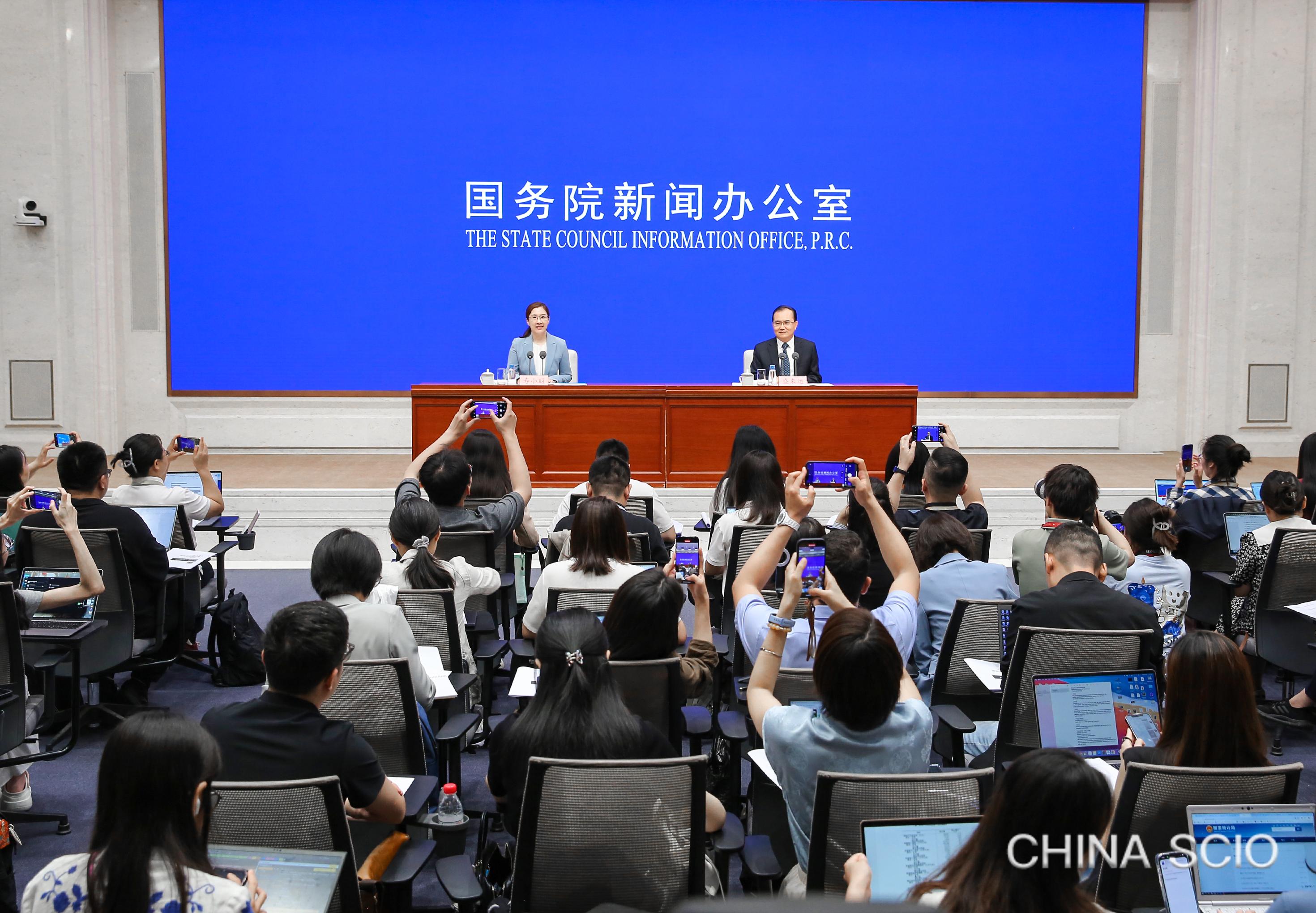
/3 Group photo
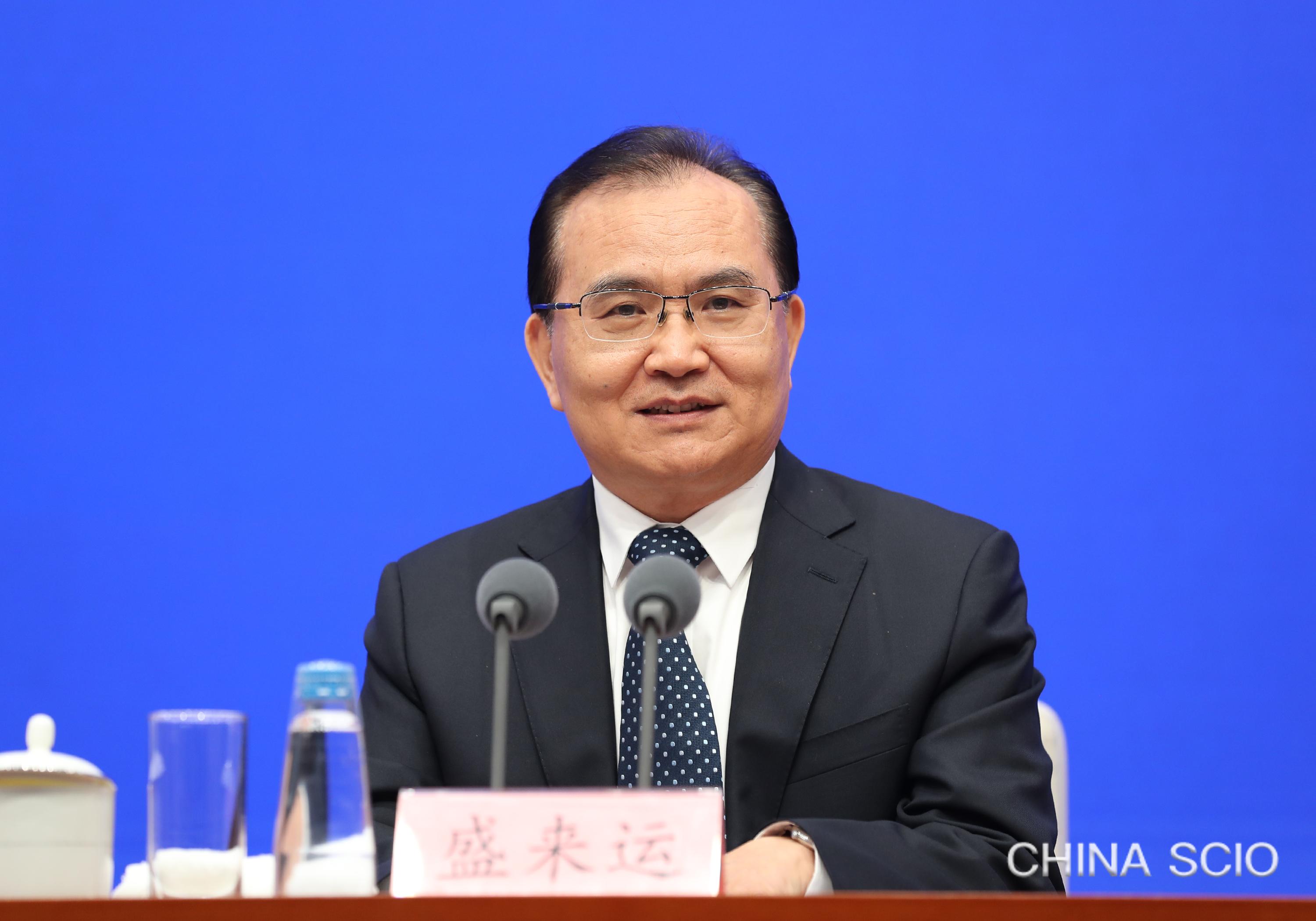
/3 Sheng Laiyun
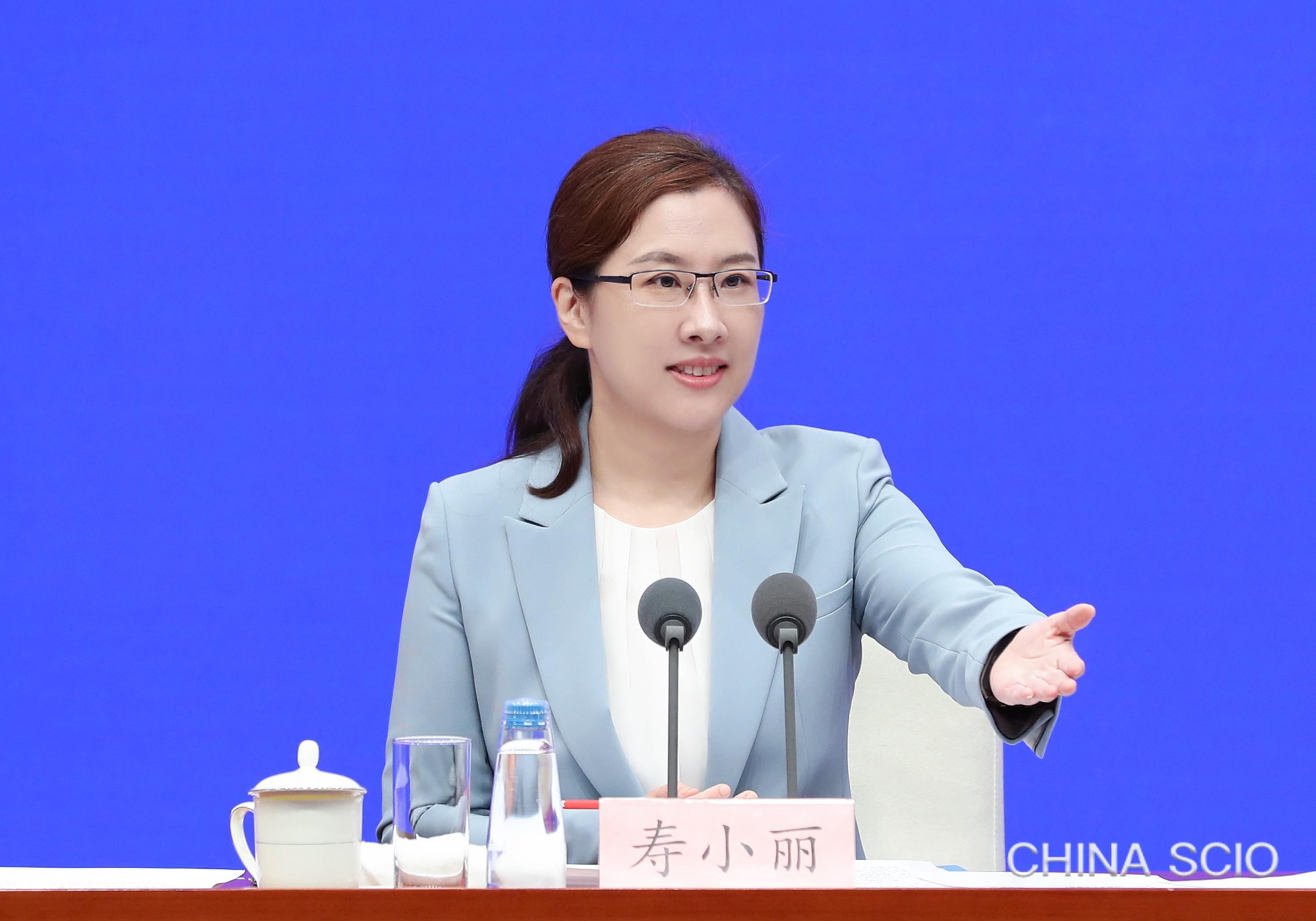
/3 Shou Xiaoli
SCIO briefing on China's financial statistics in H1 2025
July 14, 2025SCIO briefing on China's import and export in H1 2025
July 14, 2025SCIO briefing on China's economic and social achievements during the 14th Five-Year Plan period
July 9, 2025SCIO briefing on promoting comprehensive river protection and management
July 4, 2025