China.org.cn | May 26, 2026


Yicai:
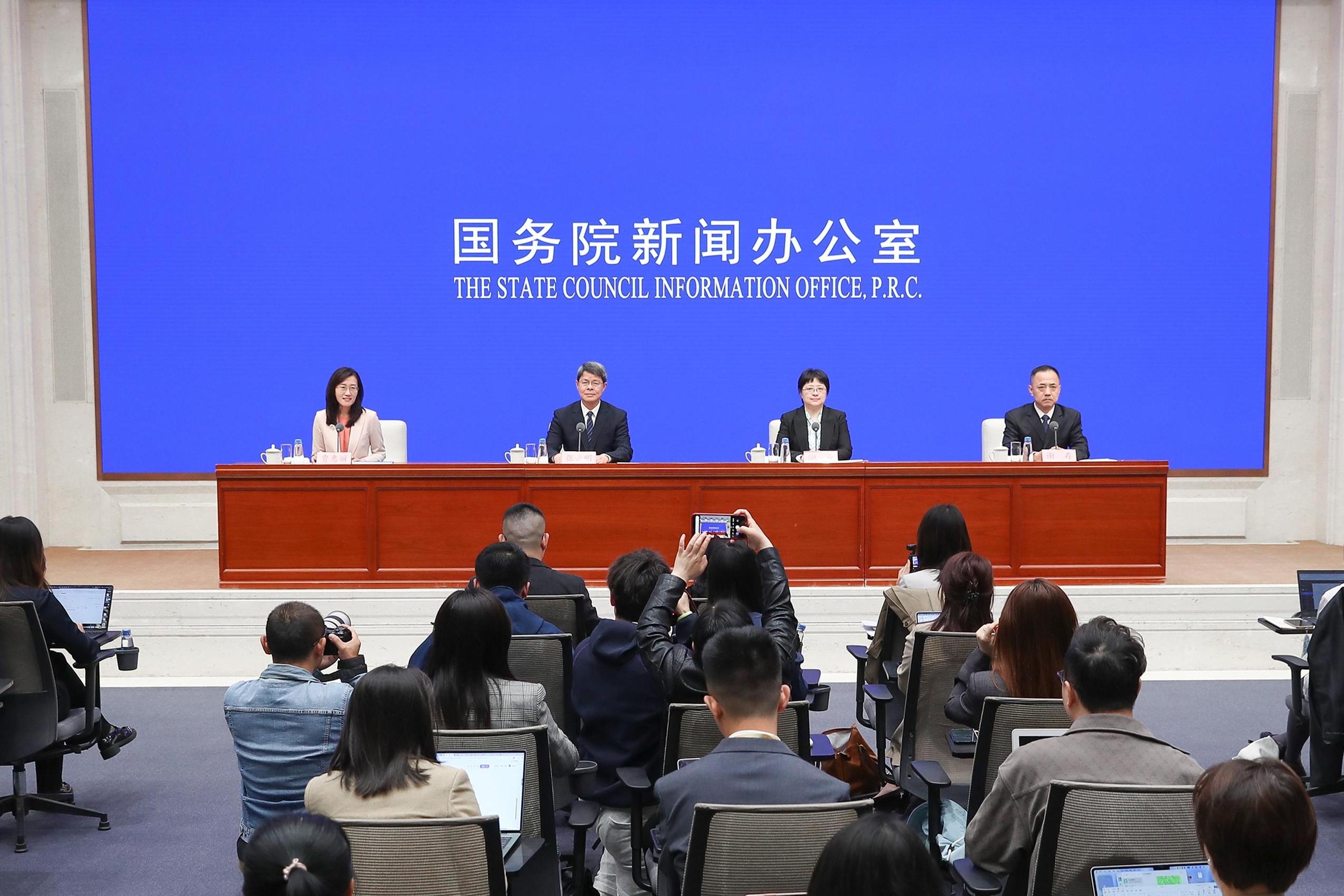
This year marks the start of the 15th Five-Year Plan period, and China has set out clear forward-looking plans for industries of the future. What is the overall state of China's future industry development and planning? How can policy innovation help accelerate the transition of future-oriented industries from the laboratory to the market? Thank you.
Zhang Yunming:
Thanks for your questions. I'll take these. The CPC Central Committee and the State Council have attached great importance to the development of China's future industries. At the 24th group study session of the Political Bureau of the CPC Central Committee, General Secretary Xi Jinping stressed that we should approach this from the strategic perspective of building a strong nation and pursuing national rejuvenation, ground ourselves in actual conditions, leverage our comparative advantages, pursue progress while maintaining stability, and advance the tiered development of China's future industries to achieve continuous breakthroughs.
The MIIT has resolutely implemented the decisions and plans of the CPC Central Committee and the State Council regarding the development of future industries and has taken solid steps to ensure effective progress on all fronts. First, key development tracks have been steadily refined. Together with six other departments, we issued guidelines on promoting the innovative development of future industries, which systematically maps out the tracks for future industry development. Second, the supply of cutting-edge technologies has been continuously strengthened. We have stepped up support for future industries by leveraging major national science and technology projects. More than 100 innovation challenge tasks for future industry development have been deployed under the open competition mechanism, focusing on key tracks such as quantum technology and clean, low-carbon hydrogen. We have systematically planned the development of manufacturing innovation centers and pilot testing platforms for future industries in key sectors, steadily turning good ideas into good products on the production line. Third, enterprise vitality has continued to be unleashed. We have supported the development of 509,000 high-tech enterprises and 193 innovative industrial clusters, which together have drawn in 54,000 innovative enterprises of various types. Fourth, the industrial ecosystem has continued to improve. Future industries must be driven by technological advancements and supported by a sound ecosystem. For three consecutive years, we have hosted the Future Industry Innovation and Development Forum at the Zhongguancun Forum, guiding local governments to build provincial-level pioneer zones for future industry development based on local conditions.
The key to moving future industries from the laboratory to the market is to let industry needs guide sci-tech innovation, clearing the obstacles and bottlenecks between innovation and market demand. In terms of technology supply, we will plan research tasks based on the actual needs of industrial development and strengthen the coordinated advancement of basic and applied research. We will develop manufacturing innovation centers and pilot testing platforms to accelerate the transition of original technologies from lab to pilot-scale and large-scale production. In terms of policy support, we will coordinate the formulation of general policies and sector-specific policies. We will introduce general policies based on common development needs and targeted policies for specific tracks to accelerate high-quality development across new fields and sectors.
Today's future industries will be tomorrow's emerging industries, or even pillar industries. Only by planning ahead for future industries today can we seize the commanding heights of development tomorrow. We will strengthen accountability, ensure the sound implementation of our duties, and sustain long-term efforts to provide strong momentum for developing new quality productive forces and achieving new industrialization.
Jia Huili:
That concludes today's press conference. Thank you to our speakers and to all the journalists for your participation. Goodbye.
Translated and edited by Cui Can, You Jiaxin, Yang Xi, Wang Mengru, Liu Caiyi, Xu Kailin, Gong Yingchun, Fan Junmei, Li Xiao, Li Huiru, Jay Ian Birbeck, David Ball and Tudor Bentley Finneran. In case of any discrepancy between the English and Chinese texts, the Chinese version is deemed to prevail.