China.org.cn | March 17, 2026


21st Century Business Herald:
How can we assess the effectiveness of the "two new" policies (large-scale equipment renewal and consumer goods trade-ins) in 2025? How effective have the policies been in stimulating consumption and investment? The 2026 "two new" policies have clarified the scope of support and subsidy standards. Building on nearly two years of implementation, how can we improve implementation mechanisms to better benefit the public? Thank you.
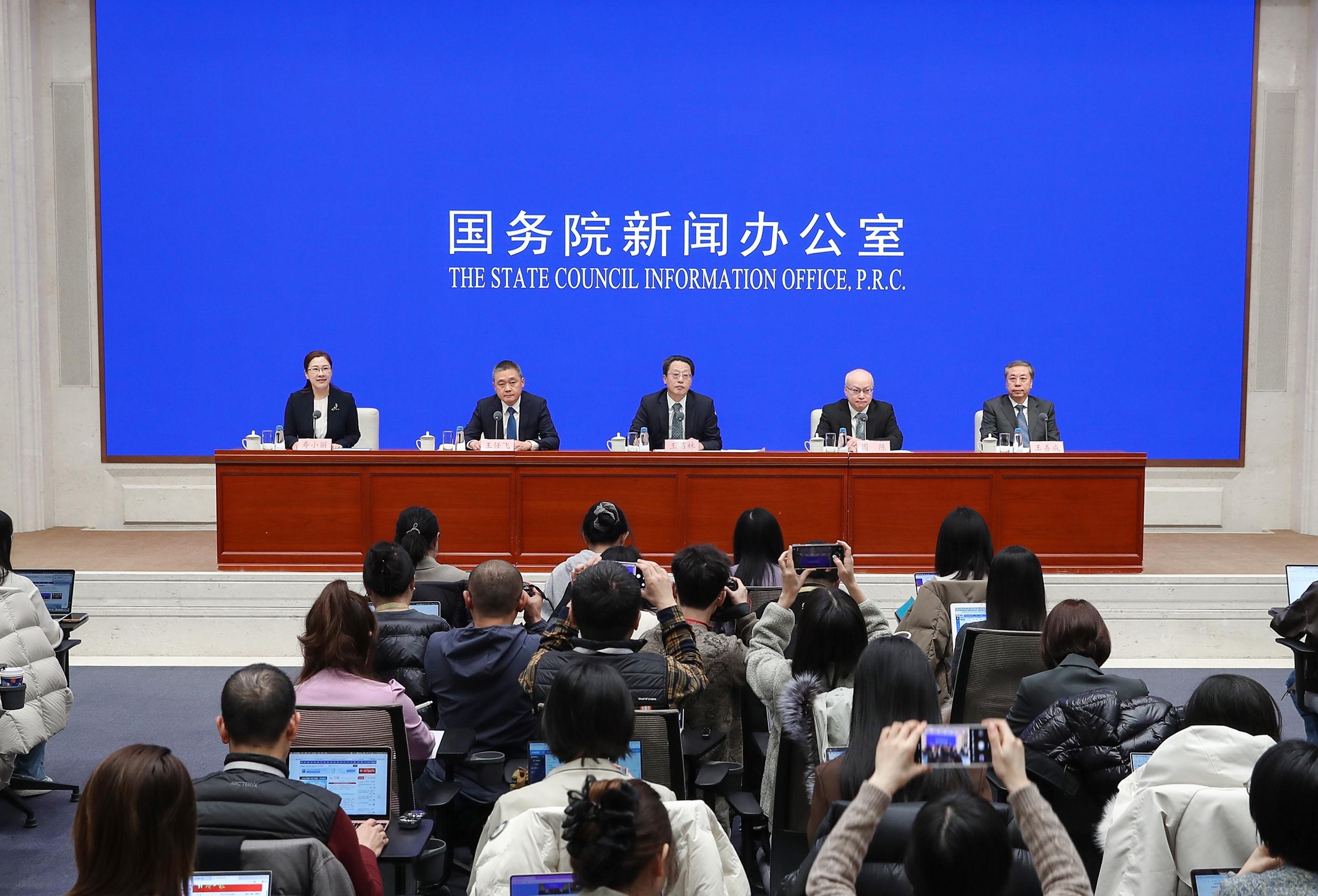
Wang Changlin:
The "two new" policies, particularly the trade-in program, have significantly stimulated consumption over the past year and will continue to do so this year. Now, I would like to invite Mr. Wang Shancheng to address these questions.
Wang Shancheng:
Thank you for your questions. Promoting large-scale equipment renewals and consumer goods trade-ins is a major decision made by the CPC Central Committee and the State Council, aimed at advancing the overall vision of high-quality development. It also represents an important measure to expand domestic demand and strengthen macroeconomic countercyclical adjustments. The "two new" policies have been highly effective and delivered remarkable results since their implementation in 2024. According to relevant data, the "two new" policies have played a major role in stabilizing investment, expanding consumption, promoting transformation and improving people's livelihoods since 2024. First, they have boosted investment. In 2025, the allocation of ultra-long-term special treasury bonds supported approximately 8,400 equipment renewal projects, driving a total investment of over 1 trillion yuan. This contributed to an 11.8% year-on-year increase in investment in equipment and tools, and boosted overall investment growth by 1.8 percentage points. Second, they have stimulated consumption. In 2025, over 360 million people applied for subsidies to trade in old goods for new ones, driving sales of related products to more than 2.6 trillion yuan and directly boosting total retail sales of consumer goods by 0.6 percentage point. Third, they have accelerated the green transformation. Since the implementation of the "two new" policies, the recycling system has been rapidly improved, with more than 29,000 new intelligent community recycling facilities added nationwide. Energy conservation and carbon reduction standards have been steadily advanced, with all 294 national standards related to energy consumption and emissions under the "two new" policies being released. Additionally, the promotion of green and low-carbon products has been accelerated, with nearly 60% of vehicles purchased by consumers being new energy vehicles and more than 90% of home appliances achieving top-level energy and water efficiency ratings. The "two new" policies have led to annual energy savings of more than 69 million tons of standard coal and a reduction in carbon emissions exceeding 170 million tons.
As everyone knows, before the New Year's Day, China announced policies to implement large-scale equipment renewal and consumer goods trade-in programs in 2026. These policies further optimized the scope of support, subsidy standards and implementation mechanisms. China also promptly allocated the first batch of 62.5 billion yuan in ultra-long special treasury bond funds to support consumer goods trade-ins. Local governments successively implemented the consumer goods trade-in program on Jan. 1, achieving a smooth policy transition and seamless continuity. Regarding how to further improve fund utilization efficiency and enhance the effects of policy stimulus, the main arrangements are as follows:
Regarding equipment renewal, we will first lower the investment threshold. We will further lower the investment threshold for declared programs, increase support for small- and medium-sized enterprises, and expand policy coverage. Second, we will enforce strict requirements. We will clarify project approval criteria and strengthen review standards across sectors to improve the quality of project assessments. We will standardize equipment depreciation and disposal procedures to avoid resource waste. Third, we will strengthen supervision. We will improve the closed-loop management system for equipment renewal projects and hold all parties accountable for their management responsibilities. We will strengthen daily coordination and supervisory inspections, accelerate project construction and implementation, and improve fund utilization efficiency.
Regarding the consumer goods trade-in program, we will first optimize fund allocation. We will determine funding levels for each region based on factors such as consumption potential and the effectiveness of policy implementation. Second, we will standardize subsidy criteria. In accordance with the requirements for building a unified national market, we will implement a unified subsidy standard nationwide for the scrapping and replacement of vehicles, trade-in programs of six categories of home appliances, and purchases of four categories of digital and smart products. Third, we will ensure that funds are used in a balanced manner. We will rationally manage the work pace and allocate central government funds in batches every quarter. We will guide local governments to spend subsidy funds in a balanced and orderly manner, ensuring a smooth transition across weeks, months and quarters. We will urge local governments to establish systems for advance subsidy payments to resolve delayed payment issues and ease the financial burden on enterprises. Fourth, we will crack down on illegal activities. We will strictly audit funding and accurately identify all types of illegal and irregular activities. We will implement strict price controls. Any fraudulent practices, such as obtaining subsidies through deception or raising prices before receiving subsidies, will be investigated, punished, exposed and cracked down on.
In summary, in 2026, we will optimize the scope of support and subsidy standards for the "two new" policies. We will improve implementation mechanisms at every stage and strengthen the whole-chain management of projects and funds. This will enhance the accuracy, convenience and effectiveness of the "two new" policies to ensure greater outcomes. Thank you.