China.org.cn | September 17, 2025


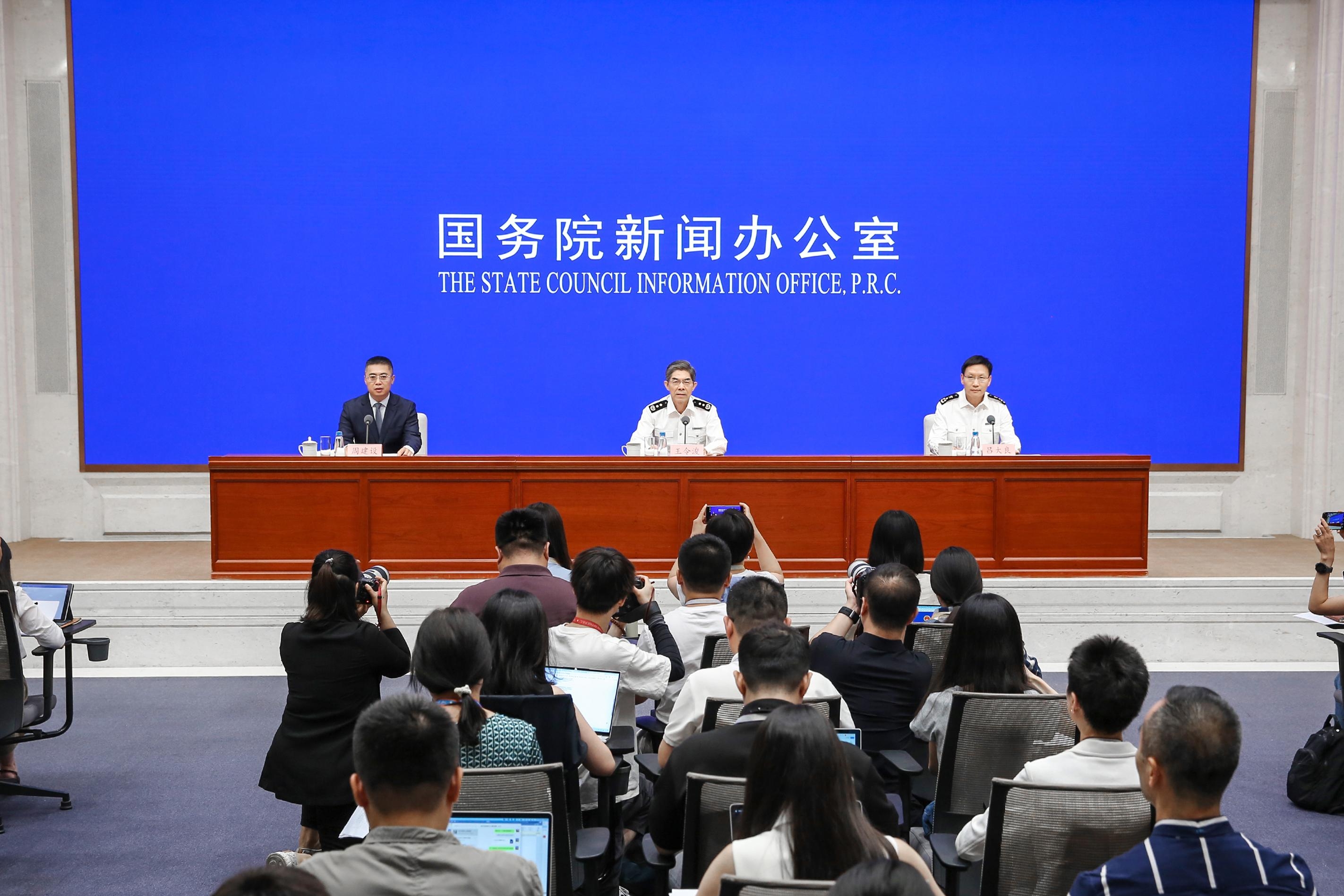

Market News International:
What are the reasons behind China's negative year-on-year growth in imports so far this year? What is the outlook for imports in the second half? Thank you.
Lyu Daliang:
Thank you for your questions. Mr. Wang just briefed on the first half of the year's trade figures, including exports and imports, covering both scale and growth rates. The import growth rate in the first half of this year resulted from multiple factors, including uncertainties in global trade policies and declining commodity prices. As a major commodity importer, commodities account for about 30% of China's total import value, and international price fluctuations significantly affect the country's import growth rate. In the first half of the year, average import prices of crude oil, iron ore and soybeans all fell more than 10% year on year, pulling down overall import growth by 2.7 percentage points.
For imports, we need to look at both the growth rate and the overall trend, as well as both the monetary value and the actual quantity. As China's economy continues to recover and improve, expanding domestic demand has helped stabilize imports. In the second quarter, imports returned to growth, driven primarily by increased volume, reflecting substantial improvement.
On the one hand, stable growth in industrial production has driven a recovery in imports of equipment and components. China's manufacturing PMI has risen for two consecutive months. In the second quarter, the import growth rate for high-end machine tools accelerated by 13.9 percentage points compared with the first quarter, while the import growth rate for electronic components accelerated by 7.7 percentage points.
On the other hand, rebounding market sales have boosted imports of certain consumer goods. Driven by policies such as trade-in programs for consumer goods, the year-on-year growth rate of China's total retail sales of consumer goods was faster in the first five months than in the first quarter. In the second quarter, imports of food, tobacco and alcohol grew at a relatively fast pace of 8.8% while imports of cultural and recreational products increased 10.8%. Additionally, daily chemical products rose 3.1%.
Here, I would also like to introduce another development. Since Dec. 1 last year, China has granted zero-tariff treatment to all the least-developed countries it has diplomatic ties with. In the first half of this year, China's imports from these countries achieved double-digit growth. Going forward, we will extend zero-tariff treatment to 53 African countries with diplomatic relations with China, leveraging China's large market to drive shared development among all nations.
With its massive population, China is intensifying efforts to implement its domestic demand expansion strategy and launching special campaigns to boost consumption, making it one of the world's most promising large-scale markets. As China's market continues to expand and the country opens its doors wider, its imports will bring even greater benefits to the world.
Thank you.

